


The Top 12 Cutest Birds in America

Updated: Feb. 02, 2023




The votes are in—see if your favorite bird made our list of the cutest birds in America. Then get the birding basics on how to attract these adorable fliers to your yard.
Our editors and experts handpick every product we feature. We may earn a commission from your purchases.
How do you define cute? If you think about it, it’s rather subjective. What one person thinks is cute, another might not find attractive at all. So “cute,” in and of itself, is tricky, but now add the complication of trying to define cute birds. You’re sure to have all sorts of opinions! Now, we wouldn’t dream of identifying the cute birds in America all on our own. So we put together an online poll and asked you, the readers, to vote. While beauty and charm is in the eye of the beholder, these chipper, pint-size fliers will surely bring a smile to your face.
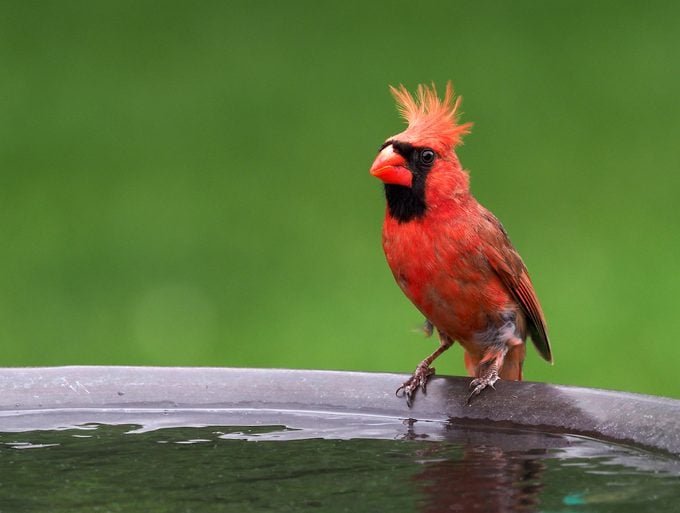
1: Northern Cardinal
While male northern cardinals are stunningly bright and showy, females are no slouches in the cuteness category either. They have subtle hints of blush that appear as if whimsically painted on. Cardinals prefer platform feeders for foraging on black oil sunflower and safflower feasts. If you don’t have space for an additional feeder, add a tray to the bottom of your tube feeder to give cardinals a place to perch and eat.
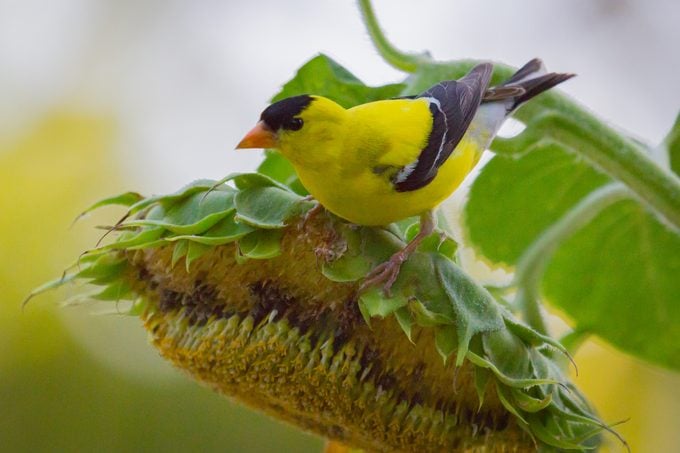
2: American Goldfinch
Goldfinches glow like beams of sunshine in summer and ebb to rich olive green in winter. These widespread cuties are recognized as the state bird of Iowa, New Jersey and Washington. While they eat a variety of seeds, a tube or sock feeder full of thistle is a magnet for finches. The fine seeds dry out if kept in storage for too long, so consider buying smaller bags rather than stocking up.
Backyard Tip: Use an upside-down thistle feeder to keep goldfinches around but bully birds away!
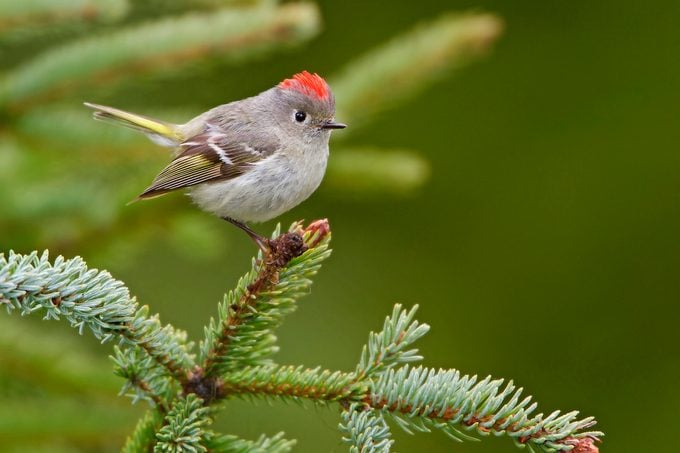
3. Ruby-Crowned Kinglet
Like feathered pingpong balls with toothpick legs, ruby-crowned kinglets bounce and flit about, flicking their wings in near constant motion. Kinglets are most visible in winter along the coasts and throughout the southern states, but migrants show up anywhere. Despite their bug-filled diet, they occasionally nibble on suet cakes. Bold white eye-rings give these little nuggets personality. Red crown feathers are usually tucked away among the gray plumage. Check out the top 9 most beautiful birds in America.
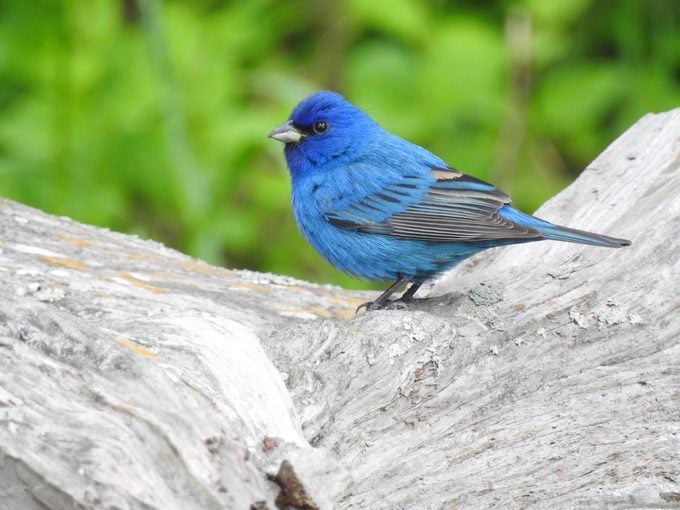
4: Indigo Bunting
The color of the male indigo bunting has to be one of the most vibrant, gorgeous blues found in nature. It’s almost iridescent, like a peacock. Females are a dull brown, but you can still identify them by their thicker grosbeak bill. These birds are migrants and are common throughout the East in late spring and summer. If you want to attract them to your yard, try mealworms or a thistle feeder. Indigo buntings also love white millet seed.

5: Rufous Hummingbird
We couldn’t put every hummingbird on the nomination list for cute birds, because we were afraid they would dominate. After all, nearly everyone can agree that a 3- to 4-inch hummingbird is cute! The rufous came in at a solid fifth on our list. It’s found mostly in the West, though some rufous hummingbirds are gaining a reputation for wintering in the lower Southeast. The male has a stunning gorget and beautiful cinnamon coloring across his back. Offer sugar water for all hummingbirds. Discover jaw-dropping facts about hummingbirds.
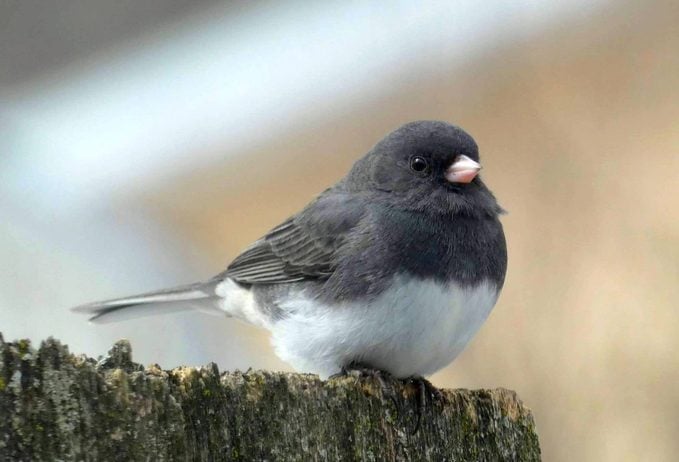
6. Dark-Eyed Junco
Called snowbirds across much of the continent, flocks of dark-eyed juncos are harbingers of winter and holiday cheer. For many years, separate types of juncos were classified as unique species, but now scientists identify them all as dark-eyed juncos. Most of them have delightful pink bills, and their white outer tail feathers flash as they fly by. These members of the sparrow family use brush piles for cover and feed on birdseed scattered directly on the ground.
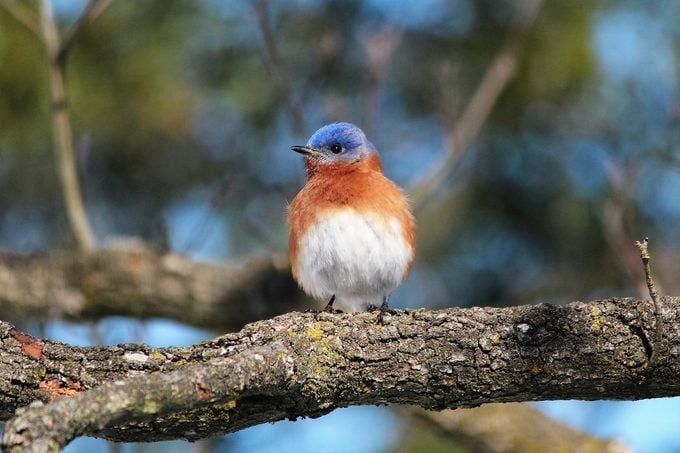
7. Eastern Bluebird
Along with their western counterparts, eastern bluebirds are beautifully patterned with rusty maroons that contrast against brilliant blues. Bluebirds perch conspicuously in open areas. To attract them, set out nesting boxes. You may even see some fledglings, come summer! If you are lucky enough to have bluebirds in your neighborhood but not your yard, they might take mealworms from a feeder. Native landscapes with fruiting trees also attract bluebirds to backyards.
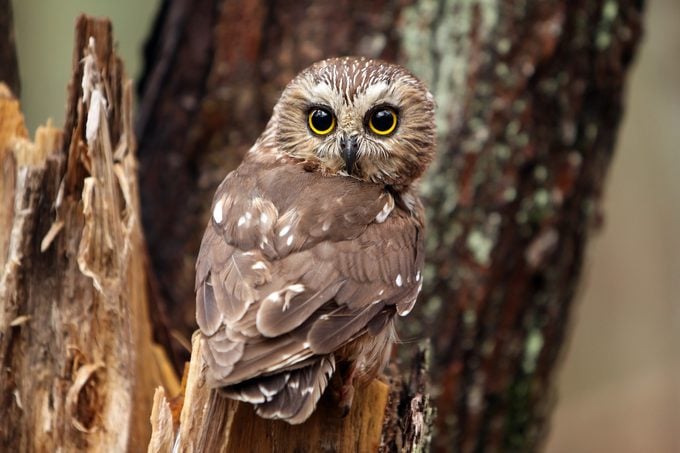
8. Northern Saw-Whet Owl
Despite being named after the sound of sharpening blades on whetstones, the tiny northern saw-whet owl’s charming toot, toot, toot calls are hardly menacing. The pint-size owls stand just about 8 inches tall, with oversized, endearing eyes. The alarm notes of songbirds may draw your attention to a roosting saw-whet owl in a dense conifer stand. You might also see the elusive birds at a banding program as researchers continue to learn more about their distribution, mostly in the forests of northern and western North America.
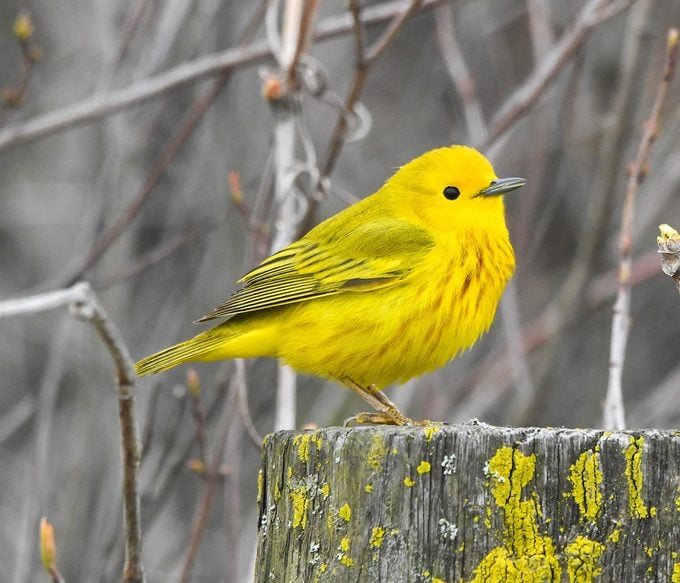
9. Yellow Warbler
Listen for the cheerful sweet, sweet, sweet tweets of yellow warblers in brushy habitats. You might see a lemon-hued male sporting orange streaks on his chest, or a soft yellow female. Warblers feed mostly on insects, so they generally aren’t attracted to feeders. Instead, entice these cute birds to your garden by adding a water feature like a bird bath or, even better, a natural looking pond with flowing water.
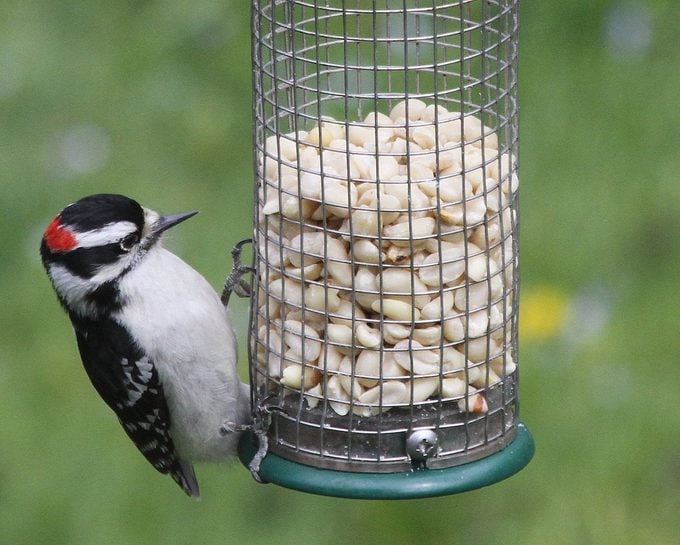
10. Downy Woodpecker
The daintiest of the woodpeckers, downies are familiar friends in backyards from coast to coast. They seem delicate even as they chisel out cavities in tree trunks, one chunk at a time. Downy woodpeckers eat a variety of foods including seeds, fruits and insects, and they visit suet feeders throughout the year. No-melt suet is available for warmer months. But definitely serve high-fat treats during the winter when downies need the extra nutrients.
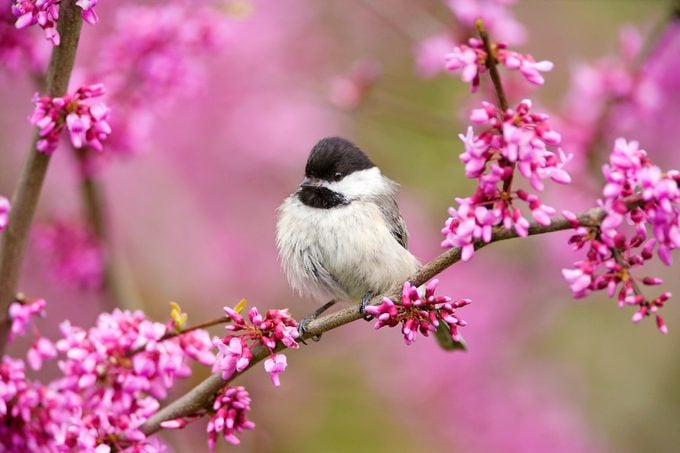
11. Black-Capped Chickadee
Don’t be mad, but we left these cute birds off our list the first time. We heard about it, too! Several people wrote in, asking us how we could forget the black-capped chickadee. We publicly apologize to those who were shocked by our omission. Who doesn’t love this little black-and-white flier, found throughout much of the U.S.? You can easily attract chickadees with black-oil sunflower seed. Check out 20 incredibly cute chickadee pictures.
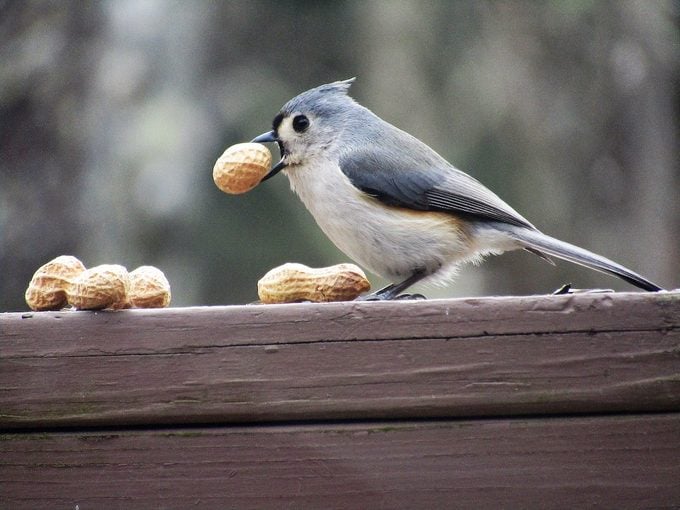
12. Tufted Titmouse
It isn’t the only crested bird around, but a tufted titmouse’s peak certainly has the most flair. Both sexes always look styled and perfectly moussed, with vibrant black eyes to offset their pale expressive faces. With a range that’s expanding northward, these cute birds are common feeder visitors in the East. They readily eat sunflower seeds, but it is especially amusing to watch them tackle whole peanuts in the shell. Learn how to attract titmice to visit your backyard.
Originally Published: September 15, 2021

