

Choose the Best Birdhouses to Attract More Birds

Updated: Feb. 23, 2023




Nesting birds are rewarding to watch. Get expert tips for on how to attract birds to a birdhouse and learn how to choose the best birdhouse.
Our editors and experts handpick every product we feature. We may earn a commission from your purchases.
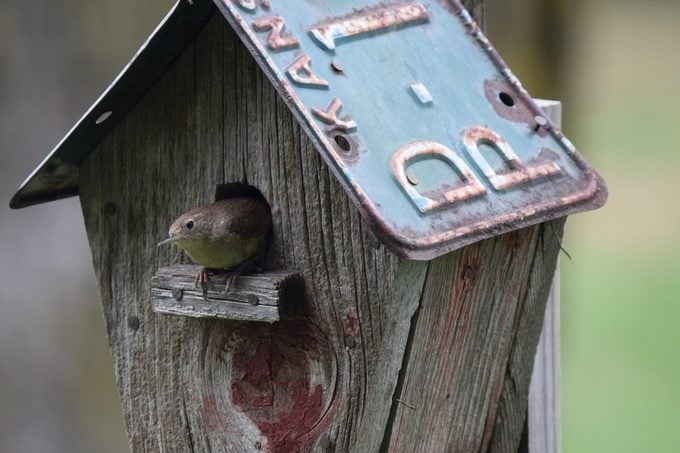
There are few bird-watching experiences more rewarding than setting up a birdhouse and having a pair of birds select it as their home to raise young. Get ready for an adventure as you witness the awe-inspiring life cycle of birds. But setting up a successful birdhouse isn’t as simple as “build it and they will come.” There are several key factors to consider as you choose a birdhouse.
Many backyard birds will not use a birdhouse or nest box, including popular species like cardinals, orioles and goldfinches. But enough birds do nest in birdhouses to make it worthwhile to set up a few to see what happens.
About 30 bird species in each region of the country are so-called cavity nesters, which means that most of them will also use a birdhouse. Bluebirds, purple martins, house wrens, chickadees, tree swallows and house sparrows are the most common birds that nest in houses. Attracting birds like wood ducks, screech-owls, woodpeckers, titmice and nuthatches may also be possible.
When birds nest on your property and raise their young, it’s so gratifying. “It’s the ultimate standard of success,” said Robyn Bailey, project leader of the Cornell Lab of Ornithology’s NestWatch program. “And it brings a greater diversity of birds to your backyard.”
Learn how to build a one-board DIY birdhouse.
Select a Good Birdhouse Location
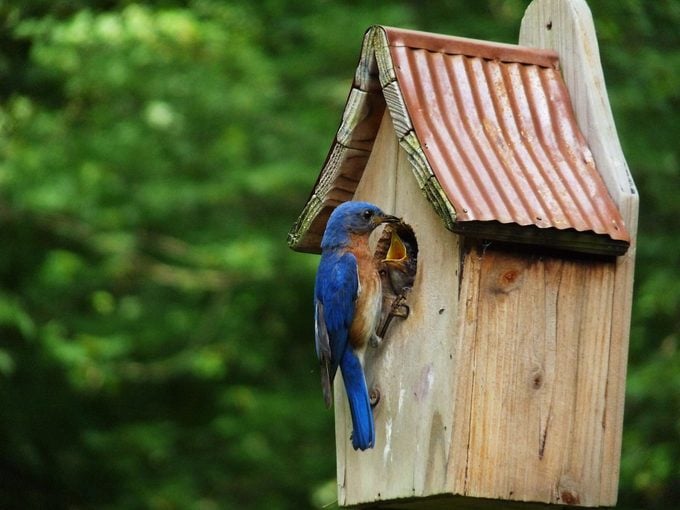
Birdhouses should hang in the habitats the birds like most. Each species has different habitat requirements, and this includes the environment they’ll choose for nesting. For example, the best location for a bluebird house is an area facing or surrounded by open fields, where the insects they eat and feed to their young are plentiful. They prefer nest boxes with a clear flight path. Chickadees are just the opposite. They prefer houses in a thicket or a stand of small trees and shrubs. House wrens like to choose a home near woody vegetation. Purple martins select apartment houses placed on a tall pole in the middle of a lawn or open field. And tree swallows want to be close to water where they can find aquatic insects to eat and feed to their young. Try not to place the house too close to bird feeders.
Here’s how to build a DIY bluebird house.
Pick the Proper Birdhouse Design
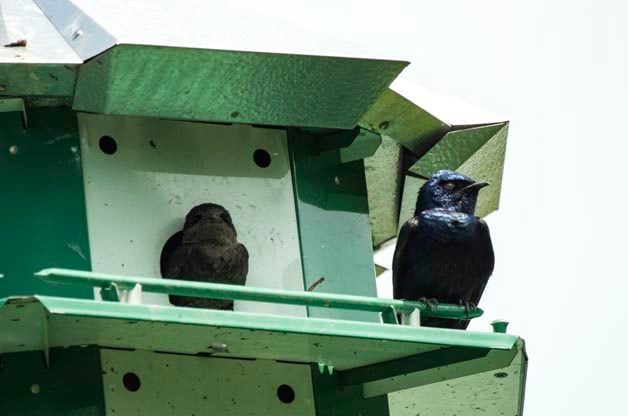
In addition to specific habitats, different bird species also require varied types of birdhouses. Purple martins like to live in communities of many birds of their species. Therefore, an apartment-style house or multiple nesting gourds work best. House wrens live in single, small houses, and prefer not to have other wrens close by. Bluebirds require single-room dwellings, typically 50 to 75 yards apart. No matter what type of birdhouse you use, wood is the best material. The houses also should have ventilation around the top and drainage holes in the floor, and be painted or stained an earth tone. The exception is purple martin houses, which often are made of aluminum (or dried gourds) and painted white to reflect heat.
Learn how to make a purple martin gourd house.
Attract Birds to the Right Size Birdhouse
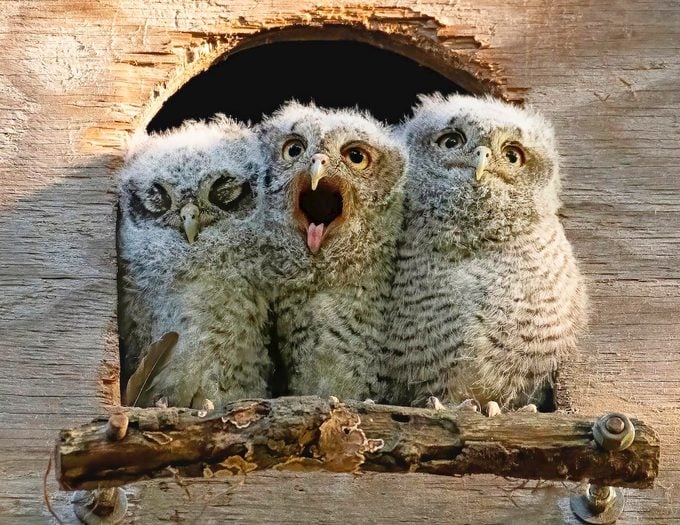
Generally, small songbirds need small houses; large birds require large houses. House wrens are happy with an 8-inch-tall house with a 4- by 6-inch base, while a chickadee birdhouse should be 8-inches tall with a 5- by 5-inch base. Bluebirds need more room, so a box that’s 5-1/2 by 5-1/2 inches and 10 inches tall is perfect. Wood ducks and screech-owls need big houses, 10 by 10 inches and 24 inches high.
Check out more proven tips to attract nesting birds.
Pay Attention to the Entrance Hole Size
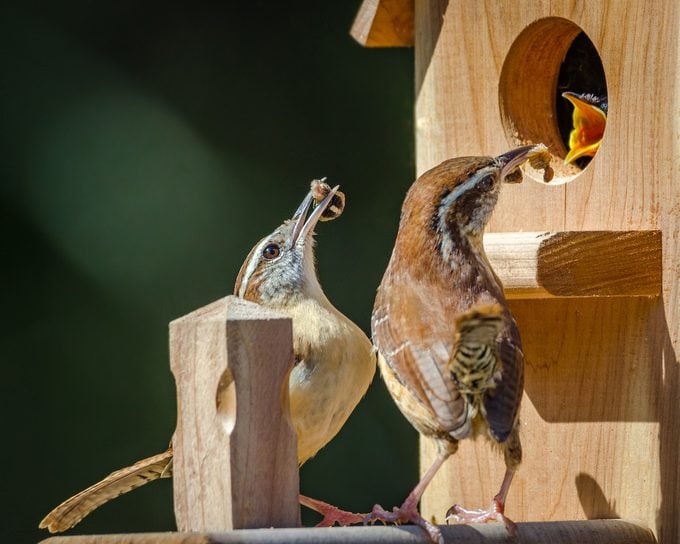
A very important aspect of selecting the right house for the nesting birds you want to attract is the size of the entrance hole. Consult this helpful birdhouse hole size chart for guidelines. House wrens require the smallest entrance, only 1-1/8 inches. This will also keep out competing nesters, since almost no other birds can fit through such a small opening. Wood ducks and screech-owls like an elliptical doorway that is 4 by 3 inches and about 20 inches above the floor of the house. The oval-shaped entrance helps prevent predators like raccoons from entering. Chickadees, tufted titmice and nuthatches are comfortable with a 1-1/4-inch hole, while bluebirds need about 1-1/2 inches to get inside.
Check out these unique birdhouses birds will actually use.
Hang the Birdhouse at the Right Height
The final factor to consider is that nesting birds prefer their houses at different heights. If the house you buy doesn’t have hanging instructions attached, take a moment to look them up.
Purple martin houses need to be about 15 to 20 feet above the ground. Wood ducks and screech-owls also need lofty homes, 12 to 40 feet high. For bluebirds, secure the house to a post 5 to 8 feet above the ground. House wrens prefer them 6 to 10 feet above the ground and hanging from a tree. Chickadees are most likely to nest in houses that are 4 to 8 feet above the floor of a thicket.
This is the only bird nesting material you should put out.
When to Put Out Birdhouses
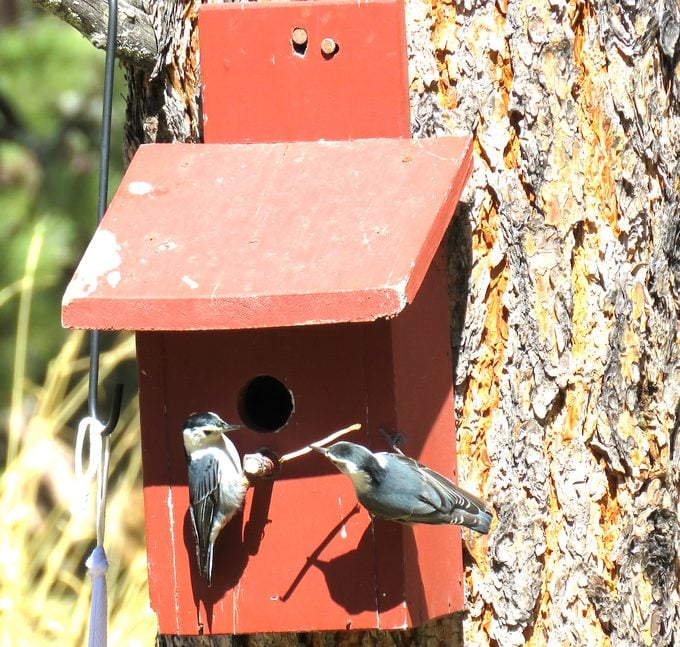
To ensure that the home is available to early nesters, put out your box by February if you live in the South, mid-March if you live up north. Don’t forget about late-nesting birds. If you prefer, you can keep it up all year.
Even if you follow these requirements, not every birdhouse will be successful. The best advice on how to attract birds to a birdhouse is to offer multiple houses of several types. Then, chances are good you’ll have some winged tenants to admire come nesting season.
Find out how to get rid of wasp nests in birdhouses without pesticides.
Watch for Nests
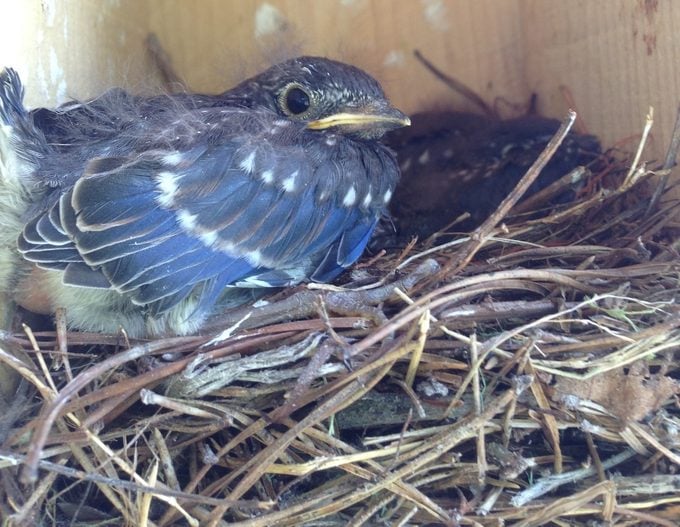
“It’s a common misconception that you shouldn’t check on a bird or monitor its nest,” Robyn said. “Checking on your occupants is a good way to make sure things are going the way you’d hope.”
Moving as nonintrusively as possible, check your birdhouse once or twice a week, keeping visits to less than a minute. If you want to put your data to good use in studying birds, record what you see using the NestWatch website or mobile phone app.
Learn how to identify bird eggs by color and size.
Keep Your Birdhouse Clean
Each spring and fall, use a paint scraper to scoop nesting materials out and clean the birdhouse. If it’s heavily soiled, wear a mask and wash the house with soap and water.
What Birds Use Birdhouses?
- Owls
- Phoebes
- Robins
- Swallows
- Titmice
- Woodpeckers
- Wrens
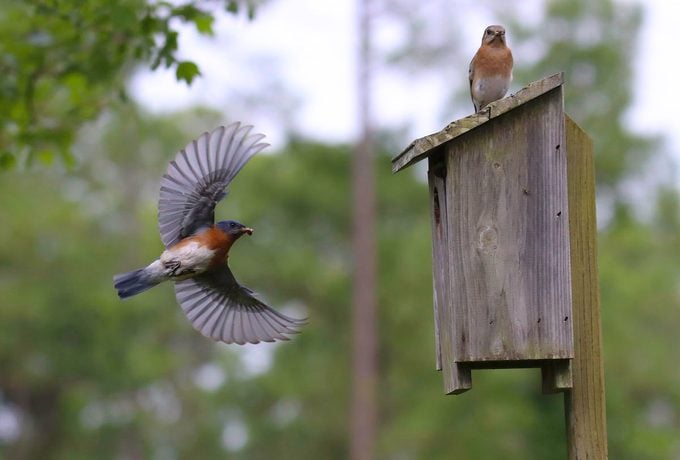
- Bluebirds
- Chickadees
- Doves
- Flickers
- Flycatchers
- Kestrels
- Nuthatches
Learn about 8 different kinds of bird nests and how to spot them.
The Best Birdhouses and Nest Boxes to Buy
Welcome more bird families to your backyard with a variety of cozy places for them to raise their young.
Songbird House
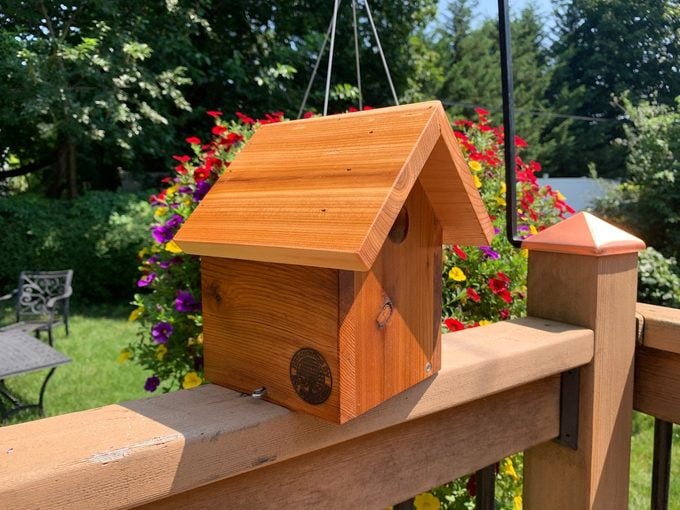
Chickadees, titmice and wrens are the most common backyard cavity nesters. They take up residence in classic wood birdhouses, but they’re very particular about the size of the entrance hole. These songbirds are most likely to raise a family in a box if the hole is 1 1/8 to 1 1/2 inches in diameter.
Bluebird and Tree Swallow House
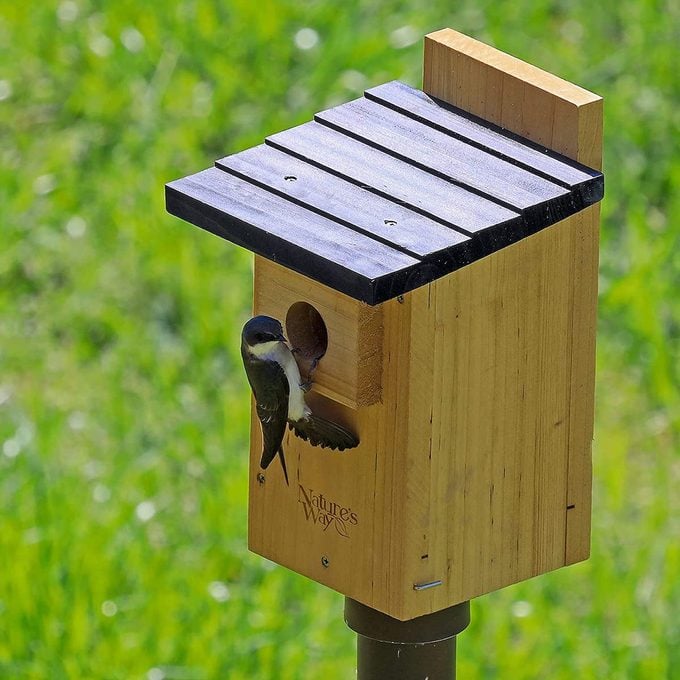
Look for a house or nest box that is approved by the North American Bluebird Society to meet these birds’ specific requirements. Bluebirds need a slightly larger house than the smallest songbirds. Don’t be alarmed if tree swallows also use the nest box.
Purple Martin House
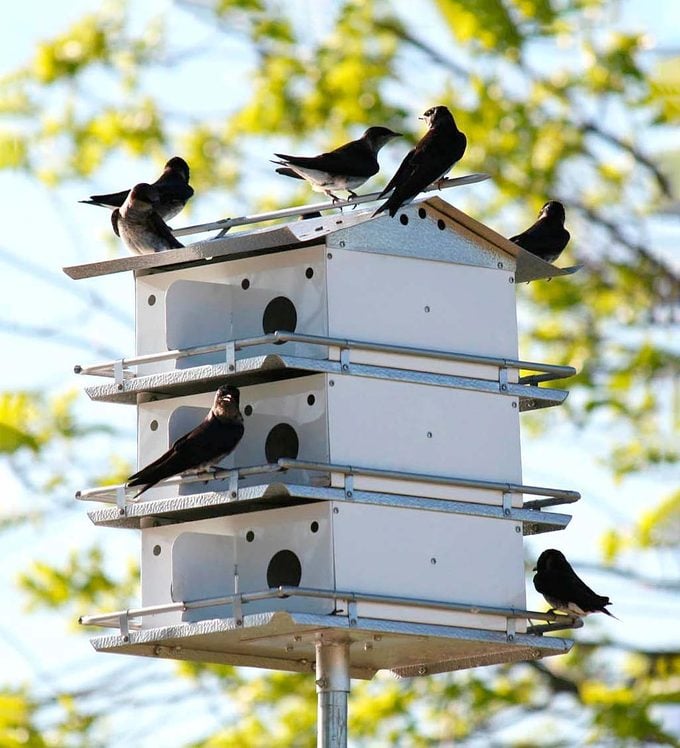
A type of swallow, purple martins nest in colonies, so consider a six- to 12-cavity house. Being a martin landlord takes some commitment, though. First set up the large multi-unit house 12 to 18 feet above ground—and then keep the cavities clear of nonnative house sparrows.
Woodpecker House
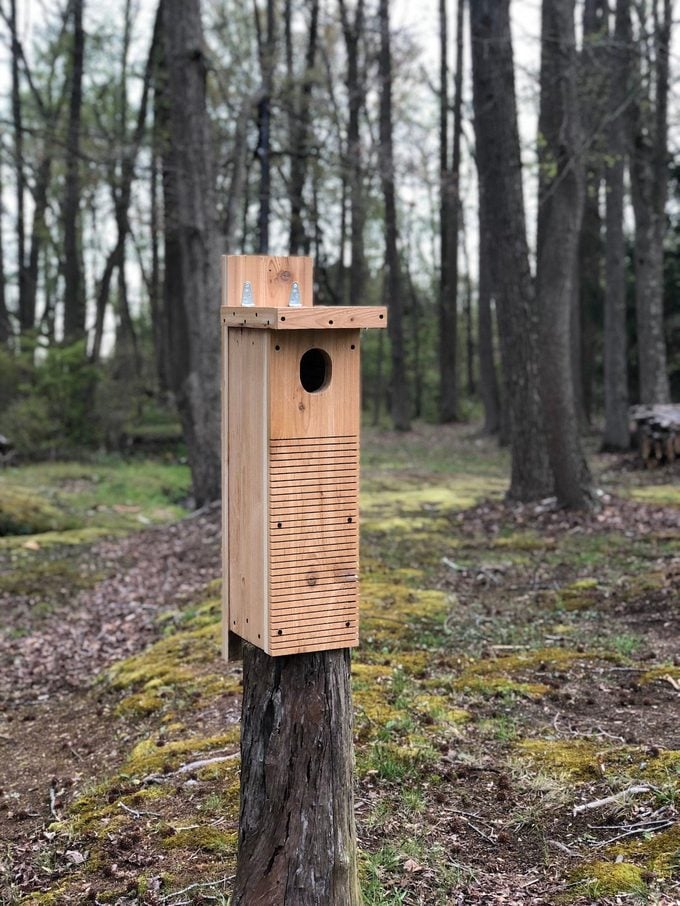
Entice woodpeckers with nest boxes attached to tree trunks, anywhere from 8 to 12 feet high. Add 4 inches of wood shavings to the floor— woodpeckers use it as nesting material. The preferred entrance hole size varies by species. Downies like 1 1/4 inches; flickers favor 2 1/2 inches.
Screech Owl House
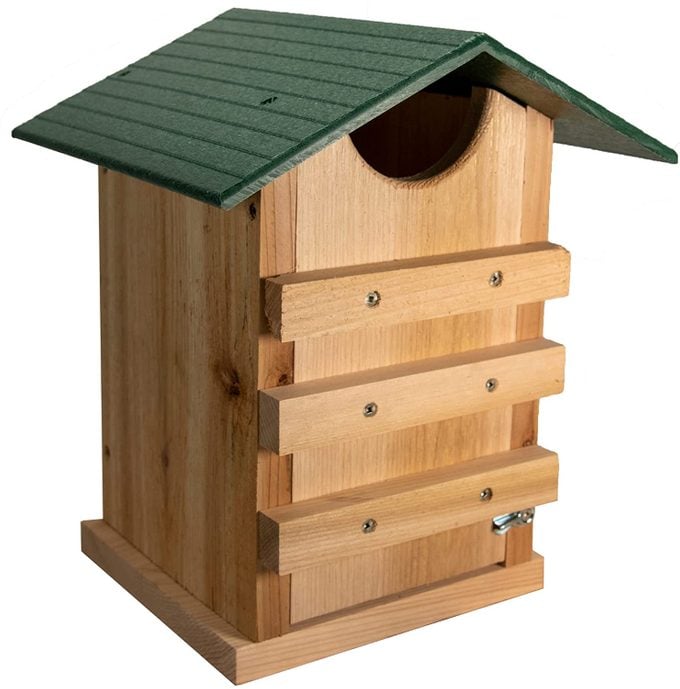
Attract owls to reduce garden pests! Hang a house for screech-owls to nest in the summer and roost in winter. They will use a box with an elliptical entrance hole 4 inches wide by 3 inches high. Watch them peek their heads out around dusk. Bonus! Wood ducks are attracted to the same type of birdhouse.
Learn how to spot the owl in your backyard trees.
Originally Published: November 03, 2021

