


Eastern vs Western Screech-Owl: What’s the Difference?

Updated: Oct. 07, 2022




It’s difficult to ID Eastern and Western screech owl species—location is your best bet. Hear their call and learn about their size and nests.
Our editors and experts handpick every product we feature. We may earn a commission from your purchases.
What Does an Eastern Screech-Owl Look Like?
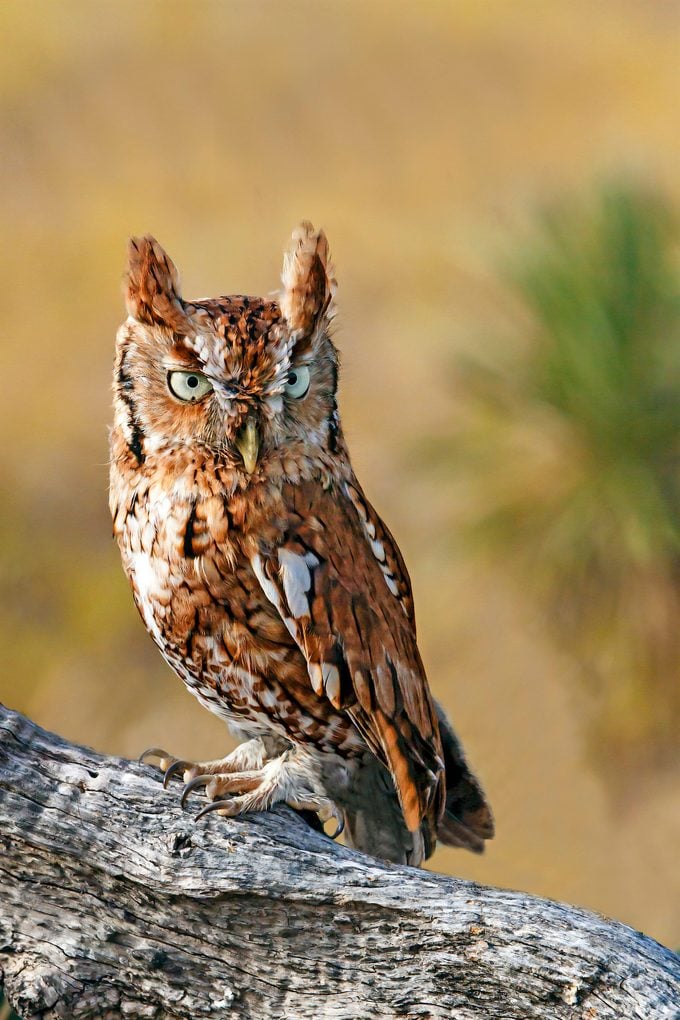
Appearance
The eastern screech-owl has both a gray and a red morph. About a third of easterns end up with the rufous coloring. Look for heavy streaks below and darker bars on the back, small ear-like tufts on the head and a yellow bill.
These two owls were considered the same species until the 1980s.
Discover 13 fun facts about owls you should know.
What Does a Western Screech-Owl Look Like?
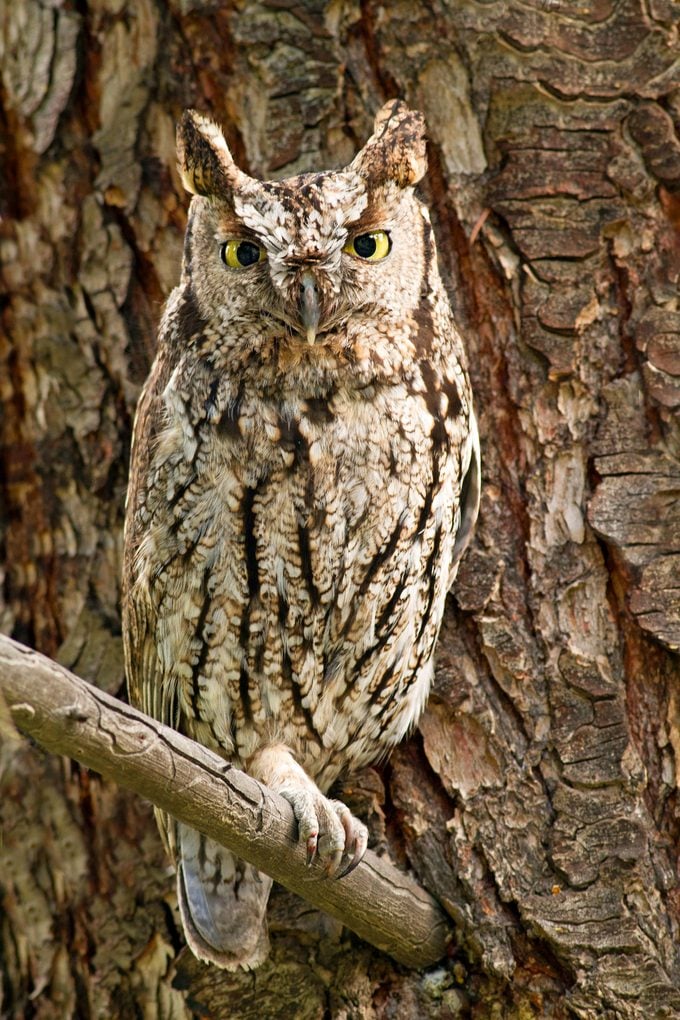
Appearance
The western screech-owl sports a gray look, but some birds are more brown. Essentially identical to the eastern’s gray morph, though westerns have darker bills.
Discover the amazing types of owls in North America.
Screech-Owl Size
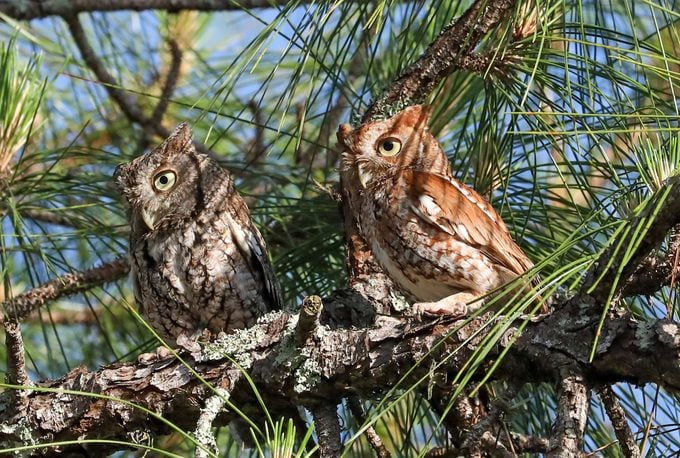
A screech-owl measures 8-1/2 inches long, or about the size of a beer glass, with a wingspan of 20 inches.
Don’t miss 15 outstanding pictures of owls.
Screech-Owl Nest and Eggs
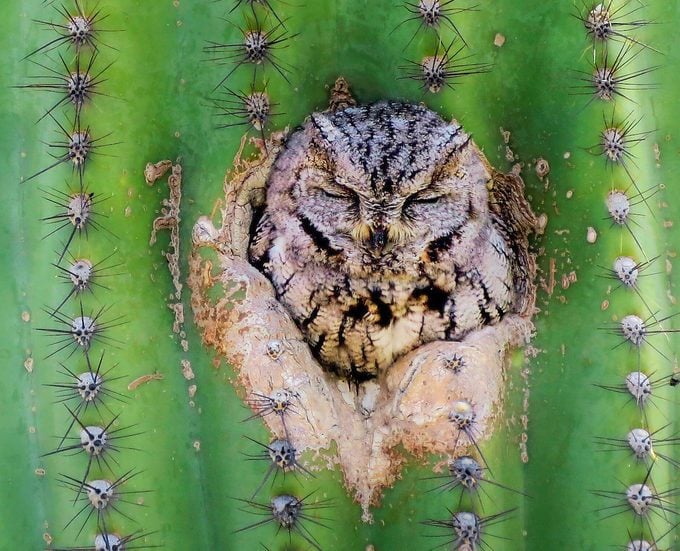
As they lose habitat to development, these owls need friendly places to call home. Both the eastern and western owls use nesting boxes. Hang up a box in your yard to encourage them to stick around. The birds will use the box for both roosting and nesting. The female screech owl lays four to five white eggs in debris at the bottom of a nesting cavity.
Baby Screech-Owl
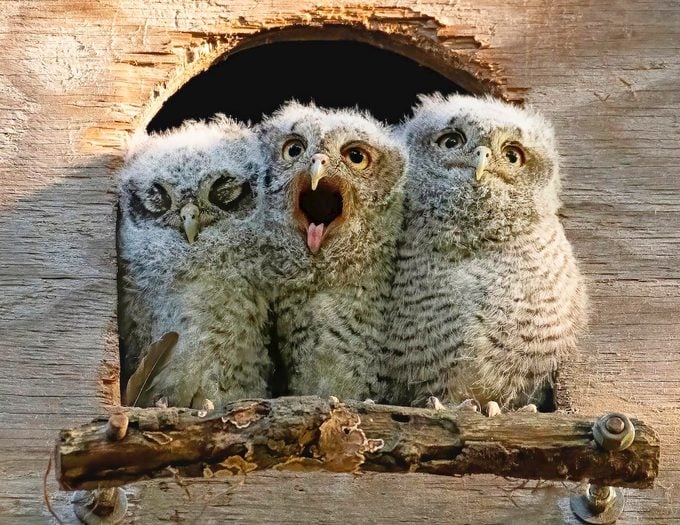
If you yearn for your very own owl visitors, it is possible to attract them to your yard. Birds & Blooms reader Janet Kirk of Fort Myers, Florida, has proof that patience pays off. She put up a nest box four years ago, and a female eastern screech-owl finally moved in. A month later, the owl’s mate showed up, and eventually Janet and her family watched three baby owls fledge.
Science writer and nature photographer David Shaw had a similar experience. “I watched as the pair of adult owls brought dead mice and voles, and occasional small birds to their growing chicks, which poked their fluffy, down-covered heads out into the open air.”
What Do Screech-Owls Eat?
Their diet consists of insects, including worms and moths, small mammals, other birds, fish, spiders and reptiles. These owls are fond of water, so get in the habit of looking for one at your bird bath or water feature at night. You won’t hear the bird arrive because an owl’s feathers are specially made for silence—the super soft surface and fringed edges keep prey (and us) from hearing them swoop in.
Meet the great horned owl: the greatest nocturnal hunter.
What Does a Screech-Owl Sound Like?
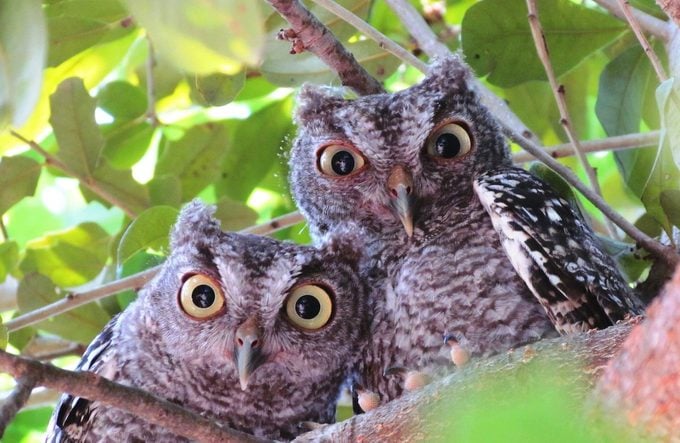
Hear what these birds sound like.
Bird songs provided by the Cornell Lab of Ornithology.
Eastern
The eastern screech-owl makes a tremulous wailing whinny or a long trill. May give a screechlike noise if defensive.
Western
The western owl makes an accelerating series of short whistles, or a very staccato hooting song, like a bouncing ball, with a short trill followed by a longer trill.
Learn how to spot the owl in your backyard trees.
Habitat and Range Maps
Look for these owls in any kinds of woodlands, as well as parks, backyards and deserts.
Eastern Range
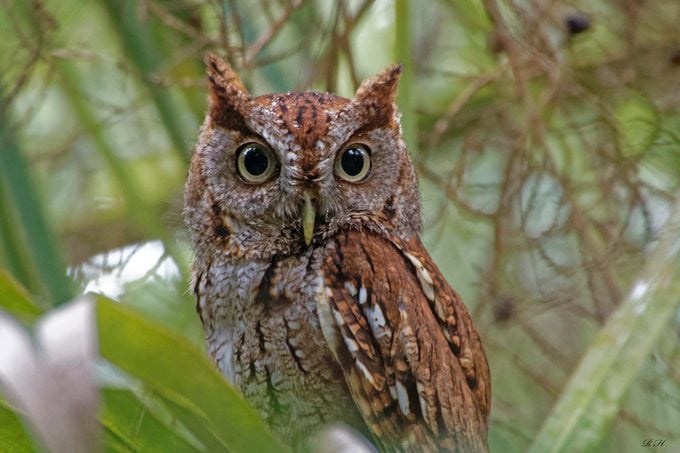
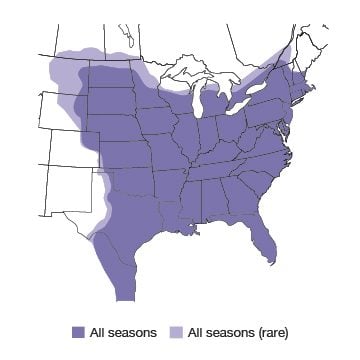
Look for these owls from the East Coast, reaching up into parts of the Northeast and down into Florida, out through the Great Plains.
Western Range
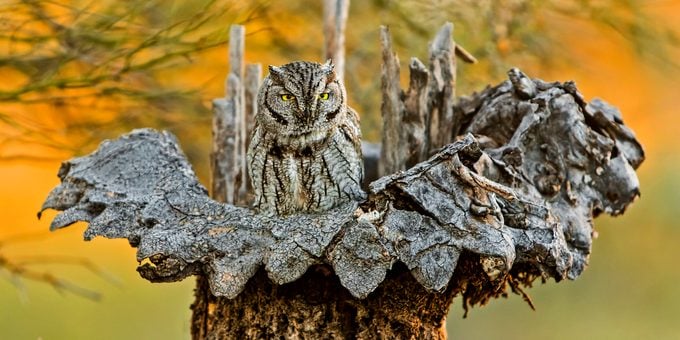
You can spot this species from Colorado and western Texas to the Pacific Coast, south into Mexico and north to parts of Alaska.
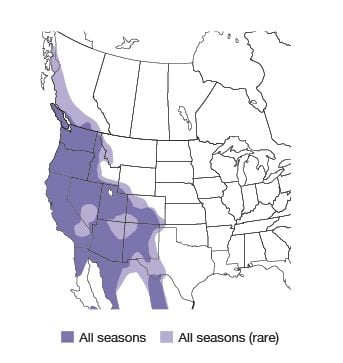
Range maps provided by Kaufman Field Guides, the official field guide of Birds & Blooms.
Next, learn about northern saw-whet owls.
Originally Published: October 07, 2022

