


Grow Late Summer and Fall Flowers for Hummingbirds

Updated: Dec. 22, 2023




When planning a garden, make sure you include these great fall flowers that attract hummingbirds. They bloom their best when the days get shorter.
Attract Hummingbirds With Late Summer Flowers
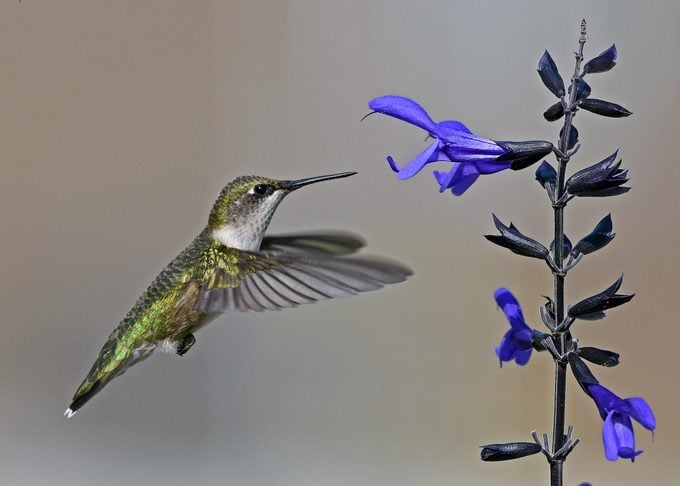
Hummingbird habits in autumn aren’t what they used to be—and that could be a good thing if you’d like to see more of the speedy little fliers whizzing around late summer flowers. “Things have shifted,” says John Rowden, director of community conservation at the National Audubon Society. Ruby-throated hummingbirds, the only species found in most of the eastern half of the country, used to depart colder regions in September. Now some of them are lingering into October, with sightings in November and even December, far outside their usual wintering range.
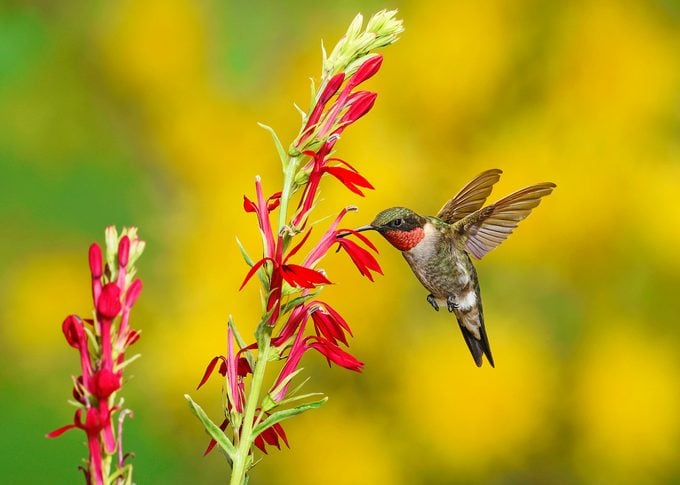
Also on the rise across much of the country are fall sightings of western hummingbirds like the coppery rufous, calliope, Anna’s and others. Scientists can’t say for sure what is causing the recent shift. But John notes that late fall hummingbirds “are actually spending a fair bit of time at feeders, guarding a feeder as a very valuable resource.”
While sugar-water feeders provide an easy feast, hummingbirds often take breaks from a feeder to visit nearby flowers or snap up tiny insects. And if a territorial hummingbird declares that a feeder is all mine, late-blooming plants give others a chance to eat. There are a variety of great hummingbird nectar plants that bloom their best when the days begin to get shorter.
Plant these sun-loving beauties in early summer, and watch them blossom and thrive when the migrating hummingbirds reach your yard.
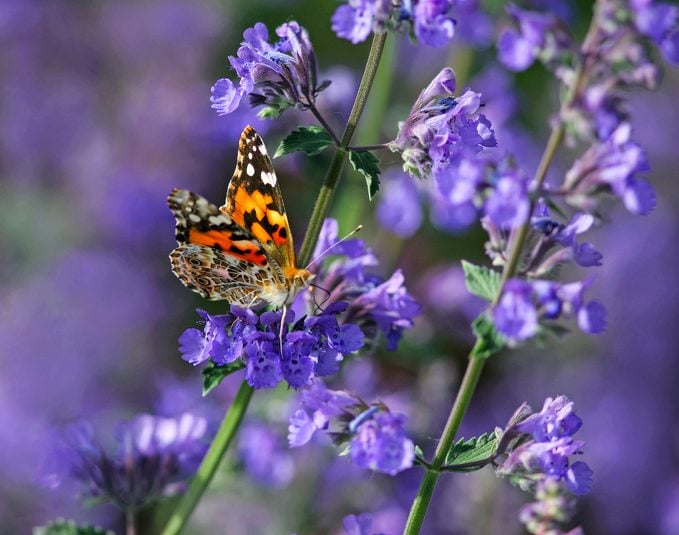
Walker’s Low Catmint
Nepeta racemosa ‘Walker’s Low’, Zones 4 to 9
Beautiful, reliable Walker’s Low catmint creates a 2-to-3-foot mound of flowers from May to November. Give it a haircut to slow down the blooms and fix floppy growth. Just cut about halfway down the stem.
Check out the top 10 purple flowers that attract hummingbirds.
Edging Lobelia
Lobelia erinus, Annual
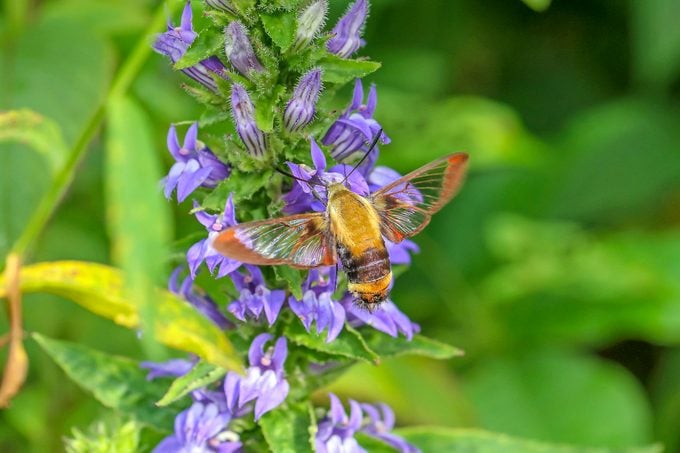
John gives a strong vote to two native perennial varieties: great blue lobelia (L. siphilitica) and cardinal flower (L. cardinalis). Annual edging lobelia, a popular container plant, blooms much longer than those perennials, making it ideal for extended fall color and nectar. Shear it back when it gets straggly to encourage reblooming.
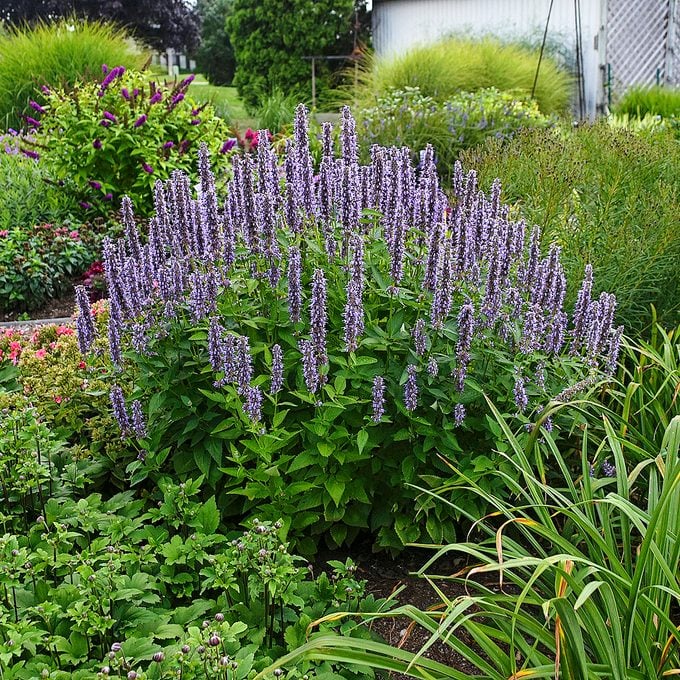
Blue Fortune Anise Hyssop
Agastache, Zones 3 to 8
A magnet for late summer bumblebees, butterflies and other pollinators, this sturdy, upright perennial blooms well into fall. Hybrids are less aggressive, but natives are biennial, self-seeding and just as pretty.
Hummingbirds will flock to a hummingbird mint plant.
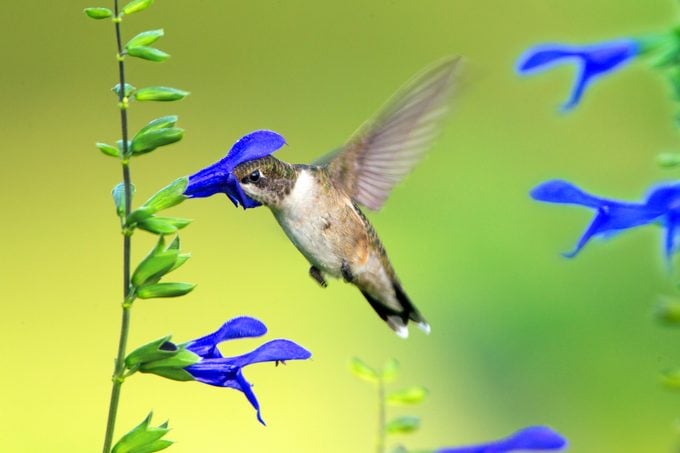
Blue Anise Sage
Salvia, Zones 7 to 11 or annual
All salvias are superb hummingbird plants. Two varieties, indigo spires and blue anise sage, zoom to 6 feet tall where they are winter hardy, and deer usually ignore their fragrant leaves.
Grow a fabulous garden for your flying jewels with the best perennials for hummingbirds.
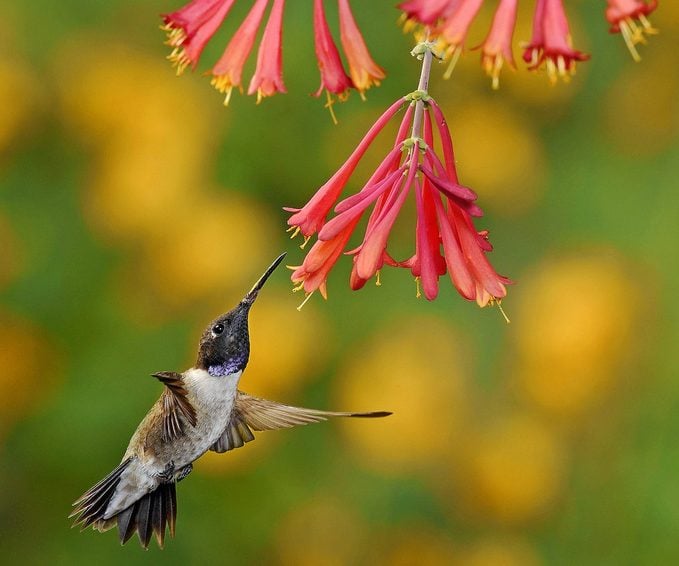
Coral Honeysuckle
Lonicera sempervirens, Zones 4 to 9
This semi-evergreen vine is a top pick among native plants that make hummers happy. Crowned with a mass of red-orange flowers from summer through early fall, it often puts out even more new fall flowers late into the season.
These are the best vines to grow for hummingbirds.
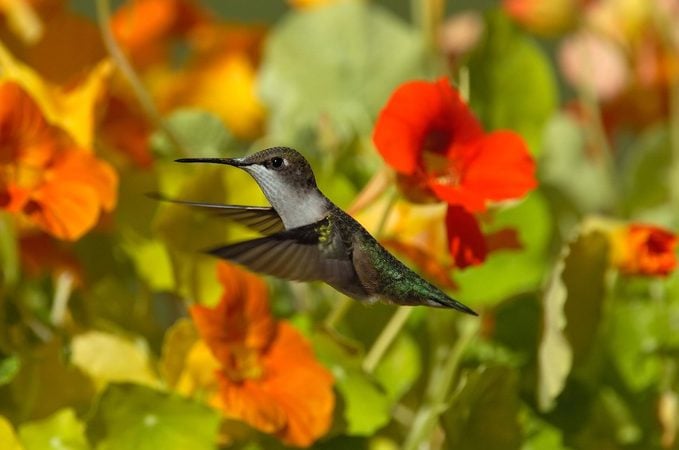
Nasturtium
Tropaeolum majus, Annual
Poke the big round seeds of these easy annuals into window boxes, containers and the front of your garden. Cool fall weather invigorates the plants, inducing a bounty of new blossoms that survive until the first frost! Hummingbirds love them, plus, they’re known for keeping bad bugs away.
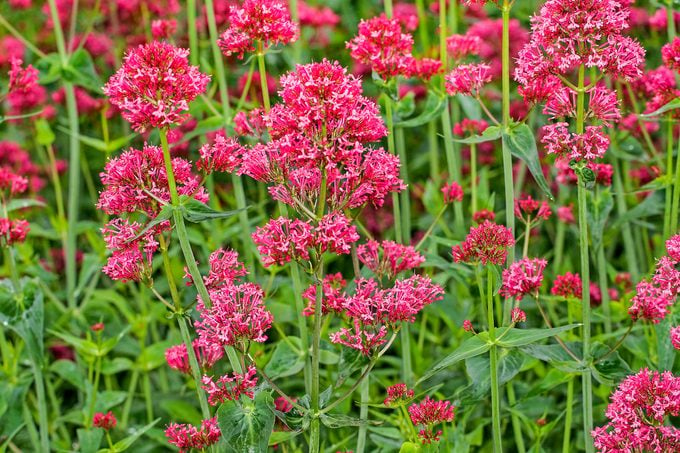
Jupiter’s Beard
Centranthus ruber, Zones 5 to 8
Hummingbirds adore these hot pink blooms, and this sprawling perennial keeps pumping out clusters of tiny bright flowers from summer through very late fall. Snip off fluffy seed head clusters to keep it blooming.
Attract more hummingbirds with these award-winning flowers.
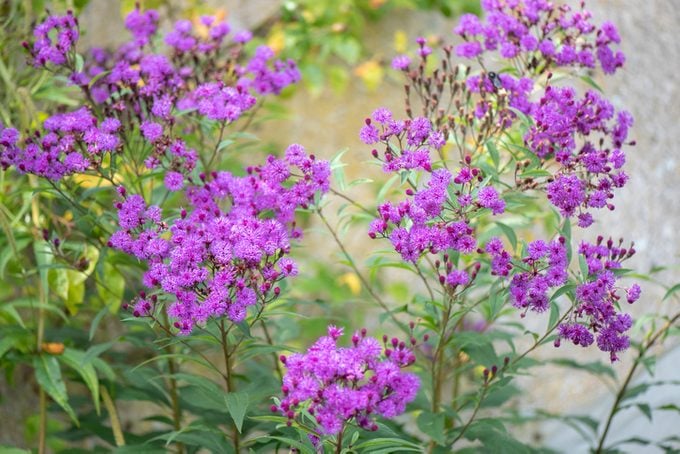
Ironweed
Vernonia spp., Zones 4 to 9
This towering fall wildflower starts blooming in late summer all over the country. There are many different species of ironweed, so seek out those native to your area to find the best fit.
Psst—these are the top 15 colorful hummingbird flowers to grow.
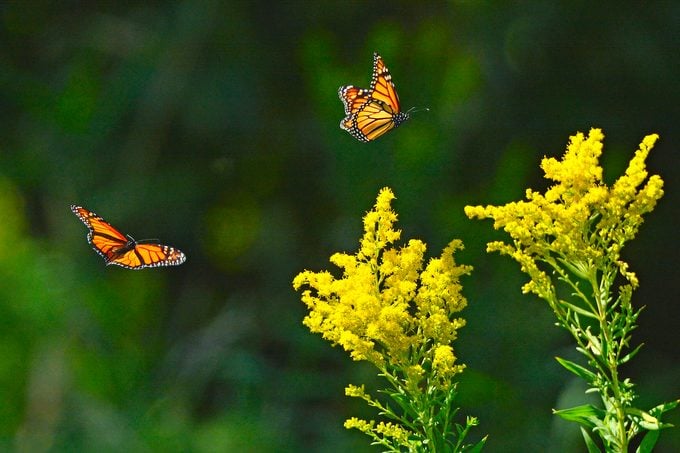
Goldenrod
Solidago spp., Zones 4 to 9
Goldenrod gets a bad rap, with people blaming it for seasonal allergies. In truth, very few people are actually allergic to these late summer flowers. Instead, they’re allergic to ragweed, which starts blooming around the same time. Plant all the goldenrod you want, with no fear of sneezing! Canada goldenrod (Solidago canadensis) is native to much of the country, but also try other varieties native to your area, too. The tall yellow spikes of this plant pair perfectly with the purple blooms of ironweed.
Learn how to create an ideal hummingbird habitat.
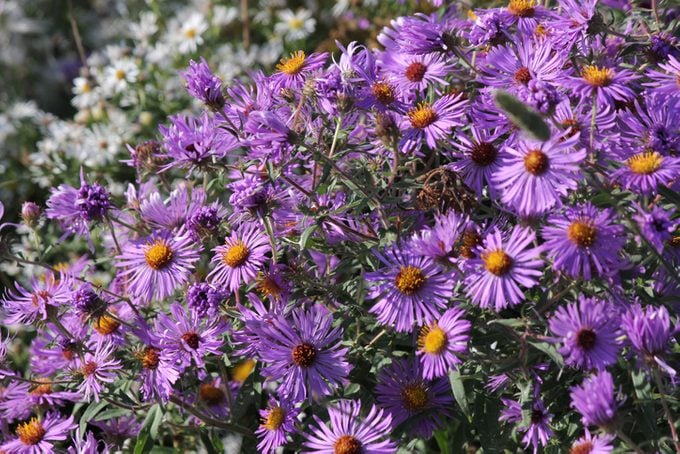
Aster
Aster spp., Zones 3 to 8
Fall blooming asters are one of the best nectar plants you can add to your garden. Carolina aster (Aster carolinianus) is one of my favorites down south, but in other areas you should focus on your own native selections, like New England aster (sometimes called Michaelmas daisy) or California aster.
Enjoy weeks of color with these long-blooming flowers for attracting butterflies and hummingbirds.
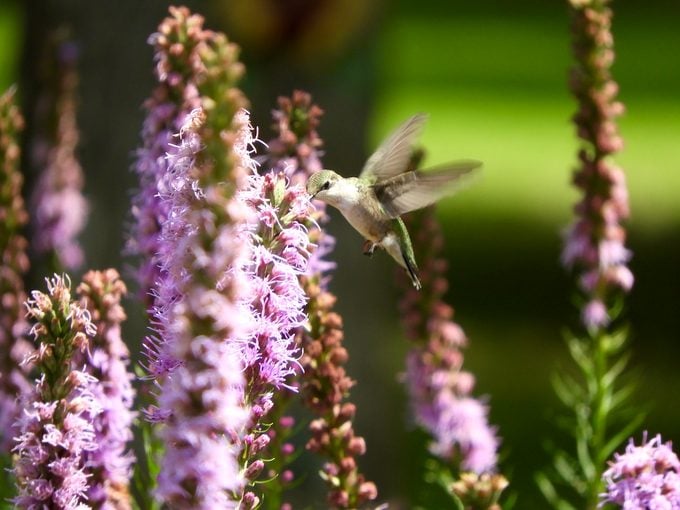
Blazing Star
Liatris spp., Zones 3 to 9
Another tall wildflower boasting stalks of purple, Liatris species are an especially good draw for butterflies as fall continues. The tiny fuzzy flower heads are perfect for tiny butterflies, but hummingbirds enjoy them too. There are 37 species of blazing star, so you’re certain to find one or more that will work well in your own garden.
Plant native firebush to attract hummingbirds.
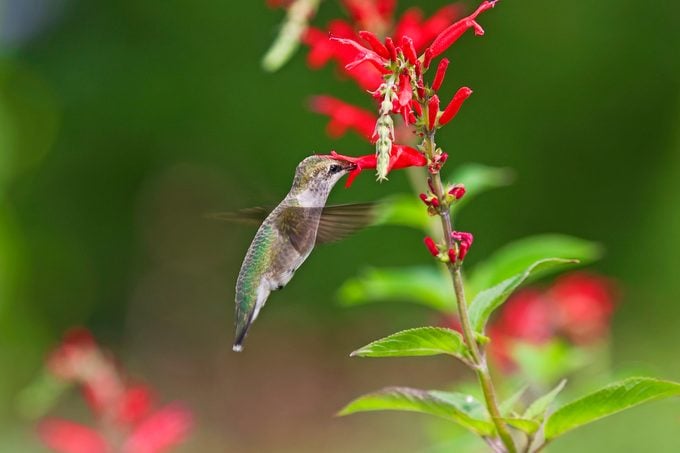
Pineapple Sage
Salvia elegans, Zones 8 to 11 or Annual
The hummingbird traffic at this late bloomer is incredible, and so is the size it reaches in a single season—up to 3 feet tall and wide! But growing pineapple sage is a bit of a gamble. If frost comes before it reaches full fiery bloom, it could kill the plant. To extend its life be sure to throw a bed sheet over the plant when frost is forecast.
Psst—we found the top 10 hummingbird plants that grow in shade.
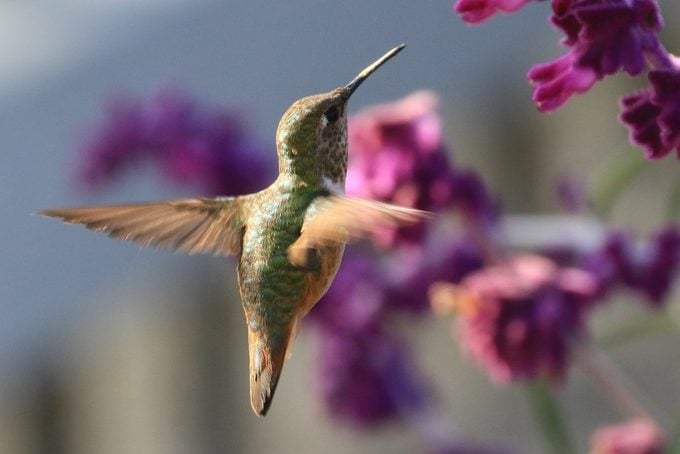
Mexican Sage
Salvia leucantha, Zones 8 to 10 or Annual
Mexican sage is another fall-bloomer that may be best for warmer climates. The foliage and flowers will be damaged by frost, and a sustained hard freeze will kill this plant entirely. In warmer areas, though, this champ blooms from late summer through to the following spring, and hummingbirds love it.
When you’re done looking at late summer flowers, learn how to make sugar-water for hummingbirds.
Originally Published: April 27, 2023

