


Top 10 Vines to Grow for Hummingbirds

Updated: Apr. 19, 2023




Attract hummers from the ground up by planting their favorite nectar-rich flowering vines. Grow these vines for hummingbirds.
If you want to grow vines for hummingbirds, you might think you need a lot of space. But even if your planting area is limited, it’s still possible to cultivate vining plants in containers on your patio, deck or balcony. But no matter where you decide to plant these hummingbird vines—in containers or right in the garden—place them where you’ll be able to enjoy the pollinators that will no doubt visit the nectar-filled blooms.
Check out the best perennials to grow for hummingbirds.
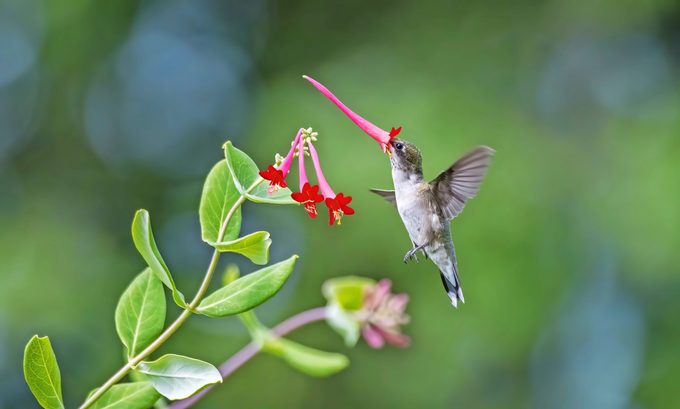
Trumpet Honeysuckle
Lonicera sempervirens, Zones 4 to 9
Hummingbirds, butterflies and bees love native honeysuckle. Planting it in full sun or partial shade and moist soil will encourage the best flowering. The orange-red, trumpet-shaped flowers appear in clusters amongst the blue-green leaves, which persist through winter in southern states.
Why we love it: Unlike a lot of other plants, trumpet honeysuckle grows in clay soil and near black walnut trees.
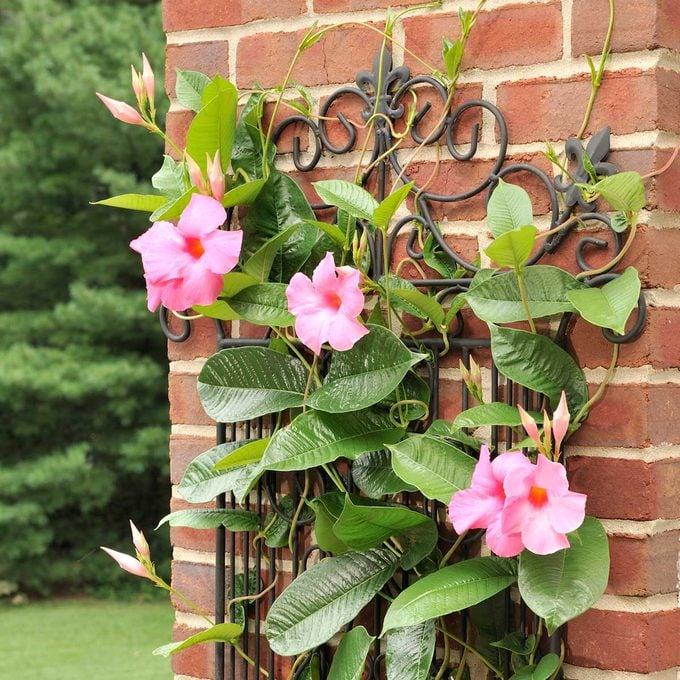
Mandevilla
Mandevilla, Zones 10 to 11 or annual
A drought-tolerant hummingbird vine that can be grown in a container, hanging basket or right in the garden, mandevilla thrives in full sun to part shade and well-drained soil. You’ll find many new cultivars with white, pink, maroon, crimson and bicolor flowers.
Why we love it: You can overwinter mandevilla indoors in a warm, sunny location.
Grow these potted flowers and plants that attract hummingbirds.
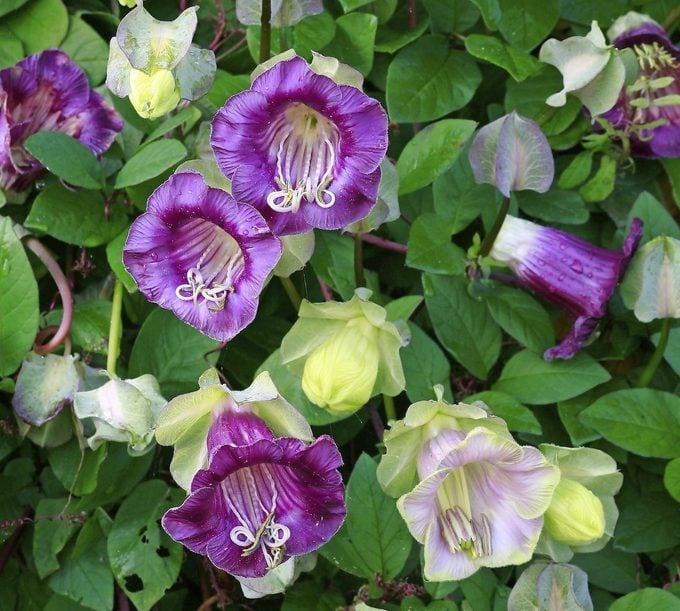
Cup and Saucer Vine
Cobaea scandens, Annual, Perennial in zones 9 to 11
A vigorous grower, give this vine a sturdy support to climb and display its cup-shaped, aromatic flowers. The blooms open green and then mature to purple, lasting about four days. Grow in full sun and provide a bit of afternoon shade in hotter regions.
Why we love it: The flowers have a sweet musky fragrance and are reportedly pollinated by bats.
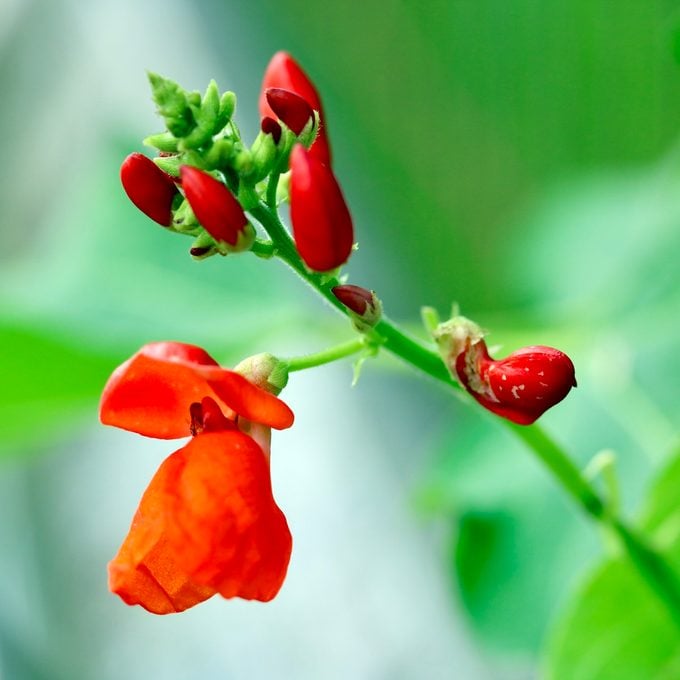
Scarlet Runner Bean
Phaseolus coccineus, Annual
Grow scarlet runner bean, a hummingbird favorite vine, in full sun in your vegetable or flower garden. You can train these long vines on a trellis, arbor or fence. Regular harvesting will keep this vining plant producing more bean pods and its scarlet colored flowers in full bloom.
Why we love it: The red blooms will brighten the landscape and attract hummingbirds. Note that the beans are edible.
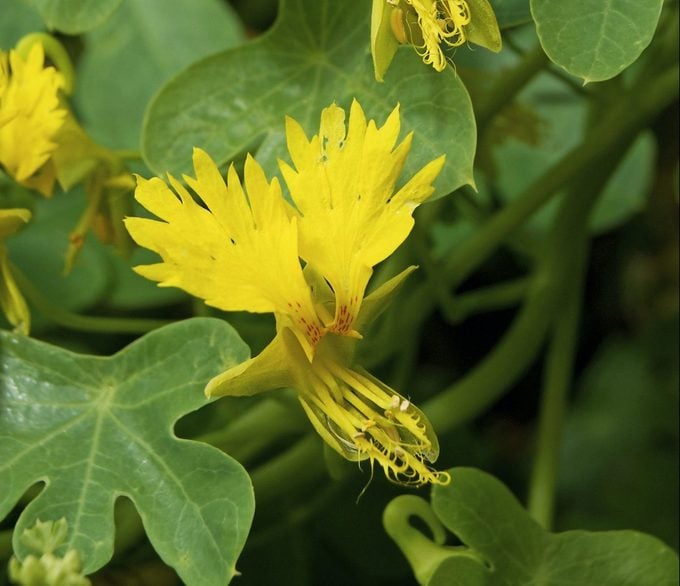
Canary Creeper
Tropaeolum peregrinum, Zones 9 to 10 or annual
Take a close look at the bright yellow flowers and you’ll see the inspiration for the common name. Grow this climbing nasturtium in full sun to part shade with moist, well-drained soil. Allow it to scramble through other plants, train it on a trellis or grow it in a hanging basket.
Why we love it: The sunny yellow flowers are super showy and fragrant.
Discover the top 10 annuals that attract hummingbirds.
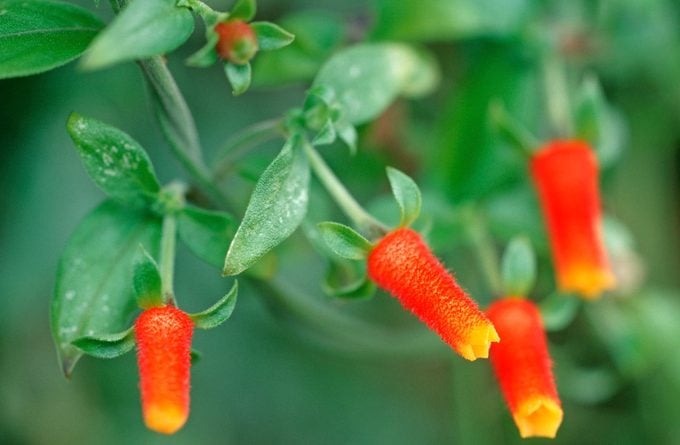
Candy Corn Plant
Manettia luteorubra, Zones 10 to 11 or annual
This noncaloric candy corn is fun for gardeners of all ages. The orange tubular flowers on these vines for hummingbirds are tipped in yellow, making them look like the Halloween treat. Grow it in full sun to light shade and moist, well-drained soil.
Why we love it: When the outdoor weather is too harsh, the candy corn plant can be grown indoors as a houseplant.
Psst—skip these flowering plants that hummingbirds don’t like.
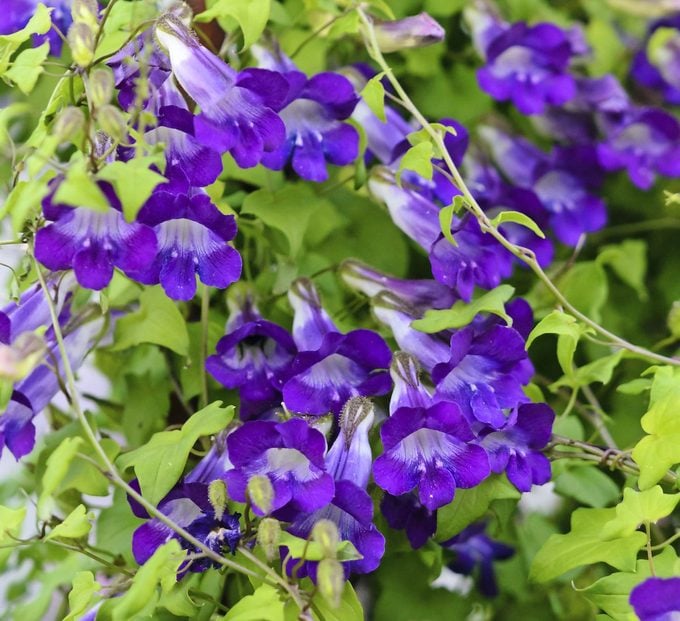
Figwort
Asarina scandens, Zones 9 to 10 or annual
Brighten the summer and fall garden with the indigo, violet, pink or white flowers of figwort. Grow it in full sun to part shade on a trellis or allow the stems to spill over the edge of a hanging basket.
Why we love it: The flowers resemble snapdragons, which is why figwort is occasionally referred to as climbing snapdragon.
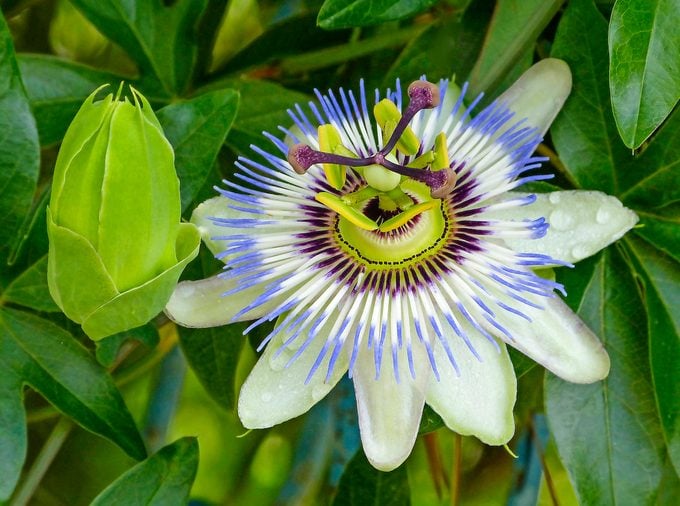
Purple Passionflower
Passiflora incarnata, Zones 5 to 9
Its unique flowers make this vine a standout in a sunny spot in the garden or a container. You can even overwinter it as a houseplant. Also called maypop, these quick-spreading vines for hummingbirds may need a bit of taming. Avoid using other species invasive to your area.
Why we love it: It’s native to the southeast U.S. and also attracts butterflies.
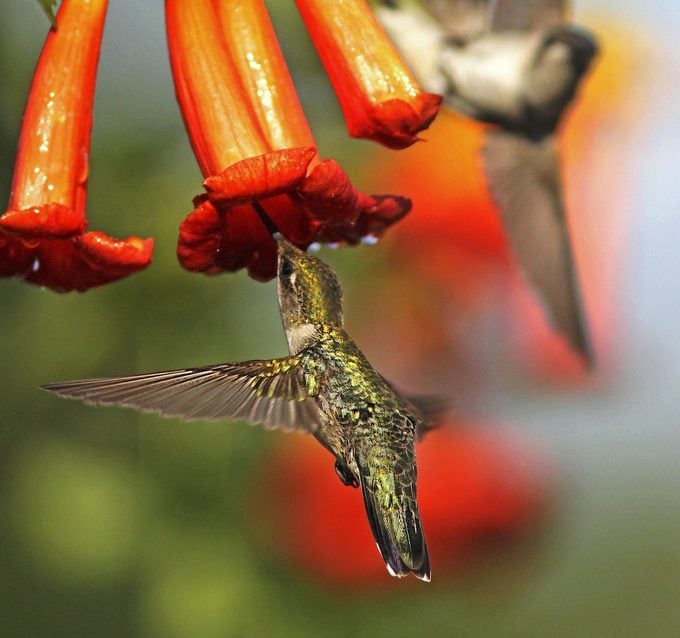
Trumpet Vine
Campsis radicans, Zones 4 to 9
This is the most classic and well-known hummingbird vine. Native to the eastern U.S. and Canada, trumpet vine thrives in full sun and poor soils. Avoid excess fertilizer because it can prevent flowering. Plant it in confined areas or mow suckers to keep it in check. It’s important to note that it can be weedy or invasive in some southeastern states.
Why we love it: The orange-red trumpet flowers are a hummingbird favorite.
Plant native firebush to attract hummingbirds.
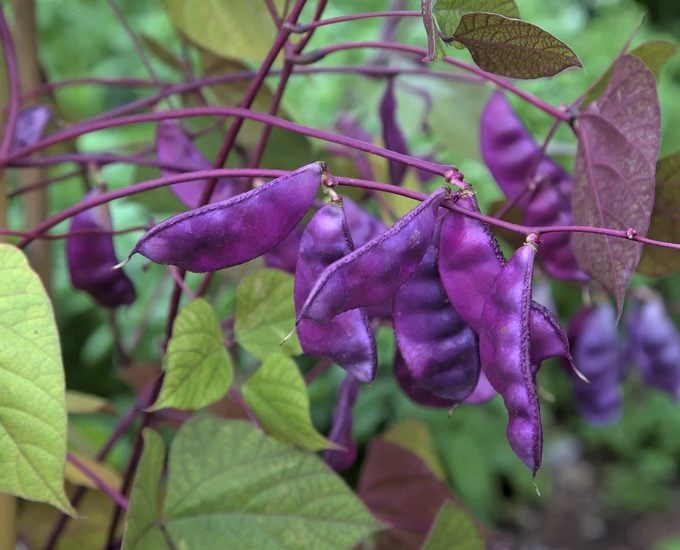
Hyacinth Bean Vine
Dolichos lablab, Zones 10 to 11 or annual
This purple beauty will quickly cover a trellis or fence and its green leaves, white, pink or purple-pink flowers and purple pods provide season-long color. Grow hyacinth bean in full sun to partial shade. Despite being an annual, it will often reseed in the garden.
Why we love it: The fragrant blooms are a treat for the senses. Plus, once established, these vines for hummingbirds are drought-tolerant.
Hummingbirds will flock to a hummingbird mint plant.
3 Tips for Selecting Proper Vine Supports
Originally Published: April 19, 2023

