


African Violet Care 101: Expert Growing Tips

Updated: Mar. 03, 2023




It's a popular houseplant, but can sometimes be tricky to grow. Try these watering, repotting and fertilizer tips for African violet care.
Our editors and experts handpick every product we feature. We may earn a commission from your purchases.
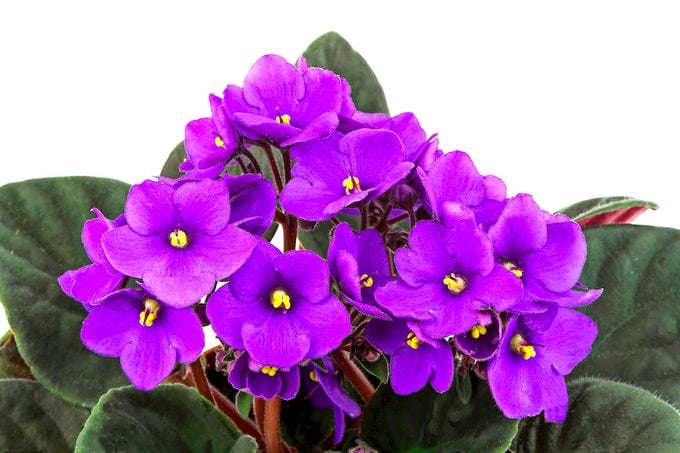
Some people find growing African violets to be a piece of cake. Their violets thrive with little special care, blooming repeatedly and creating fresh new fuzzy leaves on a regular basis. Others struggle, never seeing a bloom, moaning over spotted leaves, and eventually wind up chucking their plants in the trash. If you’re in the first group, you don’t need these tips. If you’re in the second group, try these troubleshooting tips for African violet care.
- Common name: African violet
- Scientific name: Saintpaulia ionantha
- Light needs: Bright, indirect light
- Watering needs: Water the soil, never the leaves, or bottom water
- Soil: Moist well-draining soil
Check out the top 10 blooming houseplants to grow indoors.
African Violets Not Blooming
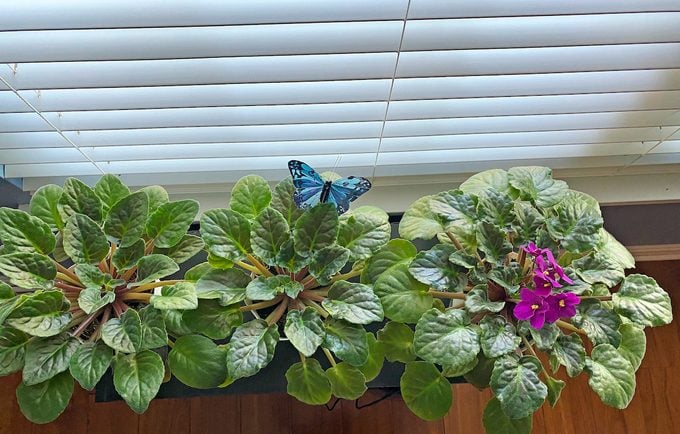
“I have three African violets but only one of them blooms. How can I get the other two to produce?” Peggy Hinds of Louisville, Kentucky.
Horticultural expert Melinda Myers: Although African violets are popular flowering gift plants that are fairly easy to care for, I encounter many gardeners with the same situation as yours. Your plants appear to be receiving the same amount of light, water, humidity and fertilizer, so we will rule these out as the cause.
If they are different cultivars of African violets, that could explain the difference. Some varieties are more prolific and frequent-bloomers than others. Recent transplanting into a larger container can also delay flowering until the roots have a chance to fill the pot, which helps to encourage flowering. Lastly, it’s often just an individual plant’s response to the growing condition—in that case, you’ll just have to wait for the others to bloom.
Did you know violets are the February Birth Flower?
African Violets Need Bright Indirect Light
African violets are native to rainforests in the mountains of eastern African countries like Tanzania. They are low-growing plants, thriving in the shade of other vegetation. In their native environments, direct light never touches their leaves. Your African violets will do best in an environment that mimics this.
Provide bright light, but never direct sun. In a sunny window, use a sheer curtain to protect the plant from direct sun. If your plant isn’t flowering, chances are it’s not getting enough light. Experiment with different settings to find the best light exposure (bright artificial light can be effective, too).
Get expert tips for overwintering begonias as houseplants.
Watering African Violets
In the wild, African violets grow in humid environments. They like potting soil that’s consistently moist but never soggy. If your home is dry, try filling a shallow dish with stones and set the pot on top. Fill the dish with water that will provide humidity as it evaporates. Never let the roots sit in water, though, or they’re likely to rot.
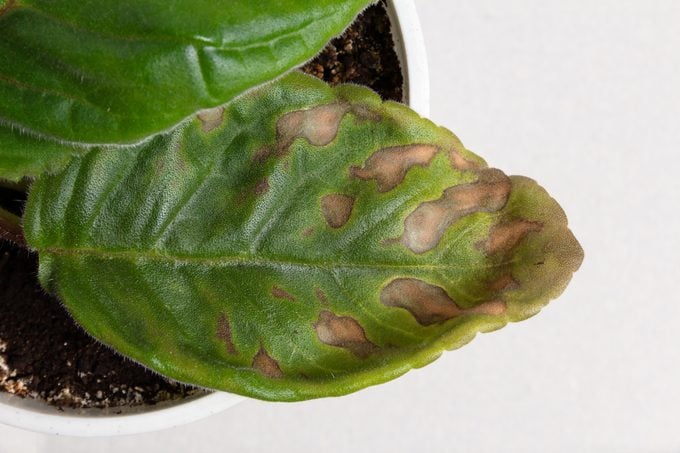
Many people prefer to use room temperature water, since cold water can shock the plant. If you water African violets from the top, use a narrow-spout watering can to get the water directly to the soil. Water that sits on leaves can cause spots. Allow the water to drain through, and get rid of any excess. Setting the pot in the sink first is the easiest way.
Psst—we found 10 seriously cool succulents that make great houseplants.
Temperature
Make note of the climate in your home. African violets need temperatures of at least 60 degrees, and dislike sudden temperature changes and drafts.
Discover the 8 best indoor plants for mental health, according to wellness experts.
Repotting and Fertilizer Needs
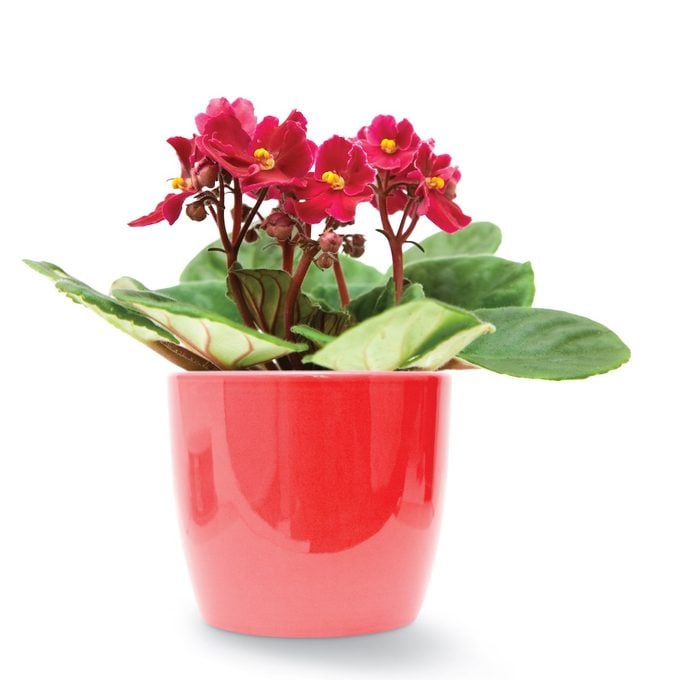
Once you’ve figured out the right light and watering schedule for your plant, don’t mess with success! Consider re-potting once a year if the plant has outgrown its pot, but remember they flower best when roots are pot-bound. The same goes for fertilizing. Do not overfeed your plant. Follow the directions on a quality fertilizer made for African violets. Liquid fertilizers usually don’t need to be used more than once a month. Other regular maintenance includes gently removing dead leaves and flowers, and keeping an eye out for indoor plant bugs.
African Violet Propagation
Once you’ve mastered growing an African violet successfully, you’ll notice your plant is producing “suckers”. These are baby plants growing out from the main stem, and are one way that African violets propagate. To maintain the health of your plant, remove these suckers when you notice them. You can discard them, or re-pot them to make more African violet plants for your friends!
Next, check out the top 10 plants to propagate that grow from cuttings.

Originally Published: March 03, 2023

