Top 10 Old Fashioned Favorites
These blooming beauties have stood the test of time. Often when people mention their favorite flower, one of these classics is named.

Photo: RDA GID
Bleeding heart
Delicate-looking foliage and heart-shaped flowers make this bloom a captivating spring favorite. Long-lasting blossoms open in late spring, covering the plants with charming pendant flowers in shades of rose pink and creamy white.
The plants are dormant by midsummer, so they're best planted at the back of a border, where later-blooming flowers can camouflage the dying foliage. Waiting to cut the plant back enables it to self-seed, ensuring an even more heartwarming display the following spring.
- Common Names: Bleeding heart.
- Botanical Name: Dicentra spectabilis.
- Hardiness: Zones 3 to 9.
- Bloom Time: Late spring.
- Size: 2 to 3 feet high, 2 feet wide.
- Flowers: Rose pink, white or bicolor.
- Light Needs: Partial to full shade. Can take more sun if the soil is moist.
- Growing Advice: Nursery-grown potted plants can be added to gardens whenever available. Sow from seed in spring after the danger of frost has passed. Take care to protect brittle roots when dividing. Will freely self-seed.
- Prize Picks: Alba has white blooms.

Photo: RDA GID
English primrose
This fragrant flower attracts bees, butterflies and birds. In spring, tight clusters of colorful blooms appear on the stems with dark green foliage.
- Common Names: English primrose.
- Botanical Name: Primula vulgaris.
- Hardiness: Zones 4 to 8.
- Bloom Time: Early spring to summer.
- Size: Up to 8 inches high and 15 inches wide.
- Flowers: Blooms in clusters. Fragrant.
- Light Needs: Partial shade, but can tolerate full sun if soil remains moist.
- Growing Advice: Keep it well-watered and in a compost-rich soil. Make sure that it gets a little shade for a better flush of blooms.
- Prize Picks: Commonly sold in mixes (Orient Star, Pageant Mix, Spectrum Series), but also available individually as blue-violet, pink, white, red, pale yellow, and bright yellow.

Photo: RDA GID
Forget-me-not
This flower makes sure you will remember it year after year. It readily reseeds itself and spreads in your flowerbeds-even to the point of being invasive. Combine it with spring bulbs for a show of color after the bulb's blooms fade.
- Common Names: Forget-me-not.
- Botanical Name: Myosotis sylvatica.
- Hardiness: Zones 5 to 9.
- Bloom Time: Spring to early summer.
- Size: 6 inches to 12 inches high and wide.
- Flowers: Blue.
- Light Needs: Full sun with daily shade or partial shade.
- Growing Advice: Start seeds indoors in early spring and sow after danger of frost, or begin seed outdoors after threat of frost has passed.
- Prize Picks: The award-winning Sylva series from Europe is very worthwhile (Blue Sylva, Rose Sylva, and Snow Sylva).

Photo: Park Seed, www.parkseed.com
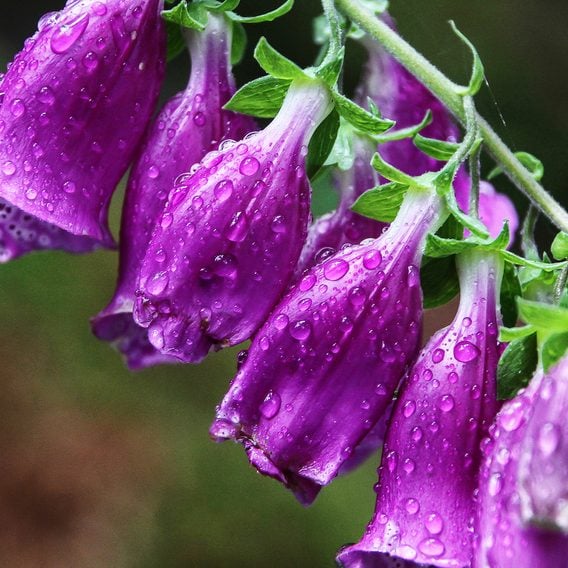
Foxglove
In ancient times, these tall, graceful flowers were believed to be favored by fairies. Today, they're prized for adding storybook charm to the garden.
Foxgloves are biennials or short-live perennials. They generally don't flower until one season after they're planted, but they self-sow readily. If spent flower heads are left in place, the seeds will distribute themselves, producing a new crop of "volunteers" each spring.
- Common Names: Foxglove.
- Botanical Name: Digitalis.
- Hardiness: Zones 3 to 10.
- Bloom Time: Spring through summer.
- Size: 18 inches to 6 feet high.
- Flowers: Tubular, bell-shaped flowers of white, cream, yellow, apricot, pink, purple, red, golden brown, and coppery rose.
- Light Needs: Partial shade.
- Growing Advice: In spring, plant seeds or transplants in garden for blooms the following season.
- Prize Picks: If you favor cut flowers, the Excelsior Hybrids produce well in various pastel colors. Foxy has big bells on a shorter, 2-foot-tall plant.

Photo: Park Seed, www.parkseed.com
Hollyhock
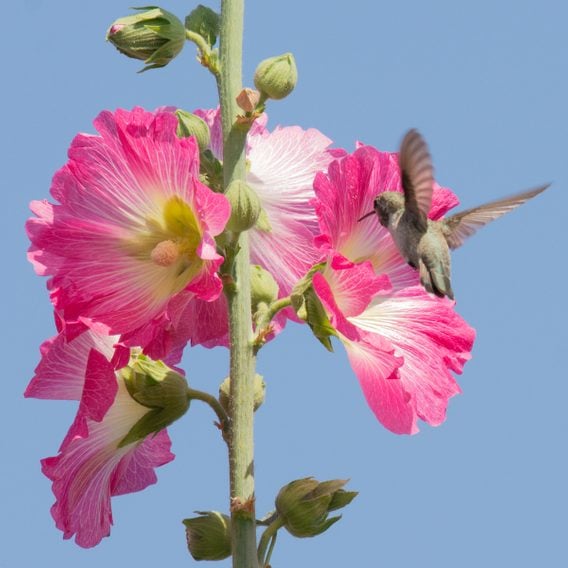
Up, up, and away! The stately blooms of hollyhock will take just about any garden to new heights. These old-time favorites unfurl richly colored flowers on lanky stems that can grow over 8 feet tall.
Hollyhocks are a biennial, which means they grow foliage on short stems their first year, but don't flower until the following year. To have a continuous hollyhock show, plant seeds in the same area for two consecutive years.
- Common Names: Hollyhock.
- Botanical Name: Alcea rosea.
- Hardiness: Zones 3 to 9.
- Bloom Time: Early to midsummer.
- Size: 3 to 8 feet high, 1 to 3 feet wide.
- Flowers: Funnel-shaped or double blooms in numerous bright and pastel hues including red, pink, yellow, white, and purple.
- Light Needs: Full sun.
- Growing Advice: Plant seeds in midsummer for blooms the following year. Or force blooms during the first summer by sowing indoors in late winter and transplanting in early spring.
- Prize Picks: Try Chater's Double for double blooms or Nigra for striking, dark maroon flowers that appear almost black.

Photo: Dutch Gardens, www.dutchgardens.com
Oriental Poppy
Even before they bloom, Oriental poppies attract plenty of attention. AS the large fuzzy buds emerge atop the plant's lanky stems, it's hard not to wonder what will unfurl next. When the flowers arrive, the bright papery blooms are definitely worth the wait...and the effort.
Oriental poppies can be difficult to grow, since they don't handle transplanting well and require a sunny site with soil that drains well. But in the right location, these exotic-looking flowers fill in quickly and reward you with years of enjoyment.
- Common Names: Oriental poppy.
- Botanical Name: Papaver orientale.
- Hardiness: Zones 3 to 8.
- Bloom Time: Late spring to midsummer.
- Size: 18 to 36 inches high.
- Flowers: Red, pink, orange, plum, or white shallow cups.
- Light Needs: Full sun to partial shade.
- Growing Advice: It's best to plant container-grown poppies during the late summer dormant season. Apply mulch after the ground freezes to protect plants through the first winter.
- Prize Picks: Choose a lower-growing cultivar like Helen Elizabeth to place at the edge of the border or in containers; it can also be planted in front of taller Oriental poppies such as Patty's Plum.

Photo: RDA GID
Peony
Don't be fooled by the peony's fragile appearance. If undisturbed, these hardy plants can survive for more than a century with little or no care. Since they need cold weather to produce flowers, they grow best in areas that experience cold winters.
There are hundreds of peony hybrids, offering a wide range of sizes and colors. Herbaceous peonies completely die back to the ground in fall, then reemerge in spring. They benefit from stakes or rings to keep the plants from flopping over under the weight of their large, heavy blooms.
- Common Names: Peony.
- Botanical Name: Paeonia lactiflora.
- Hardiness: Zones 3 to 8.
- Bloom Time: From mid-spring to early summer.
- Size: 16 inches to 3-1/2 feet high, 16 inches to 3-1/2 feet wide.
- Flowers: White, cream, pink, salmon, purple and red; saucer or cup-shaped single or double flowers 2 to 8 inches across.
- Light needs: Full sun.
- Growing Advice: Dig and divide peonies in the fall. Plant rhizome in a well-prepared location with the eyes (buds) no more than 1 to 2 inches below the soil. Plants are available at many garden centers and can be planted throughout the season.
- Prize Picks: The fragrant and early-flowering Festiva Maxima tolerates heat; it produces large gorgeous double white blossoms flecked with pink.

Photo: RDA GID
Carnation
One of the world's oldest cultivated flowers, the carnation is appreciated for its ruffled appearance, pleasant scent, and extended blooming period. It's one of the most popular cut flowers because of its wide array of colors.
- Common Names: Pink, dianthus, carnation.
- Botanical Name: Dianthus.
- Hardiness: Zones 3-10, depending on cultivar.
- Bloom Time: Spring to summer.
- Size: 4 to 36 inches high and wide, depending on cultivar.
- Flowers: Single, double or semi-double blooms classified by coloring as one of the following: solid ("self"); striped or flecked in contrast ("fancy"); marginally contrasted ("picotee"); bicolor, which have a contrasting eye; and contrasting centers matching margins ("laced"). Colors include white, yellow, rose-pink, deep pink, crimson, and many hues in between.
- Light Needs: Full sun.
- Growing Advice: Use stone chips, gravel or sand as mulch rather than organic material to avoid disease.
- Prize Picks: Desmond's deep red, rose-like beauties will make a striking addition to your patriotic garden. Itsaul White and Her Majesty are good whites.

Photo: RDA GID
Snapdragon
Despite its intimidating name, snapdragons are nothing but sweet. With spikes of unusual, five-petaled flowers in a range of solid and bicolored hues, these are distinctive and easily recognized by flower lovers everywhere.
- Common Names: Snapdragon, toad's mouth, lion's mouth, dog's mouth.
- Botanical Name: Antirrhinum majus.
- Hardiness: Annual.
- Bloom Time: Summer to fall; in areas with mild winters and hot summers, snapdragons will bloom in winter and spring.
- Size: 6 inches to 4 feet high, 6 inches to 2 feet wide.
- Flowers: Ruffled, tubular blooms of white, pink, purple, red, orange, and yellow; some hybrid blooms are bicolored.
- Light Needs: Partial to full sun.
- Growing Advice: Seeds can be planted directly in flowerbeds as soon as the soil is workable. Or purchase nursery-grown, hardened-off snapdragons for spring planting.
- Prize Picks: The Rocket series produces heat-tolerant, especially tall snapdragons with flowers in a variety of colors that look great in the garden and in bouquets. Liberty and Sonnet cultivars are intermediate in size and don't need staking. Bells and Floral Showers are dwarf varieties good for pots.

Photo: RDA GID
Sweet Pea
This fragrant flower is easy to grow and provides a season's worth of cut flowers. In fact, sweet peas perform best if you harvest bouquets often. Like the garden peas, sweet peas prefer the cooler weather of spring and early summer, gradually declining under hot August skies.
- Common Names: Sweet pea.
- Botanical Name: Lathyrus odoratus.
- Hardiness: Annual.
- Bloom Time: Varies by region; spring and summer through early autumn.
- Size: 4 to 12 feet high.
- Flowers: Wide variety of colors including pink, purple, salmon, blue, red and white.
- Light Needs: Full sun to partial shade.
- Growing Advice: Plant presoaked seeds 1 inch deep and 6 inches apart in garden, or start seeds indoors and transplant outside after about 6 weeks.
- Prize Picks: Royal Mix and Old Spice Mix are fragrant and heat tolerant. Also recommended: Captain of the Blues, which is prized for its lavender to purple flowers.