


Help the Native Bees in Your Backyard


Updated: Mar. 22, 2024




Learn important facts about native bees. Plant your garden with native bees in mind and help these powerful pollinators thrive.
On This Page
Native Bees: What Gardeners Need to Know
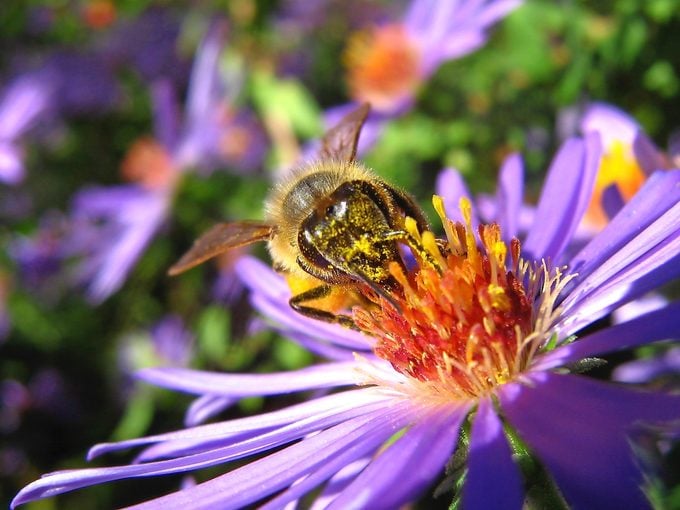
In the world of bees, honey bees get a lot of attention and right now, massive numbers of honey bees are disappearing. This phenomenon, known as colony collapse disorder, threatens both beekeeping operations and the pollination of crops and natural landscapes.
Although colony collapse doesn’t impact native bees (honey bees originated in Europe), the possible causes behind colony collapse, like pesticide use, habitat loss and disease, easily could. Native bee populations are seeing declines, though not as widely documented as those of honeybees, says Mace Vaughan, co-director of the Pollinator Conservation Program of the Xerces Society for Invertebrate Conservation.
Among native bumblebees, 30 percent of species have experienced significant drop-offs that could lead to extinction. Concern about colony collapse has brought attention to the critical pollination role of all bees and their plight, and also spotlighted what people can do to help bees, says David Mizejewski, a naturalist with the National Wildlife Federation.
To create a yard that’s safe and attractive to native bees, it’s important to understand these pollinators first.
Native Bees Hide in Plain Sight
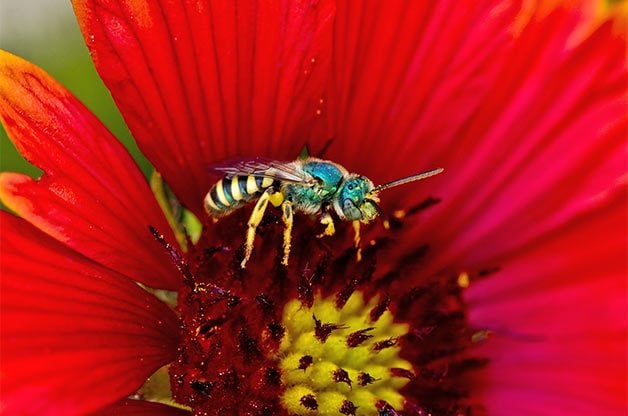
Native bees can look different from how we often visualize these flying insects. “Most of the things we learn about bees as kids aren’t true about native bees,” David says.
They exist in an array of colors, including metallic green, brown, black and gray, as well as the stereotypical yellow-and-black stripes. Native bees can be quite small and are often mistaken for flies.
It’s also useful to note that native bees tend to be docile. “Many can’t sting humans,” says Heather Holm, the author of Pollinators of Native Plants. “Their stingers can’t even pierce our skin.”
Learn how to help bees and pollinators in 10 easy ways.
Native Bees Nest in the Ground
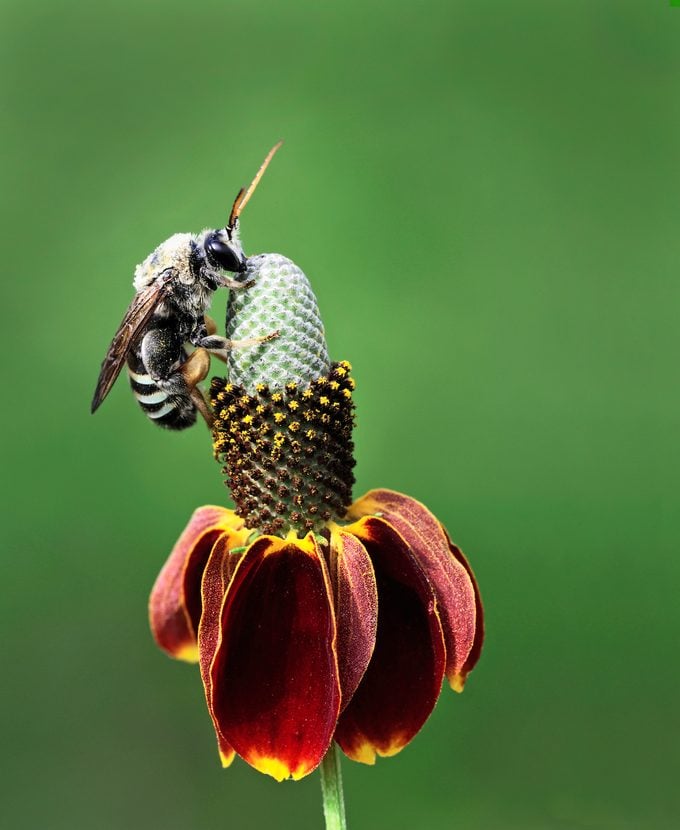
Most solitary bee species nest in the ground; the rest use tunnels like hollow stems or burrow into dead wood. Inside these nesting sites, the female bee creates a pollen loaf, lays a single egg on it, then starts a new nesting site and repeats the process.
To create a safe habitat for this type of nesting, it’s essential to have areas of undisturbed and loose ground. Bees tend to select south-facing slopes with well-drained soil, which can be warmer and drier, and make for good nesting sites. Heather suggests forgoing mulch in spots where you’d like to see bees nest. “Many of the bees are small and can’t get through a layer of mulch,” she says.
When cutting back your plants in fall, leave behind foot-long lengths of pithy or hollow stems for the tunnel nesters; cavity-nesting bees will also use those stems the next year. You can also create natural bee houses by bundling together hollow stems and hanging them in the yard. Fallen wood, brush piles or old fence posts also provide good nesting sites.
Learn what to do if you see a bald-faced hornet nest.
Native Bees Are Really Busy— Help Them Out
Most female native bees are active as adults for two to six weeks. During that time, they are collecting pollen to create as many loaves and lay as many eggs as possible. To make foraging for pollen less arduous, provide a diverse selection of flowers from spring to fall and plant them in groups.
New generations and different species of bees are emerging throughout the growing season and it’s essential that they have enough flowers for pollen collection. Heather advises gardeners identify flowering gaps during the growing season and add plants to the yard accordingly. “Bees need that continuous succession of plants flowering,” she says. If possible, plant flowers in masses about three feet across.
“As bees are flying across a landscape, a cluster of flowers has a billboard effect,” Mace says. “It’s also efficient, allowing bees to visit many flowers rapidly.”
Meet 7 beneficial garden bees you want in your backyard.
Native Flowers Are Best for Native Bees
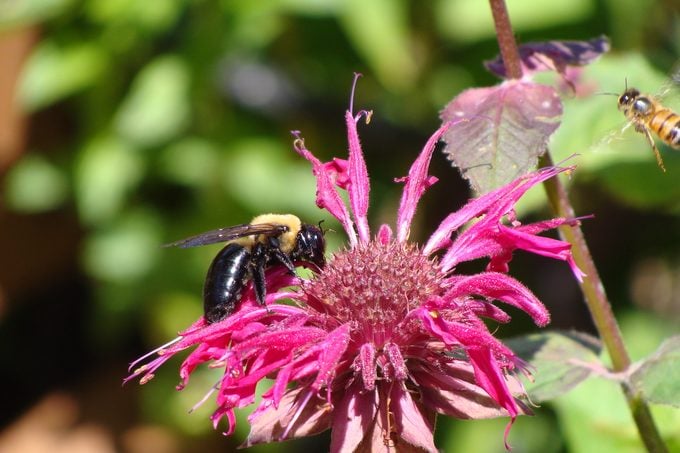
The relationship between bees and flowers is symbiotic—bees need the flowers for nectar and pollen, and flowers need the bees for pollination. A flower might be specialized to allow pollination only from certain species of bees, or its structure might help assure proper pollination, Heather says.
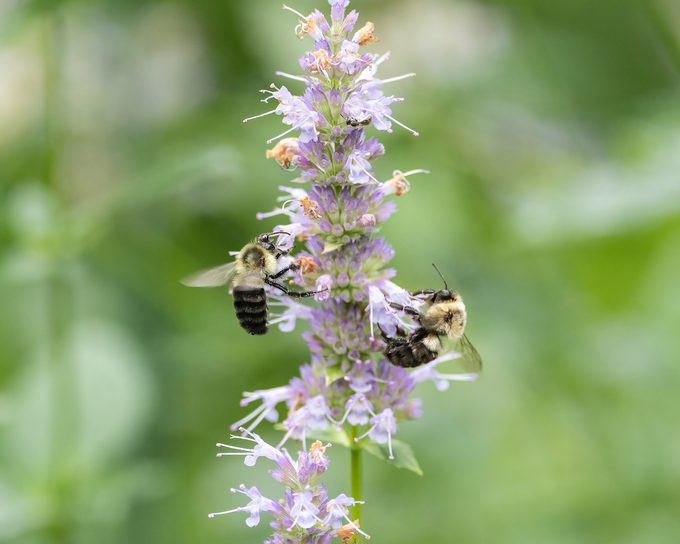
For instance: If nectar is deep in a flower, a bee will have to push its way into the flower to get at it. For a large, strong bee, like a bumblebee, this is an easy task and the flower deposits pollen on the bee in the process. A smaller bee might not be able to get to the nectar and will seek another flower.
Bring in a hybridized flower, like a cultivar that will display double blooms or a different color, and who knows what effect that change might have on its pollen or nectar. “When we select cultivars of native plants, we don’t know how that is affecting other attributes of the flowers that are important to pollinators and wildlife,” David says.
In the name of attracting bees, it’s best to choose heirloom plants or those bred as little as possible. For ideas, stroll through your local garden center and see what plants are covered with bees, Mace says. Some of the flowers he recommends are:
But depending on the conditions in your yard, there are hundreds of plants that will work. (Find plant lists for different regions at xerces.org.) “The point is that everybody can do something for the bees and everybody can have something pretty,” Mace says. “Plant the right flowers and avoid pesticides. Do that and you’ll be rewarded.”
Discover a new appreciation for wasps: pollinators and pest control.
Bee Garden Basics
When gardening for bees, here are a few general rules of thumb:
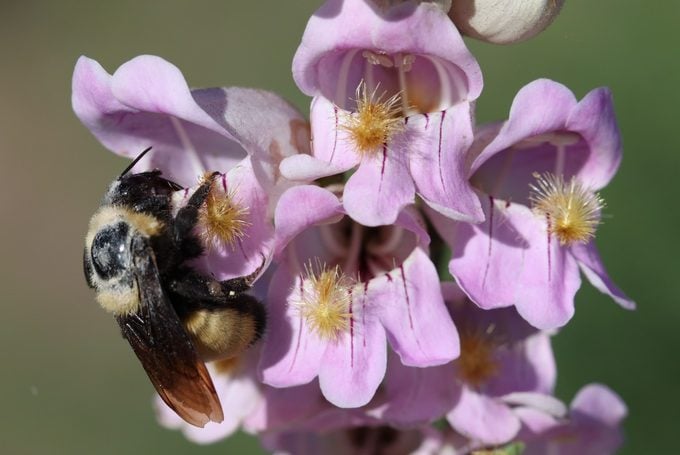
- Choose a range of flower shapes and colors to attract the most bee species. Bumblebees can easily collect pollen from complex flowers, while smaller bees appreciate simple flower shapes and a flat place to land.
- Plant season-long blooms to support bees from early spring until fall.
- Provide areas of undisturbed ground or vegetation for nesting sites.
- Bees and flowers have evolved in tandem, so choose non-hybrid natives.
- Plant in masses for efficient pollen collection. Sunny areas are most attractive.
- Avoid pesticide use. Even some organic mixtures can harm insects.
- Provide a muddy area or shallow trough for water.
About the Experts
Mace Vaughan has lead the the Pollinator Conservation Program of the Xerces Society since 2003. He earned degrees in entomology, teaching, and natural resources management from Cornell University, and has written many articles and publications on native insect conservation.
David Mizejewski is a naturalist and TV host with the National Wildlife Federation. He earned degree in human and natural ecology from Emory University and is an expert on wildlife conservation.
Heather Holm is an award-winning author of Pollinators of Native Plants; Wasps, a Guide for Eastern North America; and Common Native Bees of the Eastern United States. She has been featured in the New York Times and is dedicated to pollinator conservation.
Why Trust Us
For nearly 30 years, Birds & Blooms, a Trusted Media Brand, has been inspiring readers to have a lifelong love of birding, gardening and nature. We are the #1 bird and garden magazine in North America and a trusted online resource for over 15 million outdoor enthusiasts annually. Our library of thousands of informative articles and how-tos has been written by trusted journalists and fact-checked by bird and garden experts for accuracy. In addition to our staff of experienced gardeners and bird-watchers, we hire individuals who have years of education and hands-on experience with birding, bird feeding, gardening, butterflies, bugs and more. Learn more about Birds & Blooms, our field editor program, and our submission guidelines.
Originally Published: March 22, 2024

