


Grow a Berry Heavy Gold Winterberry Bush for Beauty and the Birds

Updated: Dec. 05, 2022




Liven up cold-season gardens and homes with this gorgeous winterberry bush. Berry Heavy Gold is also a favorite of hungry winter birds.

If you’re looking for a bird-friendly plant that’ll also provide some eye-catching interest in fall and winter, look no further than a Berry Heavy Gold winterberry bush. Beyond its wildlife appeal, it also shines in holiday decor. Here’s why you should plant one in your yard.
Check out more of of our favorite shrubs and trees with berries for birds.
Berry Heavy Gold Winterberry Bush Care and Growing Tips
This winterberry shrub produces large golden fruits that dot its branches, which sets it apart from the classic red of other holly berries.
But Berry Heavy Gold’s show isn’t over once the weather warms up. Its foliage shines in summer, when it’s green with delicate white flowers.
While this winterberry cultivar looks gorgeous outside, it’s even more fun to bring nature inside. Cut off whole branches to arrange in wreaths, decorate a mantle or place in a vase. Follow this festive winter planters guide to create your own DIY porch arrangement.
- Botanical name: Ilex verticillata ‘Roberta Case’
- Zones: 3 to 9
- Light needs: Sun to part sun
- Size: Will reach 6 to 8 feet tall and wide
One important note: Be sure to grow at least one male winterberry plant for every five female winterberry plants in order to pollinate them. Try pairing a male Mr. Poppins winterberry in order to pollinate Berry Heavy Gold. Plant them no more than 50 feet away from each other.
Grow these 20 pretty winter plants for backyard cheer.
Winterberry Bush Wildlife Benefits
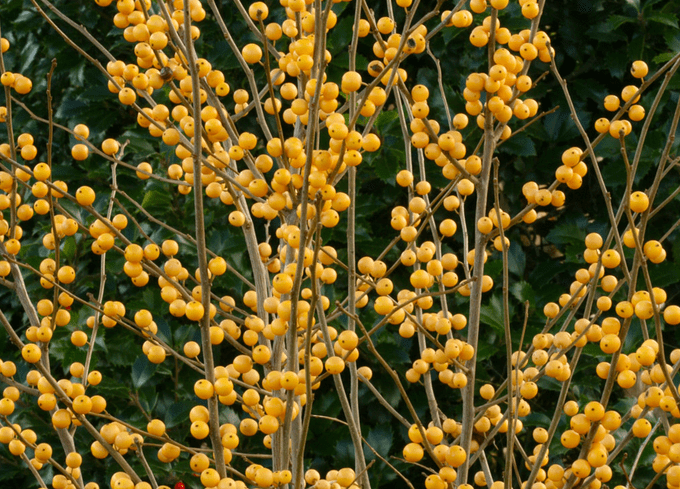
The berries are a fantastic source of energy for birds in food-scarce winter yards. Meet 7 types of backyard birds that eat berries.
But wildlife will visit this plant beyond the cold months, because pollinators happen to love its warm-weather flowers.
Keep an eye on pets around holly berries though — just like mistletoe, these berries are toxic for cats, dogs and horses.
Next, learn how to grow a black chokeberry shrub for berry-loving birds.
Originally Published: December 05, 2022
