


How to Get Rid of Mealybugs and Scale Insects on Plants

Updated: Dec. 12, 2023




Horticultural expert Melinda Myers shares her sure-fire tips on how to get rid of mealybugs and other scale insects on your houseplants.
On This Page
Expert Tips to Get Rid of Mealybugs
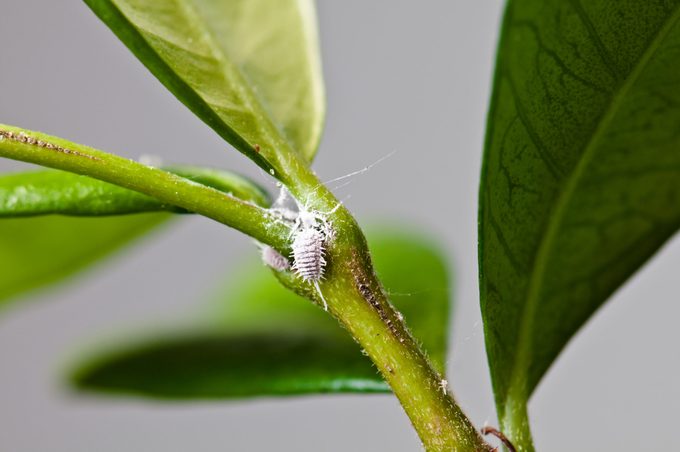
“I want to get rid of mealybugs on my 20-year-old ponytail palms. Is there any way to save the plants?” asks Birds & Blooms reader Deborah McCullough of Myrtle Beach, South Carolina.
Horticultural expert Melinda Myers says, “Mealybugs are a soft scale and, like all scale insects, can be challenging to control. Their waxy white covering protects them from most pesticides. But there are effective treatments to get rid of mealybugs. Touch each insect with a cotton swab dipped in alcohol to dissolve this protective coat and kill the insect beneath. Insecticidal soap will kill immature, translucent mealybugs before they form their cottony covering.
Organic lightweight horticulture oils, like Summit Year-Round Spray Oil will also kill all stages of mealybugs with several applications. Another option includes using a systemic insecticide that is applied to the soil and absorbed by the plant through the roots. When mealybugs feed on the treated plant, they ingest some of the insecticide as well.
Always read and follow label directions carefully. I choose not to use this for the safety of my curious grandkids and plant-eating cats.”
Outdoors, ladybugs will eat mealybugs. Check out beneficial insects you want to see in your garden.
Mealybugs on Jade Plant
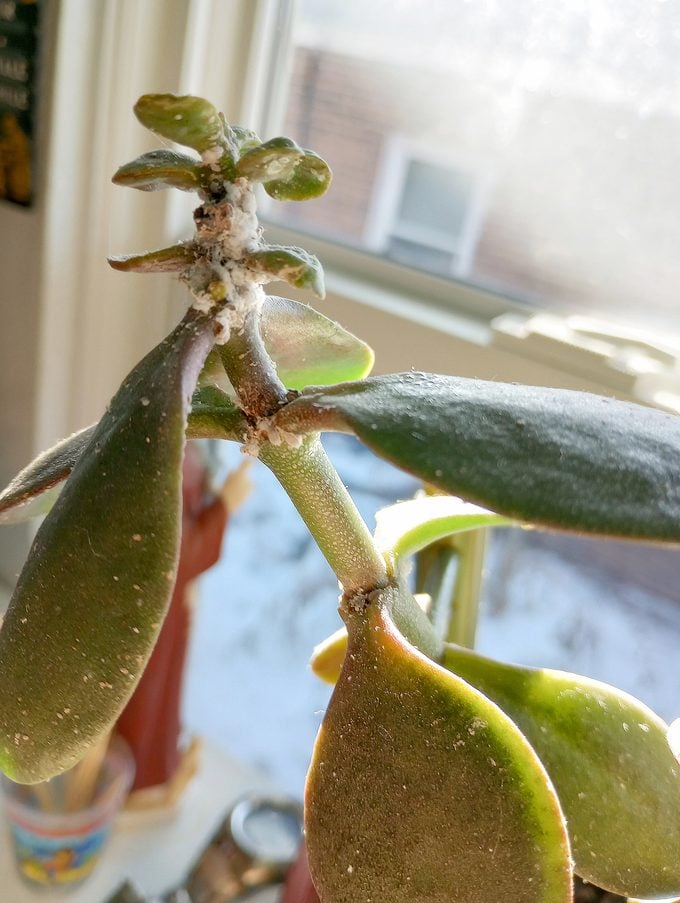
“What’s growing on my jade plant, and what should I do about it?” asks reader Wendy Ulibarri of Denver, Colorado.
Melinda says, “Mealybugs have moved in and are dining on your jade plant. The cottony fuzz protects the insects from heat, moisture and most insecticides. This, along with their tendency to feed in leaf folds, stem crotches and other hard-to-reach locations, makes them difficult to control.
In addition, jade plants and other succulents are sensitive to many insecticides, including organic horticulture soaps and oils.
Start by isolating your plant to prevent these insects from infecting nearby plants. Dip a cotton swab in rubbing alcohol and touch each mealybug to dissolve the white covering and kill the insect below. Test this method on a leaf or two before treating the whole plant.
Repeat weekly and continue to monitor this and other plants for mealybugs. Managing mealybugs is not an easy task, and many gardeners choose to discard infested plants.”
Learn how to get rid of aphids on milkweed plants.
How to Get Rid of Scale Insects on Plants
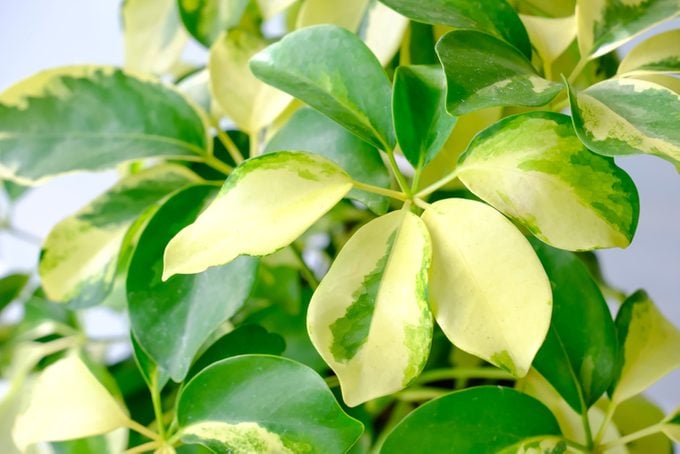
“What’s the best way to get rid of scale insects on a large indoor umbrella tree?” asks reader Boni Trombetta of West Chester, Pennsylvania.
Melinda says, “Scale insects, as you discovered, are difficult to control. Hard shells protect them from most insecticides. Immature scale are susceptible to insecticides, but it often takes several applications for adequate control. Lightweight horticulture oils, like Summit Year-Round Spray Oil, can kill all stages of this and other insects.
Systematic insecticides, which are applied to the soil and taken up through roots, can also be used. When scale insects feed on the treated plant, they ingest some of the insecticide as well. Always read and follow label directions carefully.
Next, learn how to control stink bugs in your home and garden.
Originally Published: November 12, 2023

