


The Pros and Cons of Growing Common Milkweed

Updated: Nov. 20, 2023




Common milkweed provides nectar for butterflies, and is the only food source for monarch caterpillars, but is it right for your garden?
Should You Grow Common Milkweed?

With the declining population of monarchs in the news so often these days, many home gardeners are choosing to add milkweed to their gardens to help support this beautiful butterfly. This is a fantastic idea. I encourage everyone to plant as much milkweed as they possibly can. But there are many species of milkweed. It’s best to choose species that are both native to your area as well as appropriate for your garden space. Common milkweed (Asclepias syriaca) has a wide native range and is easy to find, but it also has some aggressive properties that may not make it right for your butterfly garden.
Is tropical milkweed bad for monarchs? And is milkweed poisonous to people and pets?
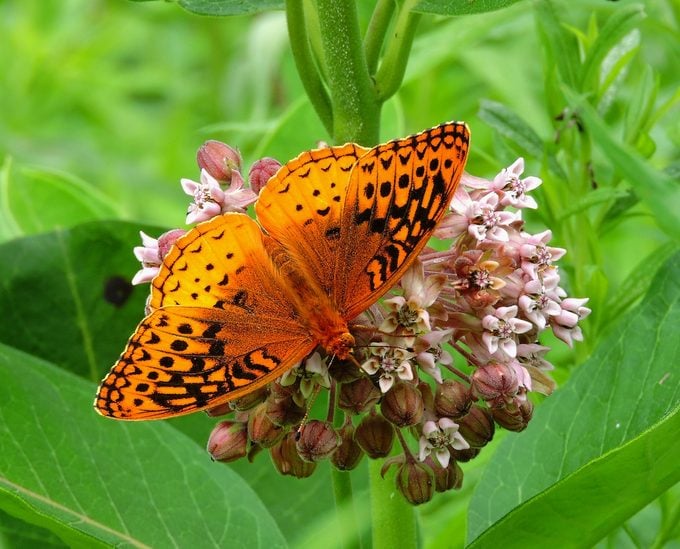
Common milkweed can be found throughout most of the Eastern U.S. and Canada (with the exception of Florida), west to the Rocky Mountains. It grows in a variety of soil conditions, usually in full sun, and is often found in ditches and roadside medians. It can grow quickly to 5 feet tall, with broad leaves and a stout stem, topped by clusters of pink flowers that butterflies visit for nectar.
The leaves are used by monarch caterpillars for food (milkweeds are their only food source) and are vital to the species’ survival. In the late summer, the flowers give way to large pods. They burst open to send their feathery-topped seeds into the wind to spread for the following growing season.
Here’s how to collect milkweed seeds from pods. And, learn if you should be removing milkweed bugs from your plants, too.
Common Milkweed Can Spread Aggressively

Anyone in its native range (zones 3 to 8) with space for a wildflower garden can consider common milkweed. But gardeners should be aware that this species is considered very aggressive. It spreads not only by seed but by underground rhizome, and can be very difficult to control. If you have a large area available, or aren’t worried about the possibly “weedy” appearance of this plant, you should find a local source for some seeds and add it to your property.
If you have a small yard, are outside its native range, or have a latex allergy, you should think twice. Common milkweed, like other milkweed species, contains latex. This causes the foliage to be very sticky and can lead to rashes in those allergic to latex. Once established, it’s nearly impossible to get rid of. Is milkweed poisonous to people and pets?
You can try growing it in sunken pots in the ground to limit the rhizome spread. Also clip the seed pods before they mature to stop the seeds from spreading. But it’s probably better to consider one of the many other species of milkweed native to your area. Try butterfly weed, showy milkweed and swamp milkweed.
Next, find out if honeyvine milkweed is an invasive plant.
Originally Published: September 07, 2022

