


Queen Lily Ginger (Curcuma petiolata)

Updated: Apr. 24, 2020




Grow long-blooming Queen Lily Ginger outdoors in warmer climates or in containers further north.
Don’t you love a plant with a secret? Take Queen Lily Ginger, for example. The brightly-colored flowers that draw you in turn out not to be flowers at all! This is one of many plants that use colored bracts to draw attention to their much smaller flowers, like poinsettia or bougainvillea. The little flowers are tucked away among the bracts, but they’re lovely in their own right and deserve some admiration too.
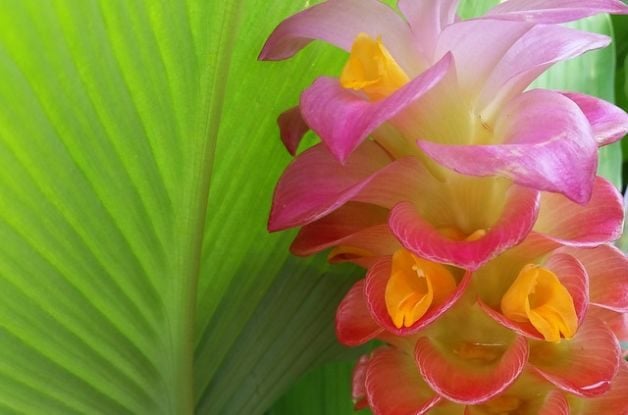
Queen Lily Ginger has a confusing common name. It’s not really a lily at all. Known botanically as Curcuma petiolata, it’s a member of the ginger family (Zingiberaceae), and part of the same genus that produces turmeric (C. longa), the main ingredient in curry. Also known as Hidden Cone Ginger or Hidden Lily, this plant is native to Malaysia. It has become a common ornamental plant in tropical and sub-tropical gardens around the world, and can be successfully grown as a container plant in colder regions.
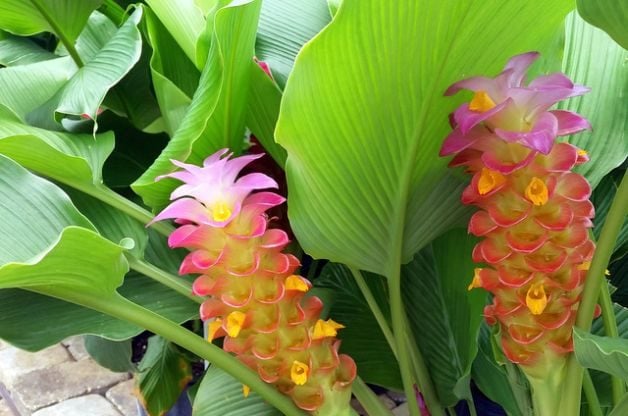
In zones 8 and higher, grow Queen Lily Ginger outside in part-shade to sun (err on the side of shade in hotter climates), in soil that remains moist but well-drained. In zones 7 and below, this makes a great container plant. Move it outside for the summer months while it’s flowering and water regularly. Whether grown in the ground or in a pot, Queen Lily Gingers go dormant in the winter months. Foliage may yellow or die back, even in warmer zones, and you can trim it back if you prefer a tidier look. Bring containers indoors for the winter and cut back on watering, providing just enough to keep the soil from drying out entirely.
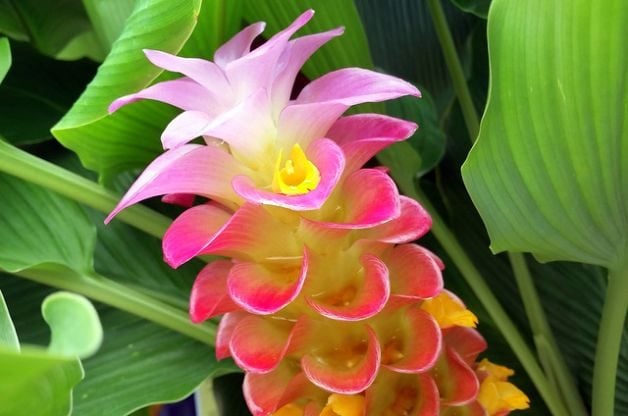
Queen Lily Ginger has wide luxurious leaves that grow lushly and almost hide the flower bracts. It spreads by rhizomes and clumps may be divided after several years. The bloom stalks, called inflorescences, make good cut flowers. Multiple varieties are available, with bract colors ranging from white to hot pink and many shades between.
Struggling with pests in your houseplants? Click here for help.
Originally Published: August 24, 2016

