


All About Black-Throated Blue (and Green!) Warblers

Updated: Feb. 10, 2021




These birds have similar names, but they look and sound different. Learn to identify black-throated blue warblers and black-throated green warblers.
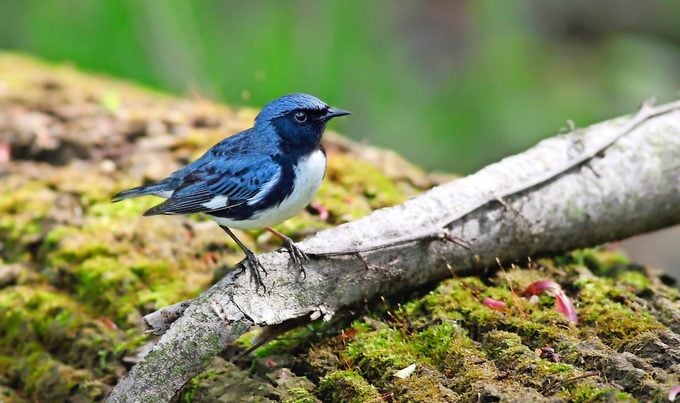 How to Identify Black-Throated Blue Warblers
When identifying black-throated blue warblers, look for field marks like the white belly and white wing spot. The male’s dark colors reflect this bird’s favorite migration habitat: in the shadows of undergrowth in eastern woods. Females look completely different, with dull olive coloring.
These lovely birds was migrate north from Jamaica to the deep forest undergrowth of the Northeast or beyond to southeastern Canada. One place to see these birds is Great Smoky Mountains National Park. Look for black-throated blue warblers in the hardwood forests. Primarily insect eaters, in fall and winter the warblers will eat berries, like beautyberry.
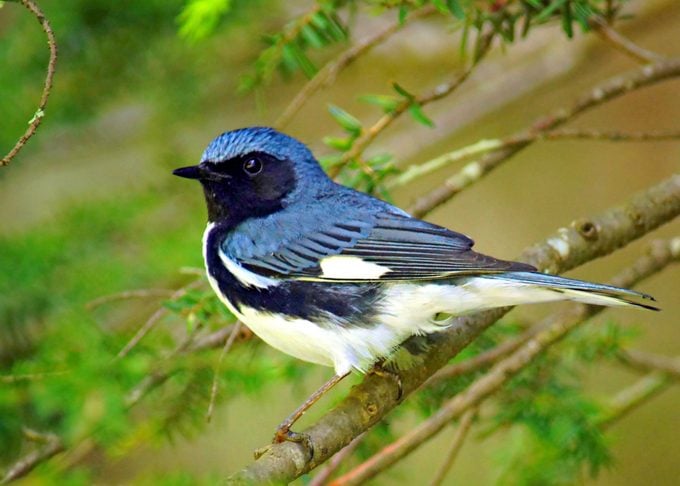
“During last fall’s migration, I saw six different warblers, but my favorite was the beautiful male black-throated blue warbler. I feel very fortunate to have snapped a photo, since warblers never seem to stand still,” says Nancy Tully of East Stroudsburg, Pennsylvania.
Learn how to identify palm warblers and yellow-rumped warblers.
Black-Throated Blue Warbler Nest
This warbler nests near the ground in a shrub such as rhododendron. Females, with their overall gray-green plumage and virtually no blue, are able to hide well while nesting. Learn about 8 different kinds of bird nests and how to spot them.
Black-Throated Blue Warbler Song
This bird’s song is a distinct zerr-zerr-zree.
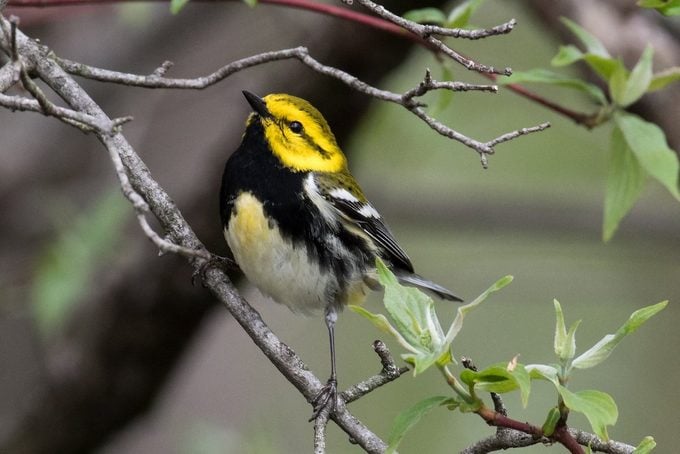
How to Identify Black-Throated Green Warblers
A common migrant, the black-throated green warbler has a deep black throat, yellow head, olive-green back and two white wing bars. They are called “green” because both males and females have olive backs. The species nests in northern coniferous forests and mixed forests in the Appalachians.
Black-Throated Green Warbler Song
You might hear this warbler before you see it. Listen for the male’s recognizable buzzy song, zoo, zee, zoo zoo zee, and then look up—way up! These birds stay high in treetops.
Next, check out 10 spring warblers you should know.
Originally Published: February 10, 2021
