


How to Identify a Northern Bobwhite

Updated: May 24, 2023




Find out what a male, female and juvenile northern bobwhite looks like, what they sound like, and where you may find these birds in the U.S.
Northern Bobwhite Sighting
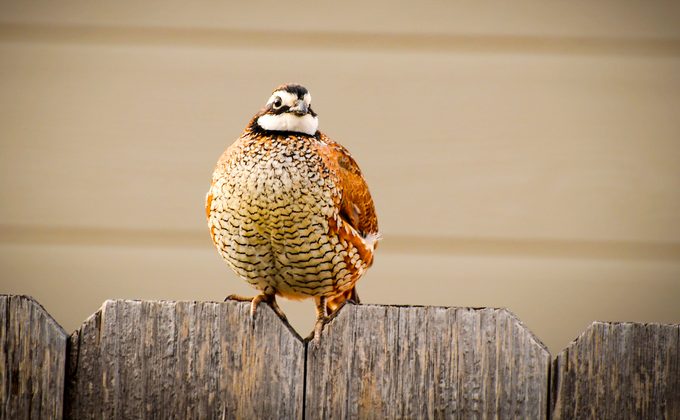
“Last winter this northern bobwhite (above) sat on our back fence for over an hour and allowed my wife to get close enough to take photos. Bobwhites are not supposed to be in southern Idaho, so what was it doing in our yard?” asks Eric Adams of Meridian, Idaho.
Kenn and Kimberly Kaufman: You’re right, northern bobwhites aren’t native to anyplace near Idaho, although there are a few small introduced populations in the Pacific Northwest. Bobwhites are often raised in captivity. Sportsmen’s groups sometimes release them into the wild, or use them to train hunting dogs how to “point” at game.
Because the one in your yard acted so tame, it was probably one of these pen-raised and released birds.
Are these mallards wild or domestic ducks?
Female Northern Bobwhite
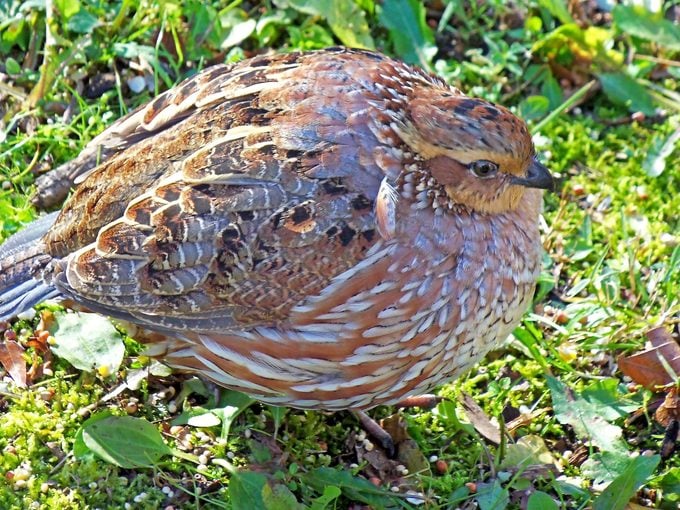
“This bird (above) lived under my deck for several days. It ate seeds and greenery and drank from the water I put out for it. What is it?” asks Karen Norman of Freeport, Ohio.
George Harrison: Your mystery bird is a northern bobwhite, which is a member of the quail family. The one under your deck is a female, distinguished by the light buff face. Male bobwhites have bright white faces. Depending on the time of the year you photographed it, this bird may have been a juvenile that would resemble a female.
They are a very popular game bird in the southern and east-central U.S. A few get into the North, though some are escapees from nearby game farms.
Meet the prairie birds: stunning species of the grasslands.
Northern Bobwhite Call
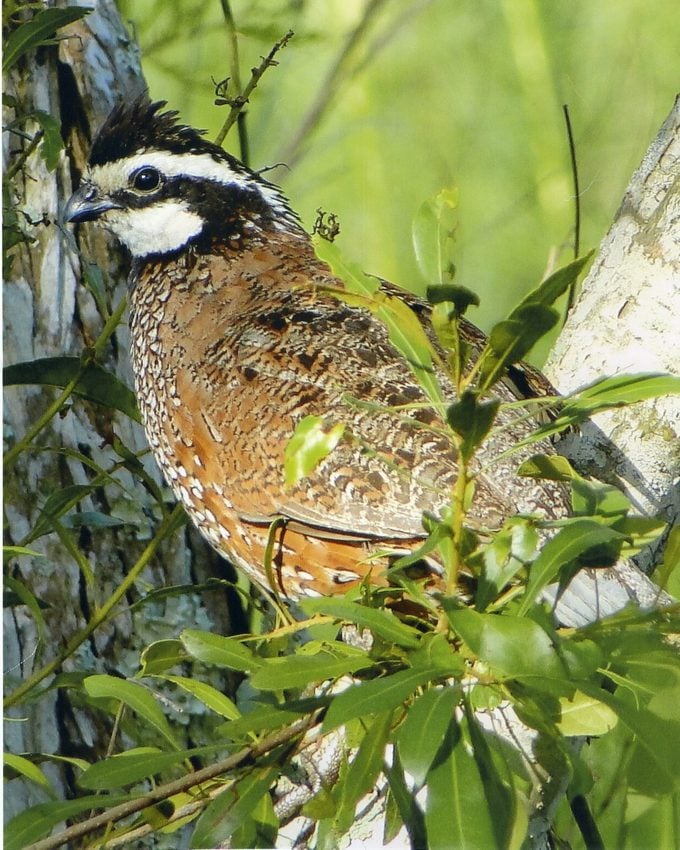
Bobwhites are beautiful birds with a loud bob-bob-white whistle, sung by the males from fence posts during the breeding season.
“After hearing northern bobwhites for quite some time but barely catching a glimpse of any, I finally came face to face with one for the first time. one day, wood ducks flew overhead and landed near a marshy area of our property. While I walked through the bog to look for the ducks, I glanced over and saw this bobwhite sitting on a stump. It hopped down, stayed around the brush under the tree for a bit, then jumped up onto a branch, where it stayed for quite some time. It was very close, and I was so excited that it was hard to stay calm. I finally got a good bobwhite picture,” says reader Georgia Wilson.
What does a mourning dove call sound like?
Juvenile Northern Bobwhite
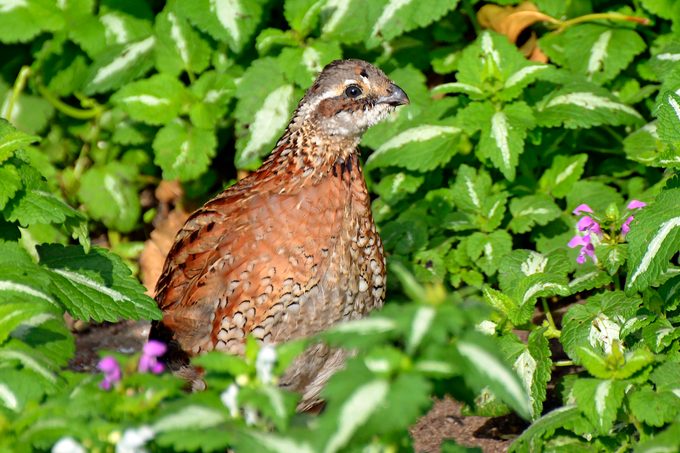
“What’s this bird that visited my yard last summer?” asks Colleen Gibbs of Coon Rapids, Minnesota.
Kenn and Kimberly: This surprising visitor is a type of quail called a northern bobwhite—evidently a young male, still molting into adult plumage, as shown by the patchy pattern on its face.
Bobwhites are widespread native birds in the eastern U.S. However, despite the name “northern,” they don’t naturally occur as far north as your area of Minnesota. Many people keep small captive flocks in farm country, however, and this individual may have wandered away from such a flock.
Next, learn fascinating bird facts about wild turkeys.
Originally Published: May 24, 2023
