


How to Identify a Barred Owl

Updated: Sep. 08, 2023




Learn what a barred owl looks like and what their call sounds like. Plus learn where you can spot these large owls in North America.
What Does a Barred Owl Look Like?
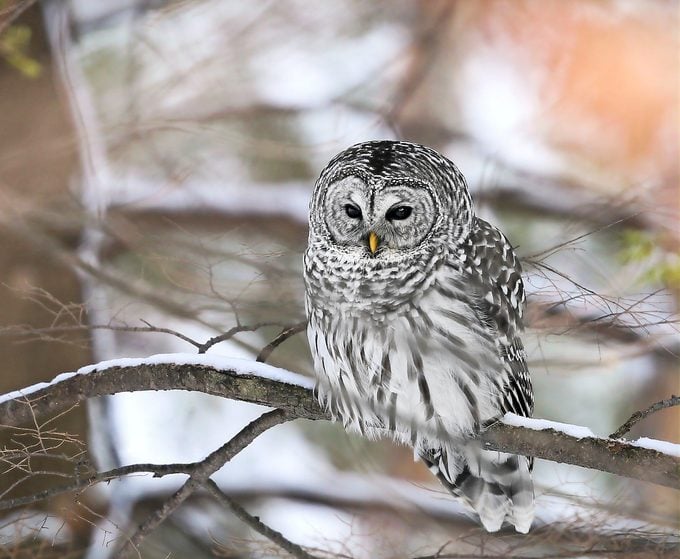
Barred owls are large brownish and white striped or “barred” raptors with no visible feather tufts on their heads. Unlike many of its relatives with yellow eyes, the barred owl has dark eyes, which enhance its mysterious appearance.
Discover the amazing types of owls in North America.
Barred Owl Call
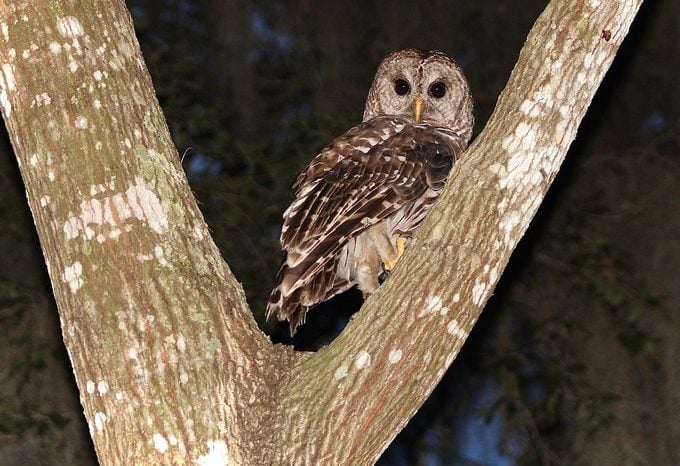
The classic “whoo cooks for you, whoo cooks for you all” is the sound you’ll hear most often from barred owls, but they make any number of hoots, shrieks, cackles and caterwauls too.
Discover fun facts about owls you should know.
Barred Owl Nesting Habits
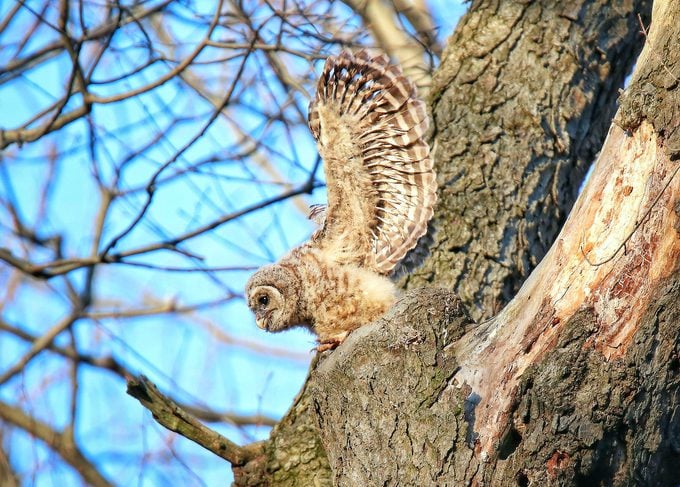
Large nest boxes can accommodate them, but they’ll also nest in natural cavities. Occasionally these birds take over a stick nest from another raptor.
Did You Know: When choosing a place to raise their young, barred owl pairs scope out sites for up to a year before they decide move in.
Meet the long-eared owl and the short-eared owl.
Range and Habitat
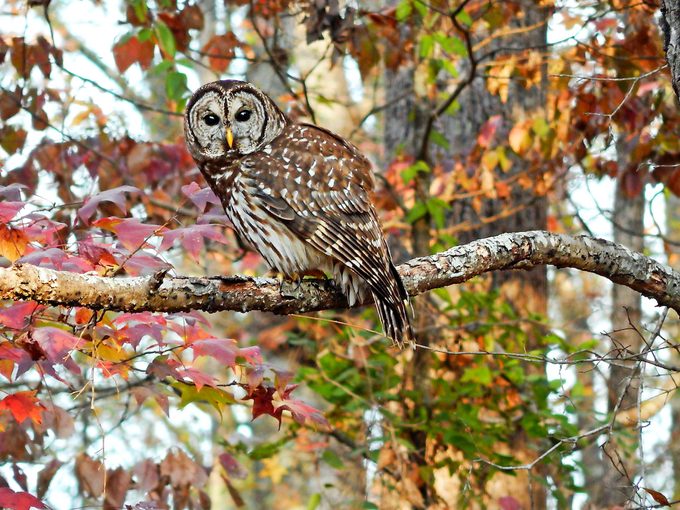
The barred owl is one species whose distribution expanded throughout the 20th century. The species was predominantly found in the East, especially in southeastern swamps and woods.
Over the last 100 years, barred owls have pushed west across Canada and then south into the Pacific Northwest. This is good news for barred owls but problematic for the closely related, and more passive, spotted owl.
But barred owls aren’t always the dominant bird—great horned owls can be a major predator on barred owls, where their ranges overlap.
Until recently, an isolated population of barred owls in Mexico was considered a subspecies, but in 2021 researchers determined these birds were a separate species now known as cinereous owls.
Do owl sightings have special meaning?
What Foods Do Barred Owls Eat?
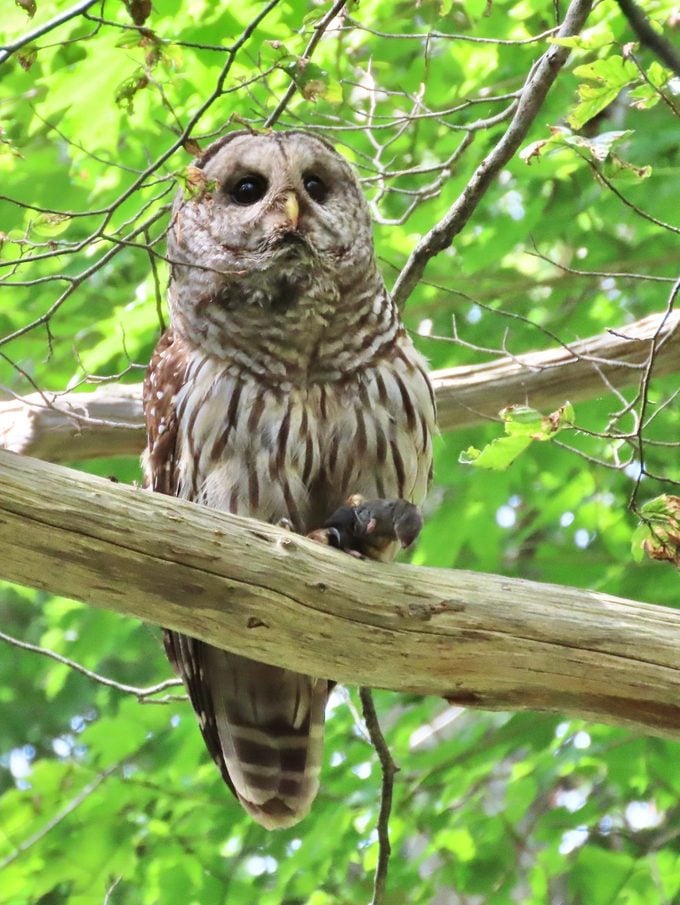
As expected for a species with such a widespread distribution, barred owls’ diets vary based on their habitat. Their feasts can include anything from crayfish, fish and frogs to small mammals and birds.
Next, learn how to identify barn owls.
Originally Published: September 08, 2023

