


9 Beautiful Flowering Trees for Your Backyard

Updated: Nov. 15, 2023




With beautiful flowering trees, you get the height and size of a tree, plus the beauty of flowers. Check out the best types of flowering trees.
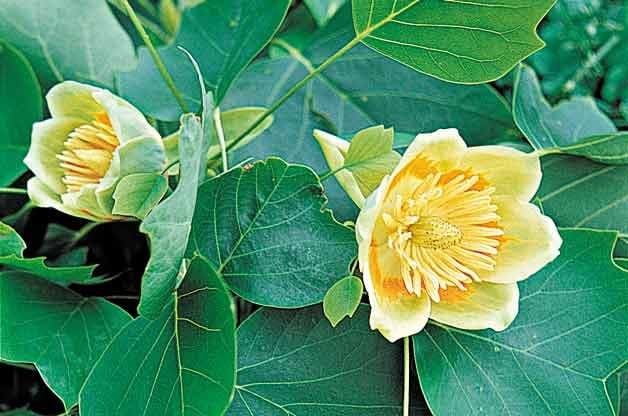
Beautiful Flowering Trees: Tulip Tree
Liriodendron tulipifera • Zones 5 to 9
Though hard to see from a distance, the tulip tree’s unique early-summer flowers are sure to dress up your yard. The cup-shaped blooms on these beautiful flowering trees have greenish-yellow petals with orange bases. But be patient: Most types of tulip trees won’t begin to flower for 10 to 12 years.
Check out the top 6 trees with pink and white flowers in spring.
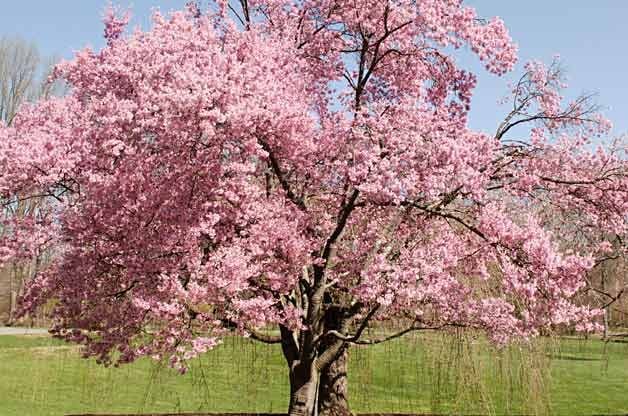
Cherry Tree
Prunus spp. • Zones 2 to 10
Whether you prefer flowers or fruit, you’re in for a treat if you plant a beautiful flowering cherry tree. Popular backyard choices are the ornamental purpleleaf sand cherry (Prunus x cistena), a shrubby variety with pink flowers and purple leaves, and the Sargent cherry (Prunus sargentii), a prolific bloomer.
Tree Growing Tip: Transplant cherry trees in spring. Select a protected spot to reduce the risk of snow or frost damage.
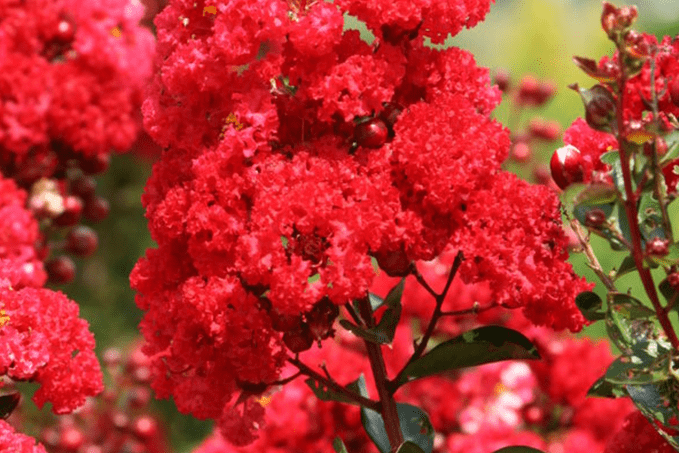
Crape Myrtle
Lagerstroemia indica • Zones 7 to 9
Crepe paper and crape myrtle have more in common than their pronunciations. The blossoms not only resemble the delicate paper, but the tree comes in almost as many colors, with flowers in endless shades of pink, red, white or purple. Fall brings a kaleidoscope of foliage, with reds, oranges and yellows mingling on the same tree. In winter, the smooth, peeling bark adds a subtle charm to the landscape.
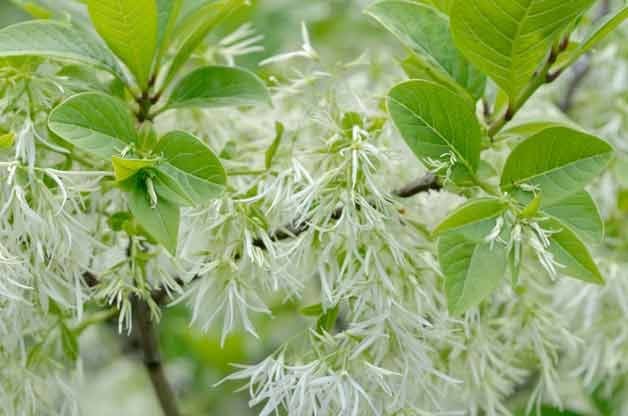
Fringe Tree
Chionanthus virginicus • Zones 3 to 9
We don’t know which we like more: The fringe tree’s captivating silhouette or its panicles of sweetly scented creamy-white flowers. This tree usually starts from seed and grows very slowly, reaching only about 20 feet. But even at an average of 6 inches a year, this delicate tree is worth the wait.
Check out 15 beautiful white flowering shrubs.
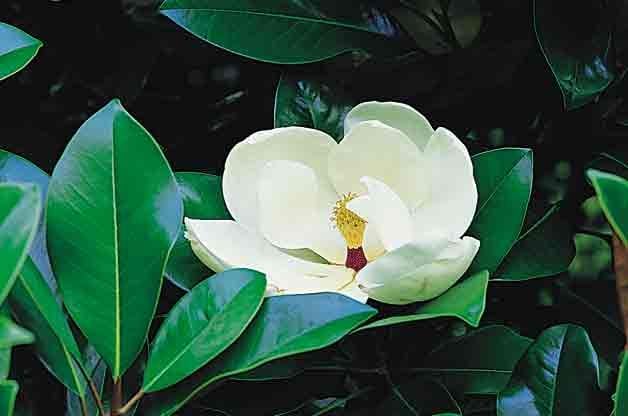
Southern Magnolia
Magnolia grandiflora • Zones 7 to 9
Big, bold and beautiful‚ the southern magnolia is a legend in the Deep South. In fact, it holds the honor of being the state tree and flower of Mississippi, and is the state flower of Louisiana. It’s the granddaddy of beautiful flowering trees, with lemon-scented white blooms that reach up to 1 foot across. And its glossy deep-green leaves are just as impressive—up to 10 inches long.
Check out the top 10 flowering bushes for your yard.
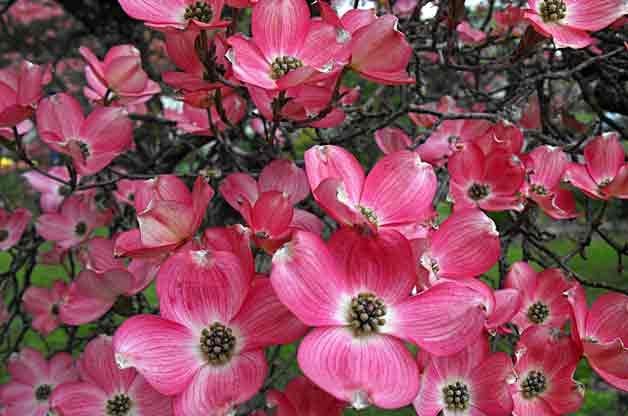
Flowering Dogwood
Cornus florida • Zones 5 to 8
The flowering dogwood could have inspired the phrase “a breath of spring.” Though its true flowers are small and green, its surrounding colorful bracts put on a glorious show. To avoid pests and disease, plant dogwood in areas where the foliage can dry well after exposure to dew or rain.
Check out 10 pretty shrubs with pink flowers.
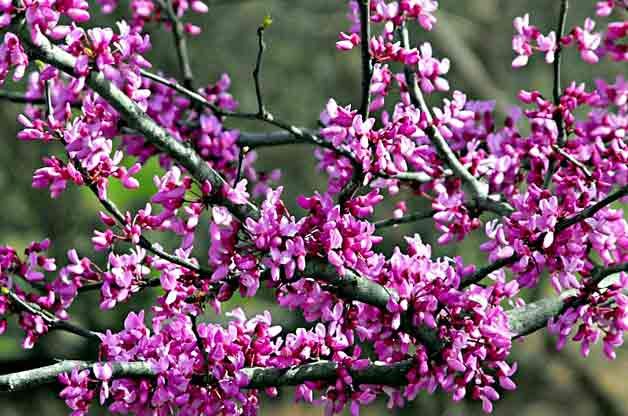
Redbud
Cercis spp. • Zones 4 to 10
After a long winter, the sight of a blooming redbud tree reminds us that spring is on its way! An early-spring showstopper, this tree bursts with a profusion of red, pink, purple or white blossoms before leaves emerge. Plant yours in a spot that has room to spread out, as redbuds are wider than they are tall.
Tree Growing Tip: Redbud’s flower clusters appear not only on new growth, but also on the trunk and older branches.
Check out more 22 early blooming flowers for spring.
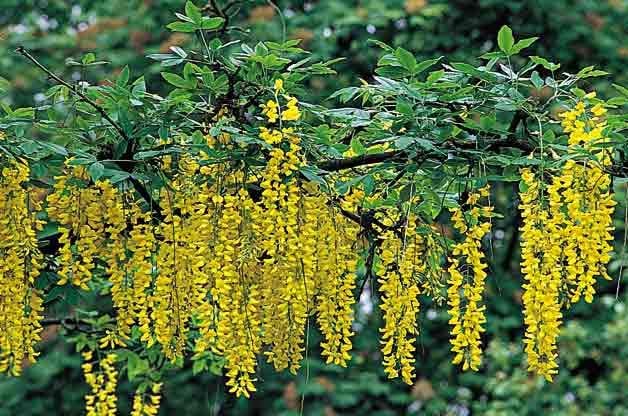
Golden Chain Tree
Laburnum x watereri • Zones 6 to 8
Though it’s small in stature, the golden chain tree demands a second look. In spring, graceful chains of yellow blooms drip from its branches. This tree makes an impression when standing alone, but it’s even more impressive when planted as part of a group. One caution, however: All parts of this tree contain a compound that can be fatal if eaten.
Discover the prettiest yellow flowering shrubs for your yard.
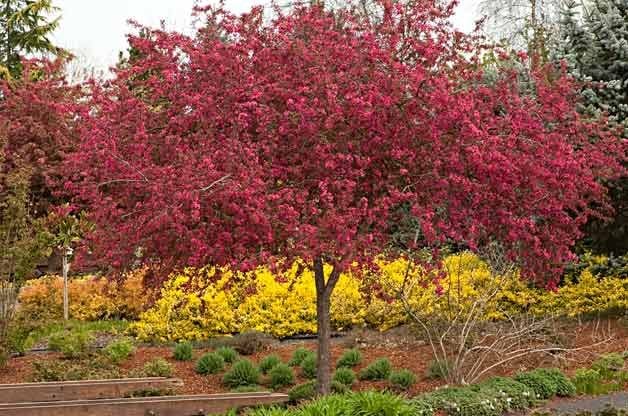
Crabapple
Malus spp. • Zones 2 to 9
This beauty’s spring blossoms are often so lavish that they hide entire branches. The flowers give way to leaves and then fruit to keep the color show going, sometimes through winter. New varieties provide the famous flowers and resist common tree diseases, too.
Psst—here’s why you should plant a weeping crabapple tree.
Originally Published: February 12, 2014
