


Sphinx Moths, the Stars of the Evening Garden

Updated: Feb. 16, 2024




A sphinx moth tends to appear in the late afternoon and evening, and often visits night-blooming flowers. Here are some types of sphinx moths to know.
On This Page
What Does a Sphinx Moth Look Like?
Some of my favorite moths to look for are sphinx moths, members of the family Sphingidae. These large moths are spectacular flyers, with streamlined bodies and wings evolved for speed and agility. A sphinx moth is one of only a few creatures capable of hovering in flight, like bats and hummingbirds, and is sometimes mistaken for the latter.
Like their close cousins, butterflies, sphinx moths feed using their proboscis, a coiled tube on the front of their heads that they uncurl and dip deep into flowers for nectar. A sphinx moth’s proboscis may be more than 11 inches long on some large tropical species. The wingspan of sphinx moths varies by species. Big poplars spread their wings 4 to 6 inches, while smaller sphinxes, like hummingbird clearwings, open to about 2 inches.
See what a sphinx moth caterpillar and pupa looks like.
Where and When to Find Sphinx Moths
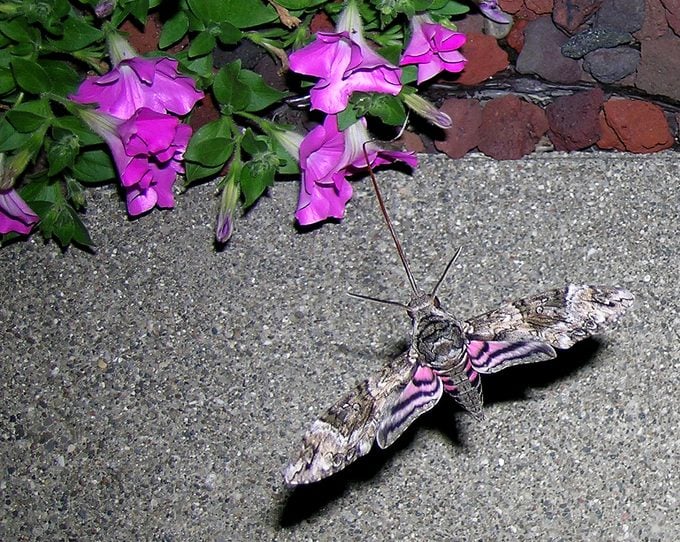
Some sphinx moths are diurnal, which means they fly during the day. Most fly at night, and a great time to look for them is during the evening after the sun sets but before it’s completely dark. They’re especially drawn to light-colored blooms in the garden. Attract sphinx moths by planting flowers that are their best in the evening and at night, like moonflowers or four-o-clocks. Some squash species are also night-blooming and are exclusively pollinated by moths.
Enjoy the backyard benefits of a moon garden.
Fascinating Facts About Sphinx Moths
- The wingspan of sphinx moths varies by species. Big poplars spread their wings 4 to 6 inches, while smaller sphinxes, like hummingbird clearwings, open to about 2 inches.
- A sphinx moth’s proboscis (tongue that sips nectar) may be more than 11 inches long on some large tropical species.
- Of the four hummingbird moths in the sphinx family, only two of them are commonly seen—the hummingbird clearwing and the snowberry clearwing.
- Five-spotted hawk moth caterpillars, also known as tomato hornworms, are driven by voracious appetites to feast on tomato, tobacco and potato plants.
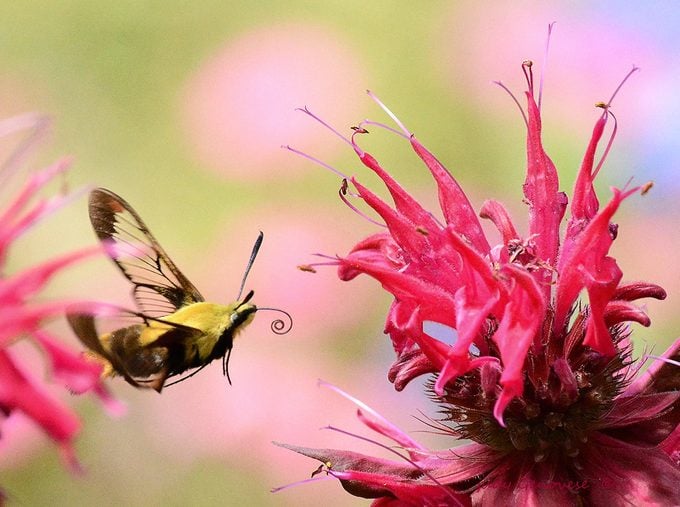
- Though not a bird (or a plane), sphinx moths move quickly. Snowberry clearwings have been clocked flying more than 30 mph.
- Just like the fliers they resemble, sphinx moths prefer nectar-filled, tube-shaped flowers. Try these four: daturas, columbines, four-o’clocks and flowering tobacco.
Types of Sphinx Moths to Know
There are hundreds of sphinx moths around the world. Here are some of the species you might find feeding on your flowers.
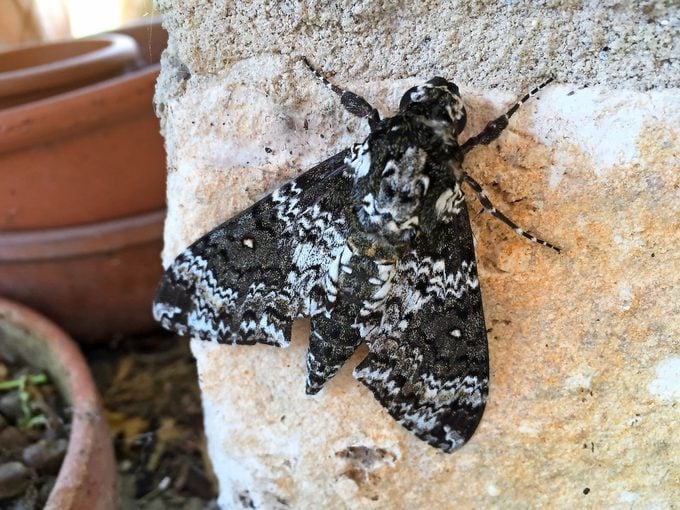
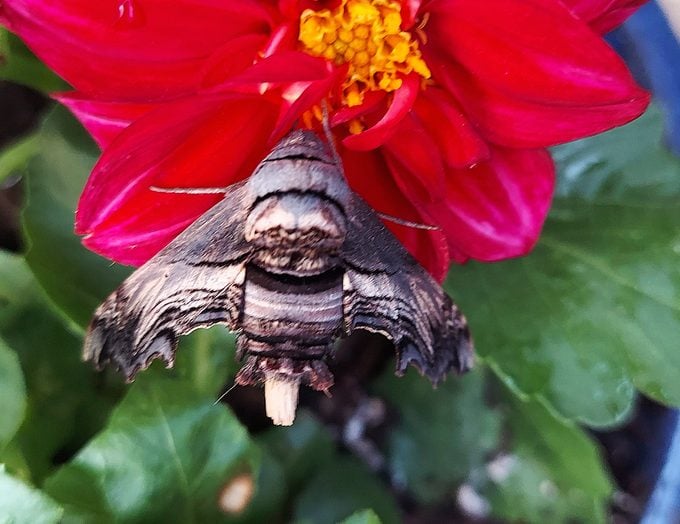
Rustic Sphinx Moth
That bold, beautiful pattern of black, white and gray is characteristic of the rustic sphinx moth (above). The large size and streamlined shape mark this as a member of the sphinx moth family. This is mainly a southern species, rarely wandering as far north as Canada. Fast-flying adults are active mostly at night, resting in the daytime. Caterpillars feed on the leaves of several plants, including bignonia, jasmine and Cape honeysuckle.
Moth vs butterfly: Here’s how to tell the difference.
Abbott’s Sphinx Moth
Official Birds & Blooms experts Kenn and Kimberly Kaufman write, “One of the smaller members of the sphinx moth family, is the Abbott’s sphinx (Sphecodina abbottii). The species is widespread in eastern North America, and its larvae usually feed on the leaves of wild grape plants (Vitis spp.). The adult moths often visit flowers at dusk, and sometimes earlier in the day. They make a soft buzzing sound in flight, unlike most sphinx moths, and they may have some natural protection from predators because of their slight resemblance to large bees.”
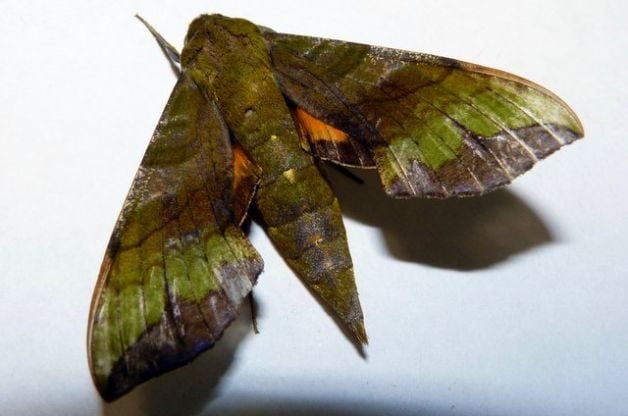
Pluto Sphinx Moth
Pluto sphinx moths (shown above) are olive green, but their hindwings show a flash of orange when they fly. This species is mainly confined to Florida and Texas, but the even showier pandora sphinx moth looks similar and is found throughout the eastern U.S.
These pictures will change the way you look at moths.
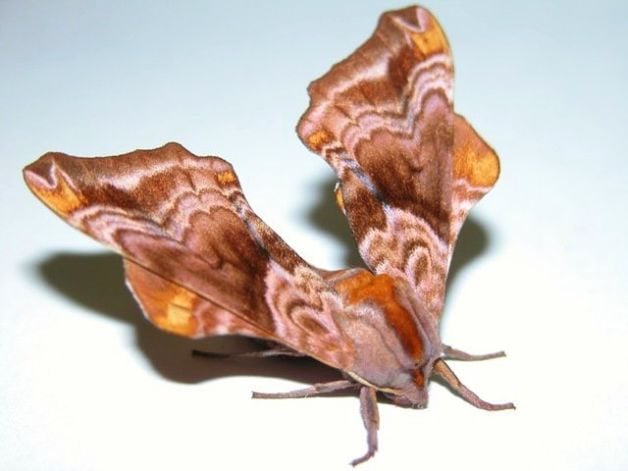
Small-Eyed Sphinx Moth
The small-eyed sphinx moth (above) is more common in the eastern half of the U.S., but can be found all the way west to California. Like many sphinx moths, the small-eyed sphinx flies at dusk, but also continues to fly all night long.
Discover 5 silk moths that might be in your backyard.
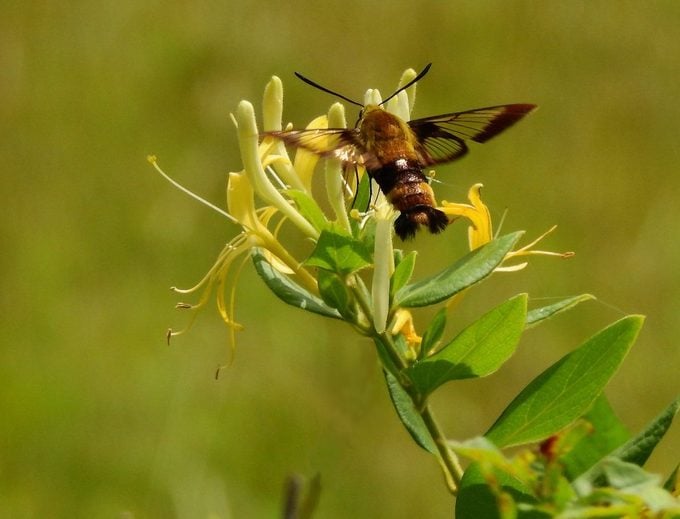
Hummingbird Clearwing Moth
The hummingbird clearwing or hummingbird sphinx moth (above) is active during the day, so many people are familiar with it. This is one of the diurnal (day-flying) moths, and frequently fools people into thinking it’s an actual hummingbird. Once you get a close look, though, you’ll see the proboscis and antennae up front and realize you’re actually looking at one of the most famous sphinx moths. Hummingbird clearwings are found throughout the eastern half of the U.S. and Canada. Attract them with the same flowers you’d use to attract butterflies. Though not a bird (or a plane), sphinx moths move quickly. Snowberry clearwings have been clocked flying more than 30 mph.
Check out interesting facts about hummingbird moths.
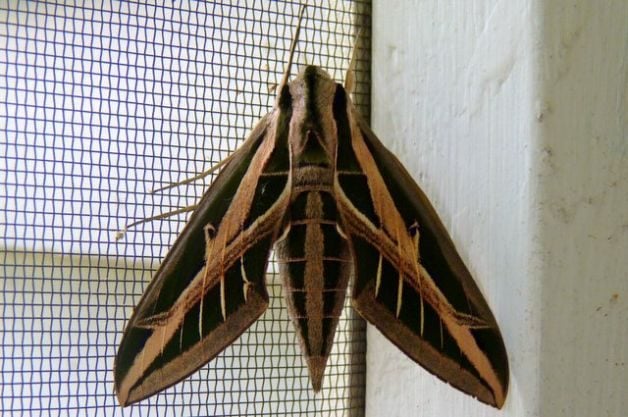
Banded Sphinx Moth
The banded sphinx moth (above) is primarily found in the southeast, but sometimes strays far to the north. This moth feeds from flowers once the sun goes down, but can often be observed at dusk without waiting for full-on dark. Its caterpillars feed on plants in the evening primrose family, so planting those is one way to attract these sphinx moths.
Meet the colorful moths you can see during daytime.
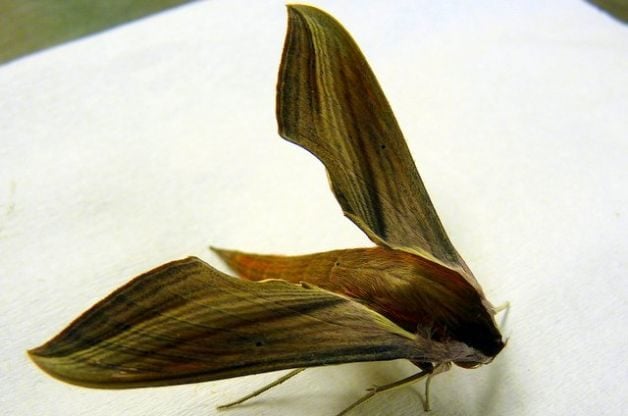
Tersa Sphinx Moth
This beautiful and streamlined creature is a tersa sphinx moth (above). It is sometimes called the “wooden moth”, and it does indeed look as though it’s been carved from wood. Adults may be sluggish in the daytime, but they fly around rapidly at dusk and night. When tersa sphinx moths visit gardens, they hover in front of flowers to feed, just as hummingbirds do. Caterpillars of this species feed on plants in the madder family, including pentas. Although tersa sphinx moths sometimes wander as far north as Canada, they mainly live in the tropics and in the southeastern states, from Texas to Florida and into North and South Carolina.
Learn all about garden moths: important pollinators.
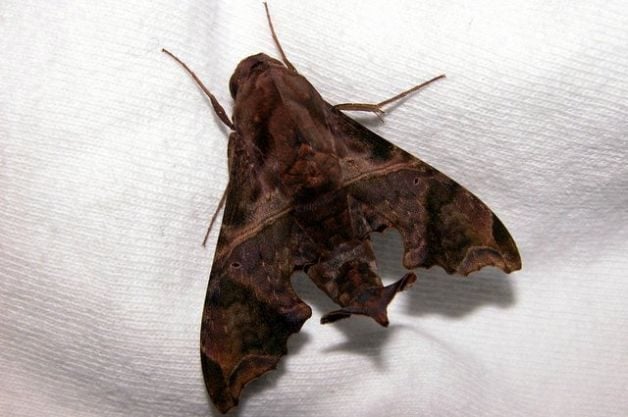
Mournful Sphinx Moth
Another moth mainly found in the southeast U.S., the mournful sphinx (above) is very dark brown in color and generally flies during the day. It’s known to make a surprisingly loud “whirring” sound from its wings.
Here’s what gardeners should know about the cabbage white butterfly.
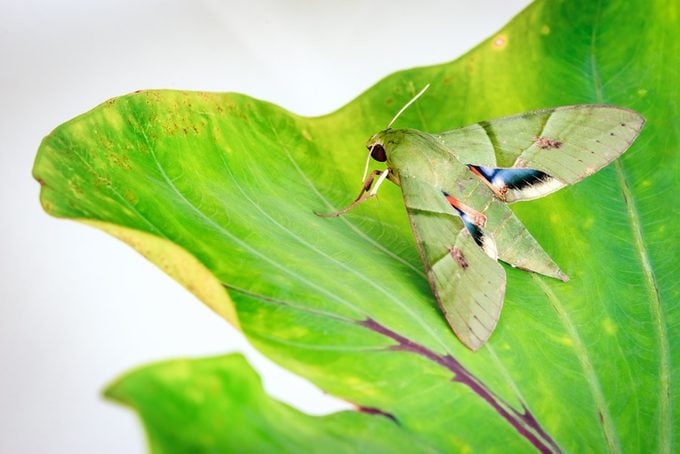
Gaudy Sphinx Moth
A gaudy sphinx moth (above) looks like a green leaf until you notice the amazing coloration on its lower wings. These green sphinx moths have a wingspan of up to 4 inches and are active at night, feeding from nectar flowers.
Learn how to identify a luna moth.
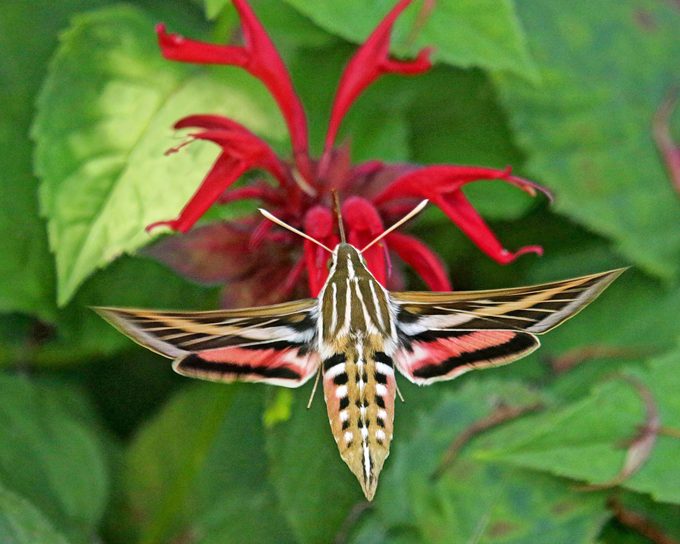
White-Lined Sphinx Moth
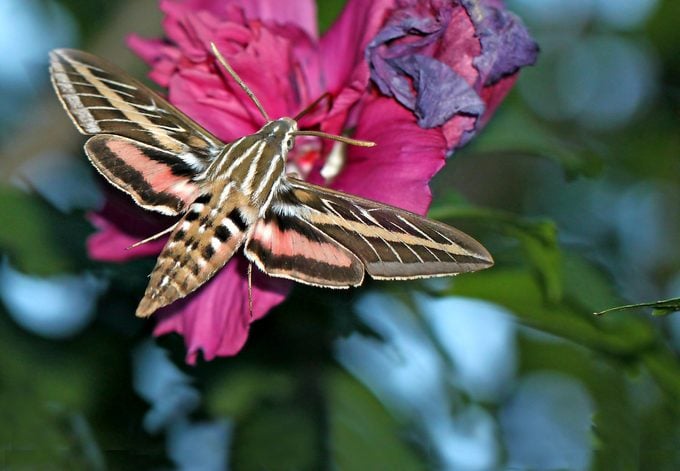
Yes, this is another one of the hummingbird moths, also known as hawk moths. Many of them take nectar by hovering in front of flowers, very much like a hummingbird. Some species are active only at night, but this one, the white-lined sphinx (above), will visit flowers in daylight. Its caterpillars feed on the leaves of a wide variety of host plants. It’s recognized by its striped and checkered body, white lines on the forewings, and broad pink stripe on the hindwings.
Plant a caterpillar cafe in your butterfly garden.
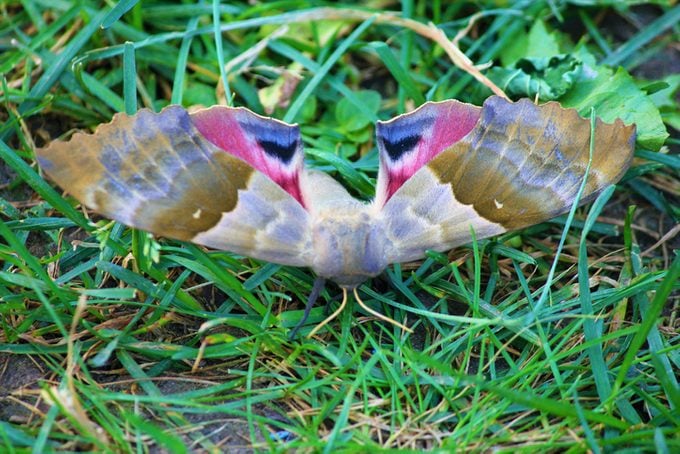
Big Poplar Sphinx Moth
The big poplar sphinx (above), with wings 4 to nearly 6 inches across, has no proboscis at all! It never feeds in its adult stage but emerges only to locate a mate and start the next generation.
Meet the milkweed tussock moth and caterpillar.
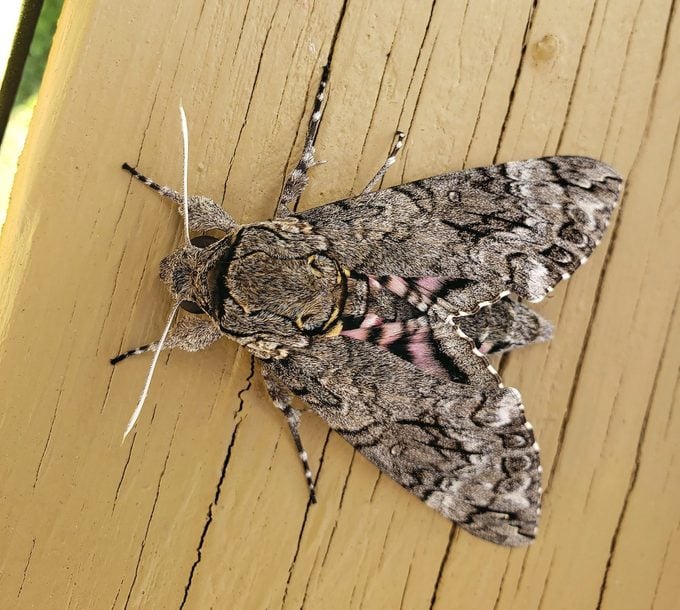
Pink-Spotted Hawkmoth
The pink-spotted hawkmoth (above) is another member of the sphinx or hummingbird moth family. This species is very widespread in the American tropics. In the United States, it is found most regularly in the southernmost states, but a few wanderers reach as far as Canada. Its larvae feed on the leaves of sweet potato, jimsonweed, morning glory and other plants. This moth is uncommon, so it’s always exciting to see one.
Here’s where you can spot a giant leopard moth.
Nectar Plants to Attract Sphinx Moths
Sphinx moths prefer nectar-filled, tube-shaped flowers.
- Brugmansia
- Butterfly bush
- Columbine
- Datura
- Evening primrose
- Flowering tobacco (Nicotiana)
- Four-o’clocks
- Honeysuckle
- Hosta
- Moonflower vine (Ipomoea alba)
- Nasturtium
- Verbena
Host Plants for Sphinx Moths
- Grapevine
- Honeysuckle
- Poplar (Populus species, including cottonwood, poplar, aspen)
- Snowberry (Symphoricarpos species)
- Virginia creeper
- Tomato
Next, learn fascinating facts about cecropia moths.
Why Trust Us
For nearly 30 years, Birds & Blooms, a Trusted Media Brand, has been inspiring readers to have a lifelong love of birding, gardening and nature. We are the #1 bird and garden magazine in North America and a trusted online resource for over 15 million outdoor enthusiasts annually. Our library of thousands of informative articles and how-tos has been written by trusted journalists and fact-checked by bird and garden experts for accuracy. In addition to our staff of experienced gardeners and bird-watchers, we hire individuals who have years of education and hands-on experience with birding, bird feeding, gardening, butterflies, bugs and more. Learn more about Birds & Blooms, our field editor program, and our submission guidelines.
Originally Published: February 16, 2024

