

20 Pretty Winter Plants for Backyard Cheer


Updated: Feb. 20, 2024




These trees, shrubs, grasses and even flowers shine bright in winter. Add height and texture to your yard with our favorite winter plants.
From winterberry and paperbark maple to witch hazel and pink muhly grass, these winter plants are pretty, yet tough. They shine brightest in cold weather, because they add height, texture and structure to your backyard space. Plus, many of these colorful winter plants have wildlife benefits.
You can go the extra mile and spread Christmas cheer with your winter plants, too. Who says holiday decor has to stay indoors? Boost the winter appeal of blue spruce and other large evergreen trees with festive lights, ornaments or garland.
Also check out these winter garden ideas to keep growing while it’s snowing.

1. Blue Spruce
Picea pungens, Zones 2 to 7
Blue spruce is a large tree, but small shrublike cultivars max out at 5 to 15 feet high. The blue-gray foliage is particularly alluring in the winter landscape when a dash of color is sorely needed. For a more blue color, select a cultivar known for its intense blue color. Check out 9 tiny evergreens to grow.
Why we love it: The lovely foliage, but also the range of shapes—mounded to lollipop to pompom.
2. Winterberry
Ilex verticillata, Zones 3 to 9
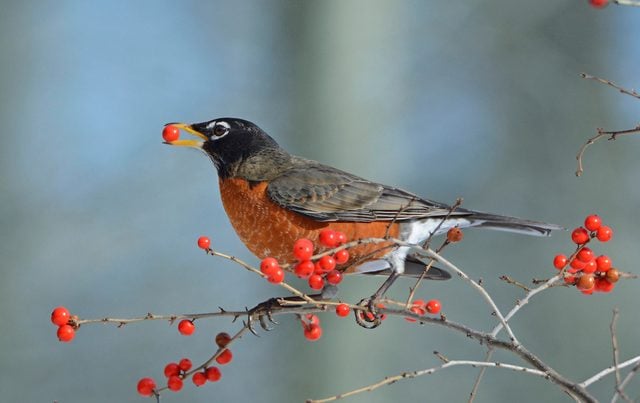
Grown as a small tree or a shrub, winterberry doesn’t get much attention during the growing season. Come winter, though, this wallflower demands to be seen when it bursts to life with bright red berries. Learn how to create winter shelter for birds.
Why we love it: The impressive collection of fruit lasts for months—if the songbirds don’t gobble it up first. Plant winterberry in groups for big impact.
3. Paperbark Maple
Acer griseum, Zones 4 to 8
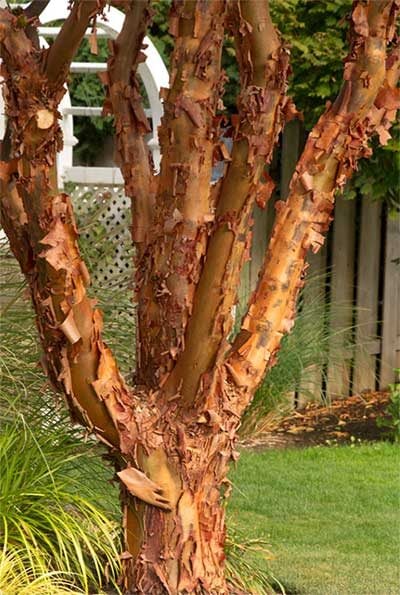
Like many other maples, paperbark has showy, orange to red fall foliage. To ease your pain when the show is over, the tree delivers shiny, coppery peeling bark in winter. Many gardeners intentionally “limb them up,” which means to remove lower branches so there’s more of the bright bark in view.
Why we love it: It’s a good-looking tree that tolerates partial shade. Grow this maple where it can be enjoyed!
Psst—these winter interest plants add color and beauty to your yard.
4. Redtwig and Yellowtwig Dogwood
Cornus sericea, Zones 2 to 7
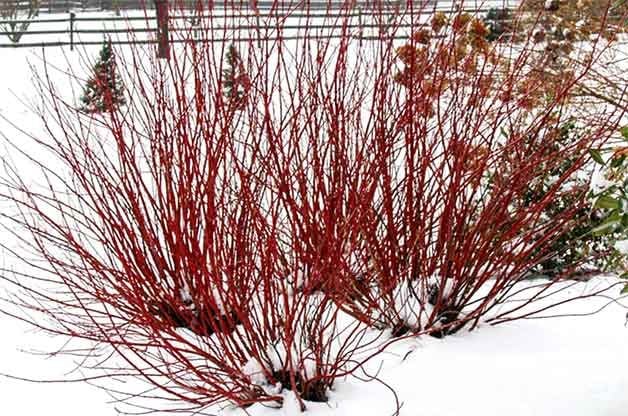
They display flowers in spring and respectable leaf color in fall. However, redtwig and yellowtwig dogwood are really known for their bark. Remove older stems every few years because the youngest growth produces the most color.
Why we love it: Dogwoods are easy to maintain pretty winter plants, requiring little more than annual pruning.
Attract more birds with a silky dogwood shrub.
5. Pink Muhly Grass
Muhlenbergia capillaris, Zones 5 to 9
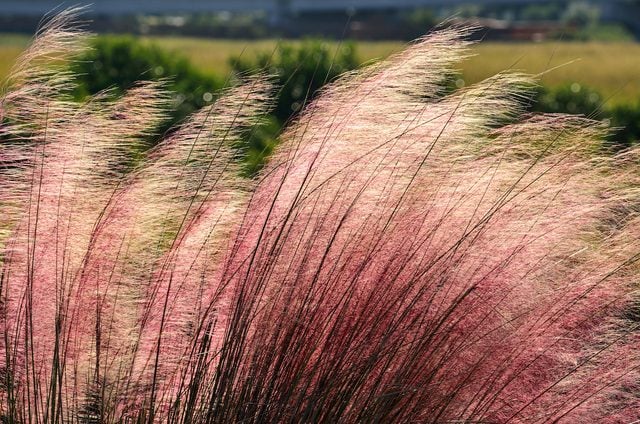
Many ornamental grasses provide exceptional winter interest, but muhly grass, also known as pink hair grass, gets a nod for its distinctive airy, pink flowers that bloom into late fall. After that, the drama continues as the plant sways in the winter wind.
Why we love it: Muhly grass is simple to grow, tolerates poor soil, looks great in masses and survives drought conditions.
Grow these native ornamental grasses for birds and butterflies.
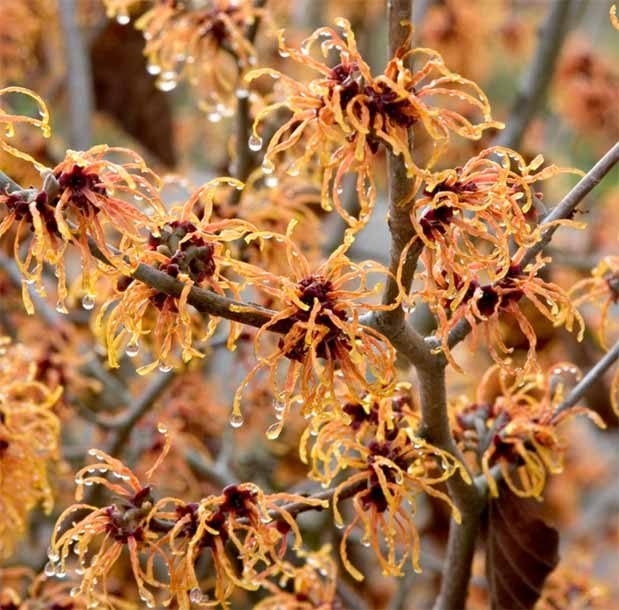
6. Witch Hazel
Hamamelis spp., Zones 3 to 9
Is it overstating things to say witch hazel is, ahem, bewitching? Not when you see it unfurl its spider-like flowers in middle to late winter. All but autumn witch hazel (a fall bloomer) are bare when in bloom, making the golden yellow, sometimes reddish orange flowers more conspicuous. Check out the top 10 winter blooms for your flower garden.
Why we love it: Witch hazels are tough, undemanding shrubs with stunning fall foliage and winter flowers.
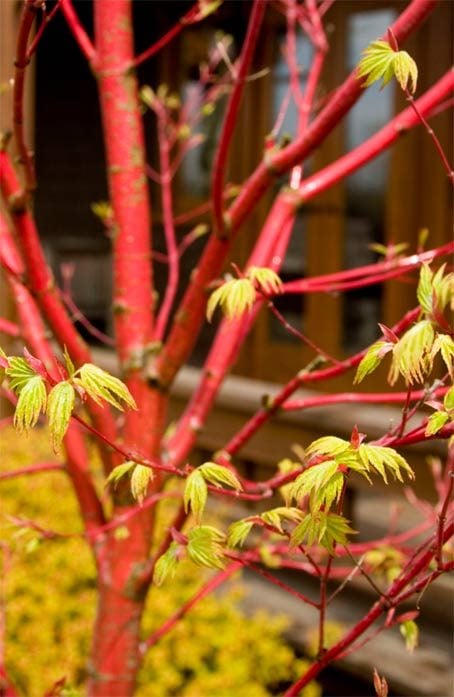
7. Coral Bark Japanese Maple
Acer palmatum ‘Sango Kaku,’ Zones 5 to 8
The coral-orange-red bark is brightest and most noticeable in winter. Ample moisture, afternoon shade and protection from winds help keep coral bark maple looking its best.
Why we love it: The bark’s unique color. And this slow-growing, relatively small tree is a perfect fit in almost any garden.
Learn how to grow flowers in winter by forcing bulbs indoors.
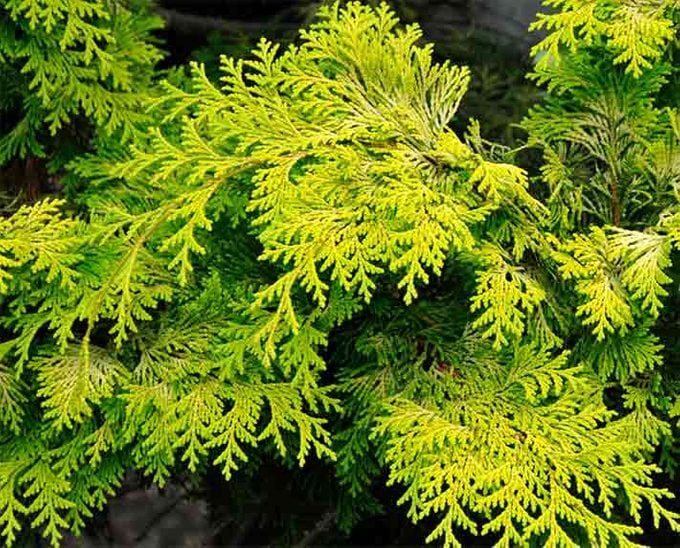
8. Hinoki False Cypress
Chamaecyparis obtusa, Zones 4 to 8
This little gem isn’t so little in its native Japan, where it reaches 70 feet tall. Most nursery-grown cultivars are shorter than 10 feet, making them a perfect fit for small backyard gardens.
Why we love it: The tightly packed, swirly, golden-green foliage makes hinoki false cypress an absolute rock star, especially in winter.
Try these dwarf conifers for small spaces.
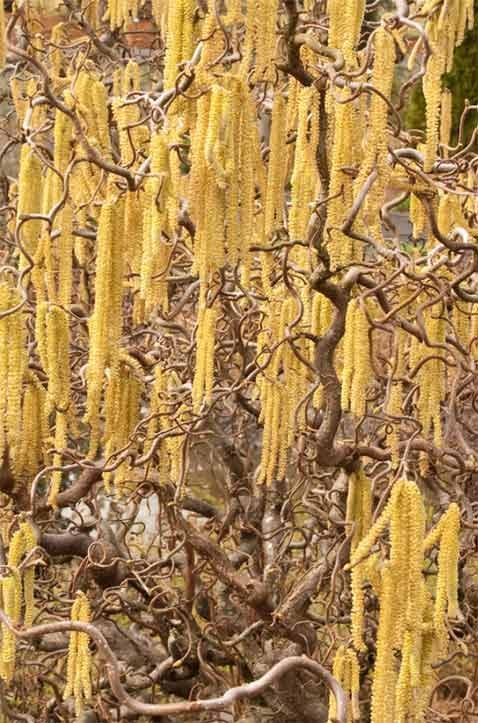
9. Harry Lauder’s Walking Stick
Corylus avellana ‘Contorta,’ Zones 3 to 9
This small, contorted shrub-like tree is known to make people long for winter. Sure, there’s golden yellow foliage in fall, but once the leaves drop, the artistry of its gnarled shape steals the show.
Why we love it: The twisty gray branches are an architectural sensation and look particularly beautiful when covered in a dusting of snow.
Learn how to grow Harry Lauder’s Walking Stick.
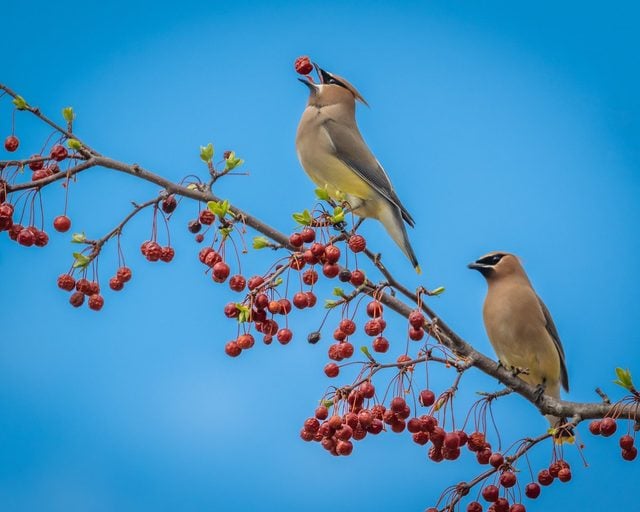
10. Flowering Crabapple
Malus spp., Zones 4 to 8
This beloved backyard tree offers year-round interest. Outstanding spring blooms and brightly colored red, orange or yellow fruit in fall and winter are crabapple’s top selling points.
Why we love it: It comes in a range of forms. The newer cultivars are disease resistant and yield more colorful fruit.
Learn why you should plant a weeping crabapple tree.
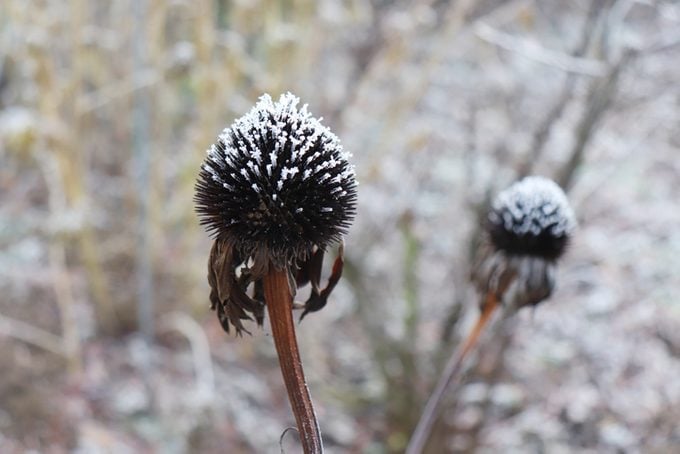
11. Coneflower
Echinacea spp., Zones 3 to 9
This native plant attracts attention from summer till the next spring. Plant groups in a sunny space for maximum impact and put off deadheading until the snow melts. Because the prickly seedpod is so substantial, a bunch of coneflowers will add a big architectural element to any winter garden.
Add some beautiful yellow color to your winter garden with the Tagetes lemmonii.
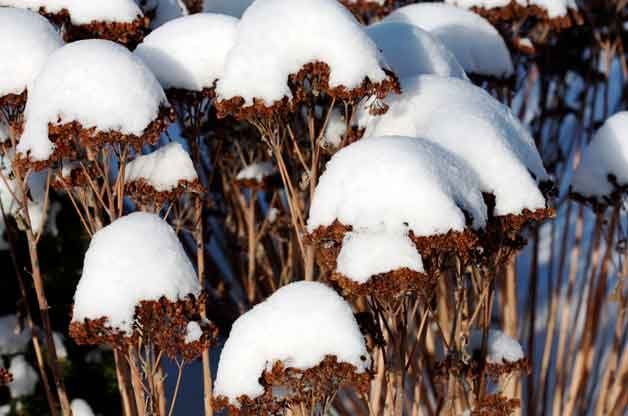
12. Sedum
Sedum spp., Zones 3 to 10
Long after frost has dulled sedum’s vibrant colors, many varieties’ flower heads add to winter gardens. You don’t have to cut back the flowers or foliage until early spring, so this flower can add interest to a garden all winter long.
Grow Autumn Fire sedum for late season color.
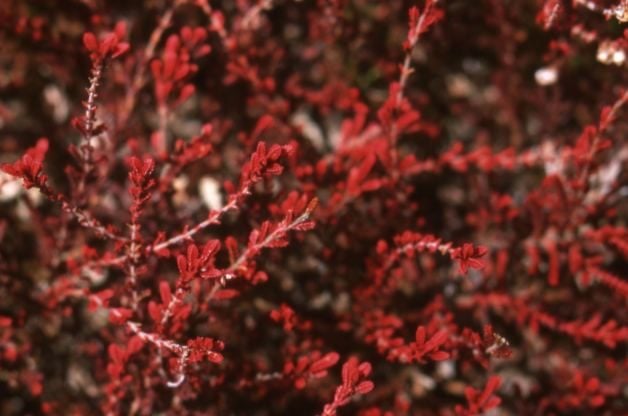
13. Heather
Calluna vulgaris, Zones 5 to 7
While heather is a celebrated plant throughout Europe, it’s often forgotten here in North America. This versatile flower boasts color during every season, making it ideal for winter gardening. From the little florets in summer and autumn to gorgeous foliage in winter, this beauty makes a strong impact in any garden with acidic soil. In locations where snowfall is light, insulate heather with mulch and pine branches.
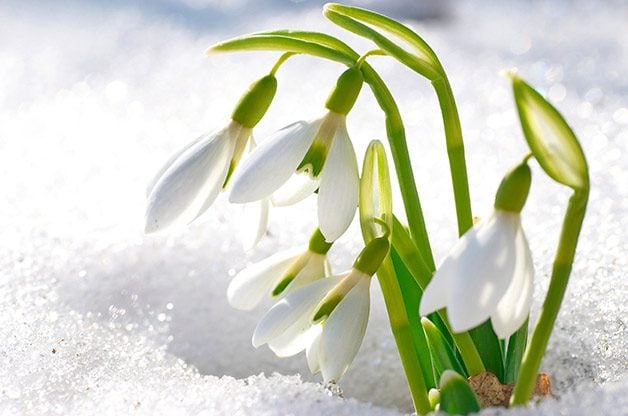
14. Snowdrop
Galanthus, Zones 3 to 9
When it pops up in late winter, snowdrop’s bright-green leaves send the message loud and clear that spring really is on its way. The snowdrop requires virtually no maintenance and spreads readily. For a larger collection of these 4- to 6-inch winter plants, simply lift and divide bulbs after they bloom, before the foliage dies back. Snowdrop is especially attractive scattered throughout naturalized settings and under deciduous trees and shrubs.
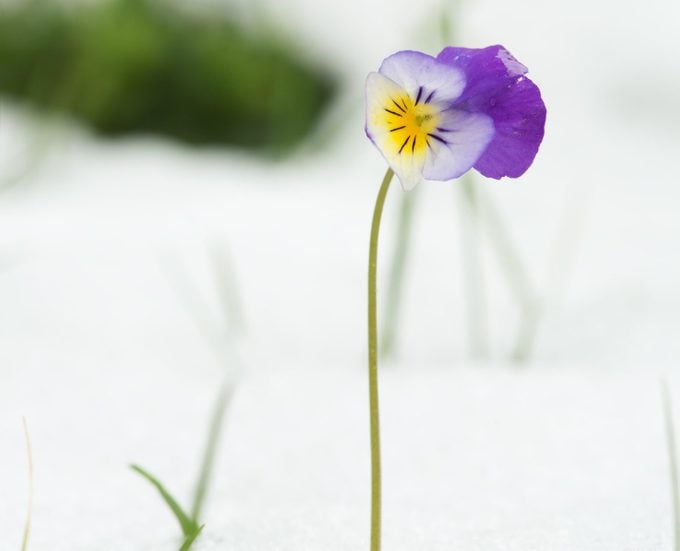
15. Johnny-Jump-Up
Viola tricolor, Zones 3 to 9
This old-fashioned classic produces a plethora of charming yellow, blue, violet and white flowers. Seeds planted the previous spring will bloom in fall and often hang on through winter. Johnny-jump-up thrives in containers, so if you live in a cooler climate, sow it in a planter and bring it inside when the temperatures plummet. You’ll be able to enjoy the colorful display even while there’s a blizzard raging outside.
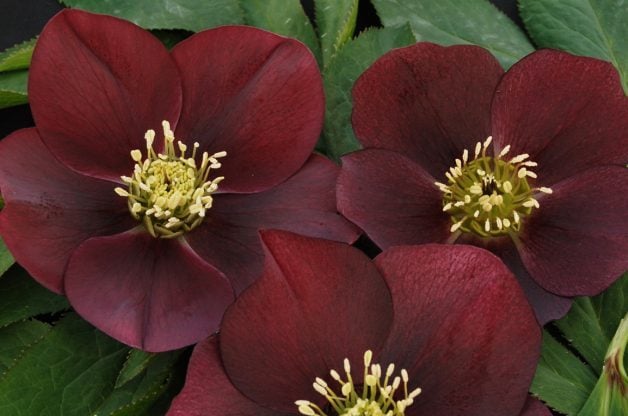
16. Hellebore
Helleborus, Zones 4 to 9
No cold-weather garden is complete without hellebore’s lovely cup-shaped blossoms. With numerous colors, and heights ranging from just 2 inches to 2 feet, this distinctive bloomer will enhance any garden, although it may be difficult to choose just one variety. You’ll probably enjoy this moisture- and shade-loving plant so much that you’ll wish hellebore bloomed year-round.
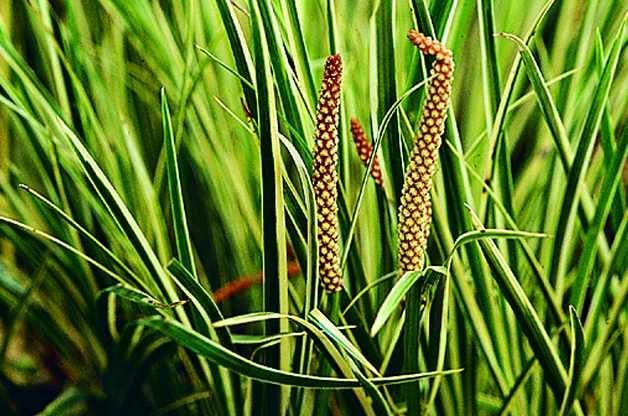
17. Sweet Flag
Acorus calamus ‘Variegatus’, Zones 7 to 11
Grown in wet areas for its grass-like, aromatic foliage, sweet flag has a sometimes wrinkly texture and can reach about 5 feet tall. The leaves are strongly variegated with creamy white bands, making it a fun accent in a winter garden alongside a pond.
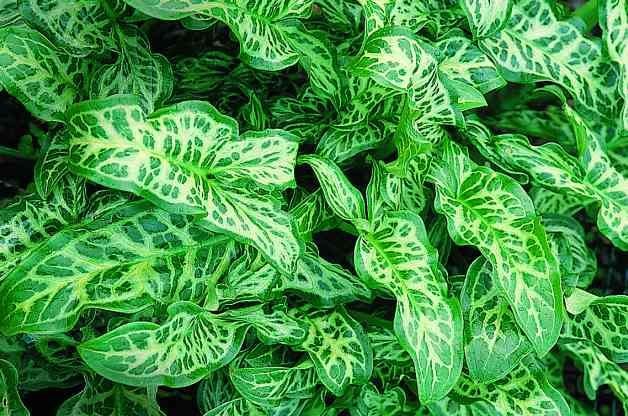
18. Italian Arum
Arum italicum, Zones 6 to 9
This Mediterranean native sends up red and green berry stalks and broad, arrow-shaped leaves marked with green veins in fall. The foliage remains evergreen in milder climates, adding a pop of color to shady spots. Arum is an easygoing plant, perfect for novice gardeners and winter gardening.
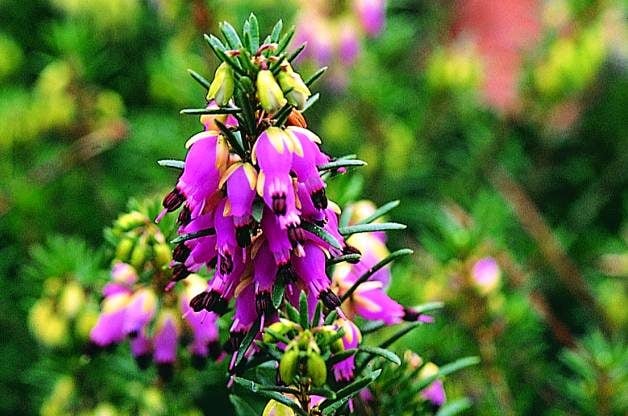
19. Winter Heath
Erica carnea, Zones 5 to 7
Through most of winter and into early spring, this reliable, low-growing plant puts on an attractive show of small, urn-shaped purple-pink flowers. Acidic soil is a must.
What Winter Plants Look Best in Your Garden?
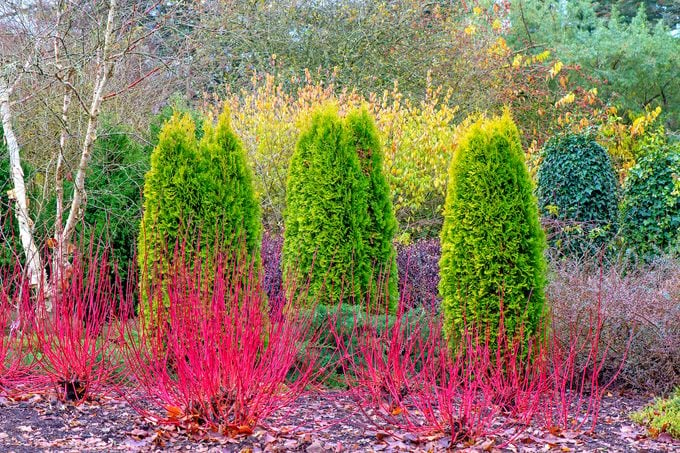
Discover the color-packed and wildlife-friendly plants that readers love to see in the cold season.
- I leave my sunflowers up over the winter months. They remind me of tall soldiers standing guard over my garden. I enjoy watching the birds and squirrels grabbing a quick sunflower seed snack, says Greg Mandigo.
- Blueberry bushes look beautiful with their red-orange twigs, says KC Primbs.
- Russian sage turns a silvery color. It reminds me of something a snow queen would have in her garden, says Beth Green.
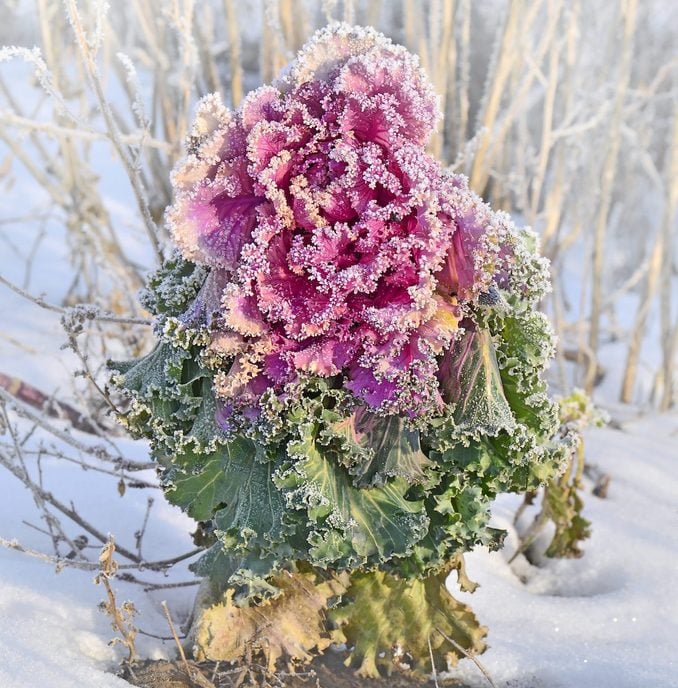
- My favorite plant is flowering kale, hands down. The colder it gets outside, the more vibrant the colors become. The plant really pops against the snow, says Deborah Howe.
- My ornamental grasses shed seeds for the birds and add so much visual interest. I love to see them waving when it’s blustery out, says Dyan Kroll.
- The bright branches of my two red twig dogwood shrubs look fantastic between the evergreens and can also be used for winter decorating, says Bobbie Yoder.
5 Must-Have Features on Winter Plants
- Foliage: Besides evergreens, look for deciduous trees, such as younger pin oaks, that hold their foliage in winter.
- Bark: Some is colorful (white birch), some is textural (musclewood) and some is just odd enough to be interesting (hackberry).
- Berries: They attract birds and wildlife. And their color gives life to the dreary winter scenery.
- Shape: Add architectural interest with contorted (Lavender Twist redbud), pyramidal (dwarf Alberta spruce) and umbrella (Japanese maple) shapes.
- Movement: Ornamental grasses wave and nod in the wind to make your landscape less static.
Originally Published: October 27, 2022

