Top 10 Spring Bulbs

The words "spring bulbs" conjure up visions of flowering daffodils, tulips and hyacinths. Considered hardy bulbs, these harbingers of spring are a welcome sign that winter is loosening its hold on backyards.

plant database
Photo: Dutch Gardens; www.dutchgardens.com

Allium

If you want to add a colorful bounce to your garden, there's no better bloomer than allium. This pretty perennial is a winning selection for almost any yard. Not only can you find an allium to suit almost any spot in the garden, the enchanting plant is easy to grow and is readily available as bulbs or container-grown plants.

  • Common Names: Allium, flowering onion and ornamental onion.
  • Botanical Name: Allium species.
  • Hardiness: Zones 2 to 8.
  • Bloom Time: Late spring to fall.
  • Size: 6 inches to 5 feet high, 12 to 18 inches or more wide.
  • Flowers: White, purple, blue, pink and yellow small star-, bell- or cup-shaped flowers grow in round cluster (ball-headed), or loose upright or drooping clusters (tufted).
  • Light Needs: Full sun; some varieties tolerate partial shade.
  • Growing Advice: Plant bulbs in fall at a depth two to three times their vertical diameter, but no deeper than 4 inches.
  • Prize Picks: Giant allium (Allium giganteum) grows 3 to 4 feet tall with a striking 6-inch purple flower head. Drumstick chives (Allium sphaerocephalon) produce small tightly packed purple flower heads on 3-foot stems. Of the ornamental onions, Globemaster is widely available and justly popular. It grows 2 to 3 feet all, with 10" flower heads.

plant database
Photo: Dutch Gardens; www.dutchgardens.com

Amaryllis

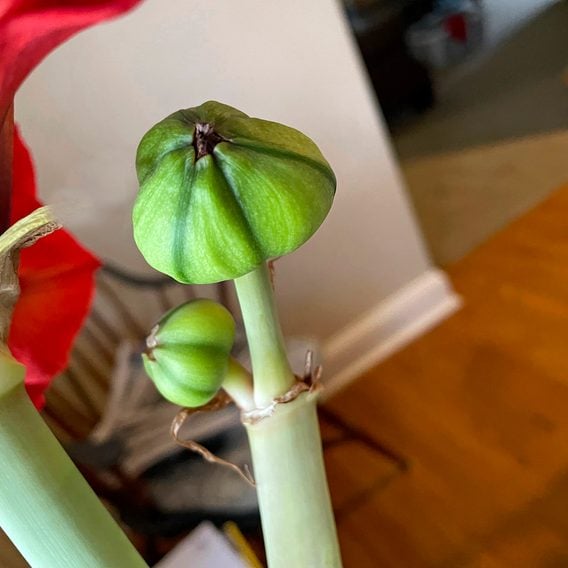
While other plants are taking a long winter's nap, amaryllis is busy producing clusters of up to six blossoms as large as 6 inches in diameter. This native of Central and South America is hardy only in very warm areas, so it's generally grown as a houseplant.

One way to care for amaryllis during its dormant phase, which begins in late summer, is to store it in a cool location with minimal water. When growth resumes, it needs a bright spot with 4 hours of sun per day.

  • Common Names: Amaryllis.
  • Botanical Name: Hippeastrum species.
  • Hardiness: Generally grown as houseplant.
  • Bloom Time: January through April.
  • Size: 1 to 3 feet high.
  • Flowers: Trumpet shaped; red green, yellow apricot, salmon, pink, orange, white; may have contrasting stripes, margins or throats.
  • Light Needs: Full to bright filtered light.
  • Growing Advice: Repot after dormant season using a pot 1 to 2 inches wider than the bulb's diameter. The bulb "shoulders" should be slightly above the soil surface. Water sparingly until the plant's rapid growth begins.
  • Prize Picks: Picotee, a large-flowered hybrid, produces stunning white flowers with delicate red edges. Exotic Star (pictured here) has star-shaped blooms.

plant database
Photo: Park Seed, www.parkseed.com

Daffodils

The yellow rays of daffodils often dot the landscape before other flowers poke their heads about the soil. In many parts of the country, these blooms are a sure sign that warmer days are ahead.

The spring bulb is particularly popular because it's so easy to grow in just about any type of soil. The bulbs also are toxic, so deer, squirrels and rabbits leave them alone.

  • Common Names: Daffodil.
  • Botanical Name: Narcissus.
  • Hardiness: Zones 2 to 9.
  • Bloom Time: Late winter through spring.
  • Size: 6 to 20 inches high.
  • Flowers: Yellow or white, some with orange pink or red flower parts; a distinctive trumpet, called a corona, surrounded by a ray of broad petals.
  • Light needs: Full sun to partial shade.
  • Growing Advice: Bulbs should be planted in early fall in northern areas and late fall in southern areas. Bury bulbs 2 to 3 times their diameter and 4 to 8 inches apart. Divide every 5 to 7 years or as needed.
  • Prize Picks: For a unique-looking daffodil, try a double cultivar like pale yellow Bridal Crown, which produces numerous double, sweetly-scented flowers. If your tastes are more traditional, stick with trumpet cultivars, like the yellow Dutch Master.

plant database
Photo: Dutch Gardens; www.dutchgardens.com

Dahlia

It's no wonder dahlias are the darlings of many gardens. With thousands of cultivars to choose from, there's a color, flower shape and plant size for everyone.

These showy flowers quickly gained popularity after Spanish explorers discovered them in Central American gardens. The kings of Spain named them in honor of Swedish botanist Anders Dahl, who created many hybrids.

  • Common Names: Dahlia.
  • Botanical Name: Dahlia.
  • Hardiness: Zones 8 to 11.
  • Bloom Time: Midsummer to first frost.
  • Size: 2 to 8 feet high, 1 to 3 feet wide.
  • Flowers: Every color but blue and green; shape varies from pompon to daisy-like shapes.
  • Light needs: Full sun.
  • Growing Advice: Plant tuberous roots in spring after last frost, placing them 4 inches deep with "eye" pointing up. Stake taller varieties.
  • Prize Picks: Show 'N' Tell's twisted red petals give this semi-cactus cultivar a tousled look. Ball dahlias - like the small white-tipped crimson bloom Kenora's Fireball - offer a full pompom of inwardly-curved florets.

plant database
Photo: Dutch Gardens; www.dutchgardens.com

Hyacinths

The sweet scent of hyacinths is an undisputed highlight of spring. One old poem suggests selling one's last loaf of bread and using the money to buy hyacinths "to feed the soul." Yes, they're that intoxicating.

Each hyacinth bulb produces a dense, compact spike of tiny flowers with a luxuriant fragrance. They're prettiest planted in clusters, especially when paired with other early-flowering bulbs like daffodils. Blossoms last 2 weeks. Plant bulbs near a doorway or other well-traveled area to make the most of this short-but-sweet show.

  • Common Names: Hyacinth, Dutch hyacinth, common hyacinth and garden hyacinth.
  • Botanical Name: Hyacinthus orientalis.
  • Hardiness: Zones 4 to 9.
  • Bloom Time: Spring.
  • Size: 6 to 10 inches high and 6 to 9 inches wide.
  • Flowers: White, cream, yellow, orange, apricot, salmon, blue, violet, pink, purple and red; rounded spikes of tubular, bell-shaped single or double flowers.
  • Light needs: Full sun to partial shade.
  • Growing Advice: Plant bulbs 6 inches deep, 6 to 9 inches apart, from late September until the ground freezes in cold regions, or late October to December in milder climates. Mulch to discourage early sprouting.
  • Prize Picks: For scent-sational flowers, plant the violet-lilac-colored Amethyst. Blue Jacket produces distinctive navy blue flowers with purple veins. The Caribbean hyacinth collection (pictured here) produces tropical blooms.

plant database
Photo: Dutch Gardens; www.dutchgardens.com

Lily

Throughout history, lilies have captured our imagination and senses with their simple beauty and purity. But today, lily lovers can choose from many vibrant colors and multiple styles. And because of terrific advancements by plant breeders, lilies are now hardier and easier to grow. So go ahead, enjoy the beauty of this reliable, colorful and usually fragrant blooming beauty from June to September - year after year after year.

  • Common Names: Lily.
  • Botanical Name: Lilium.
  • Hardiness: Zones 3 to 8, depending on cultivar.
  • Bloom Time: Spring to fall.
  • Size: 1-1/2 to 10 feet high, less than 18 inches wide.
  • Flowers: Six curved petals form various shapes in myriad colors.
  • Light Needs: Full sun to partial shade.
  • Growing Advice: Set out plants in spring or fall with crown no more than 1 inch below the soil's surface. Divide every 3 to 5 years to prevent crowding.
  • Prize Picks: Early-summer blooming Asiatics, while scentless, are bright and dependable. Orange Enchantment is a classic, as is yellow Connecticut King. Oriental hybrids bloom in the latter part of the summer with big, scented blooms. Crimson-and-white Star Gazer is the most famous.

plant database
Photo: Dutch Gardens; www.dutchgardens.com

Nerine

If you watch nerine grow, you might think these beauties have it backwards. Often, leaves come before the bloom, but not in this case. Nerine forms flowers on tall thin stalks. Then, after the flowers die down, the plants produce shiny green leaves. It doesn't matter how they grow, though. The results are stunning!

  • Common Names: Nerine.
  • Botanical Name: Nerine bowdenii.
  • Hardiness: Zones 8 to 10.
  • Bloom Time: Autumn.
  • Size: 12 to 24 inches high.
  • Flowers: Lily-like flowers in white, salmon, pink, orange-red, crimson and scarlet.
  • Light Needs: Full sun.
  • Growing Advice: Plant in well-drained soil in early spring.
  • Prize Picks: Pink Triumph flowers are softer-hued than the species, with a darker pink central stripe in each petal-lovely! You'll love the uniquely showy stamens on the closely related Guernsey lily (Nerine sarniensis), which bears 10 to 20 orange-red blooms from one single point on the stem.

plant database
Photo: Dutch Gardens; www.dutchgardens.com

Snowdrop

It's easy to see how the snowdrop got its name. This delightful plant is one of the first to bloom in spring, often while there's still snow on the ground.

It's easy to grow, too. Snowdrops require virtually no maintenance and will spread readily. When the plants become too crowded, simply lift and divide bulbs after they bloom, before the strappy foliage dies back.

  • Common Names: Snowdrop.
  • Botanical Name: Galanthus nivalis.
  • Hardiness: Zones 3 to 9.
  • Bloom Time: Late winter to early spring.
  • Size: 4 to 6 inches high.
  • Flowers: Three white outer petals surround green-tipped inner petals in a distinctive drooping teardrop shape.
  • Light Needs: Partial shade.
  • Growing Advice: Snowdrops are especially attractive in naturalized settings and under deciduous trees and shrubs. They work well in borders and rock gardens, too.
  • Prize Picks: Giant snowdrop, Galanthus elwesii, is twice as big and blooms two weeks earlier.

plant database
Photo:

Tulips

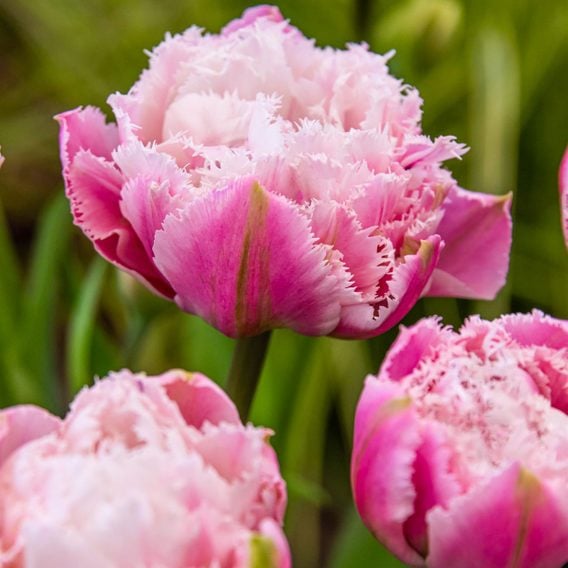
Few flowers announce the arrival of a season the way tulips usher in spring. Hands down, they're the most popular flower bulb planted throughout the world.

Available in numerous sizes, bloom times and almost any color except true black and true blue, tulips are one of the most versatile bulbs in the world. That makes it easy to find a variety that suits your style - whether it's cottage-garden or strictly formal.

  • Common Names: Tulip.
  • Botanical Name: Tulipa.
  • Hardiness: Zones 4 to 6. Most tulips require a long winter to bloom. In warmer climates, they can be forced to bloom by chilling bulbs in the refrigerator for 8 to 10 weeks before planting.
  • Bloom Time: Early to late spring.
  • Size: 6 to 40 inches high, and 3 to 6 inches wide.
  • Flowers: Nearly all colors are available except true black and true blue. There are also many bicolor, blended and streaked varieties.
  • Light needs: Full sun.
  • Growing Advice: Plant firm bulbs 5 to 6 inches deep with the pointed ends facing up. Place bulbs 6 inches apart, cover and water well. To create a bigger impact, cluster many bulbs of the same color. After the tulips bloom, do not remove the leaves until they turn yellow. This feeds the bulb, to fuel the next flowering season.
  • Prize Picks: Aleppo, a fringed raspberry-red variety will truly stand out with its feathered orange edges. Other interesting classes of cultivar include parrot, goblet-shaped, and star-shaped. Also try botanical varieties like the dark pink Tulipa bakeri for blooms that return for years to come.

plant database
Photo: Dutch Gardens; www.dutchgardens.com

Gladiolus

With sword-like foliage and tropical blooms, glads will steal the show in any garden. This age-old classic comes in a variety of option these days, with cultivars ranging in height from 12 inches to 5 feet. Perk up your garden-and vases-with these showy blooms today!

  • Common Names: Glads.
  • Botanical Name: Gladiolus; Hardy glads, Gladiolus nanus.
  • Hardiness: Zones 8 to 10; winter-hardy types, Zones 4 to 9.
  • Bloom Time: Summer in northern areas to year-round in the Deep South.
  • Size: 2 to 5 feet tall; 1 to 2 feet wide.
  • Flowers: White, cream, red, lavender, orange, yellow, deep purple, green and pink.
  • Light Needs: Full sun.
  • Growing Advice: In early spring, plant corms 3 to 5 inches deep and 3 to 4 inches apart. For continuous blooms, plant additional corms every 10 to 14 days.
  • Prize Picks: Grandiflora types: Redwing Butterfly, Dancing Doll Butterfly, Confetti Mix, Alfalfa, Blue Sky, Green Star, Tout a Toi, Phantom and the Glamini series. Hardy gladiolus: Charming Beauty, Impressive, Sabrina, and Hardy Gladiolus Mixture.

Follow us

facebook twitter Pinterest google+


Sponsored Links