

The Best Shade Garden Plants for Your Shady Areas

Updated: Feb. 14, 2023




Gardeners are not doomed to boring, colorless garden plants for shady areas. Shade plants are more colorful and interesting than ever.
Our editors and experts handpick every product we feature. We may earn a commission from your purchases.
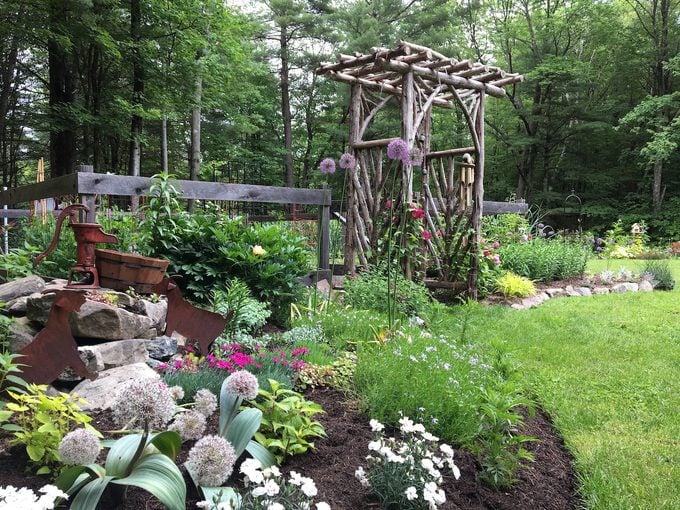
Just a few years ago, the words shade garden plants brought to mind hostas, ferns, impatiens and maybe some astilbe. Shady areas were viewed as a fine place to rest awhile on the garden bench, but not nearly as exciting as a sunny border.
Colorful garden plants for shade are still more limited than those for sun—especially now that impatiens no longer thrive in many areas due to a fast-spreading fatal disease. But foliage colors have exploded. And, oh, the possibilities! Today we can spice up our shade gardens with plants in bright lime, orange, pink, red, burgundy, purple, chocolate, near-black and every shade in between.
Shade Garden Benefits
Birds and pollinators need shade gardens for food, nesting and shelter. Even gardeners benefit from cooler shaded areas. But finding plants that bring color, interest and activity to your shady spaces isn’t always easy. Consider plants known for bold foliage when you want to liven up low-light areas. Foliage plants are no longer considered accents: They are the foundation and the “flowers.” Invite different leaf colors and textures to mingle, such as frilly fern fronds and the lily pad-like leaves of ligularia plants.
And don’t forget about blooms! Plenty of colorful bloomers thrive in partial shade. Cool or light colors such as whites, pinks and blues pop in even the darkest corners of the garden. Finally, bring a buzz of pollinator activity. Plants native to your region should always be your first choice. Here are some shade garden plant picks to get you started.
Vibrant Foliage Plants for Shade Gardens
Leaves bring as much beauty to a shade garden as blooms. Available in an array of sizes, shapes and colors, plants with unique foliage add visual interest and diversity. Grow them in multiples for big impact.
Today’s splendid palette lets us use foliage plants as we would blossoms, creating color combinations that last all season. Easy-to-grow coleus, for instance, now comes in an unbelievable selection of luscious colors, with leaves ranging from simple shapes to frilly ruffles, in heights from 8 inches to 3 feet. As a bonus, the flowers attract hummingbirds.
1. Japanese Painted Fern
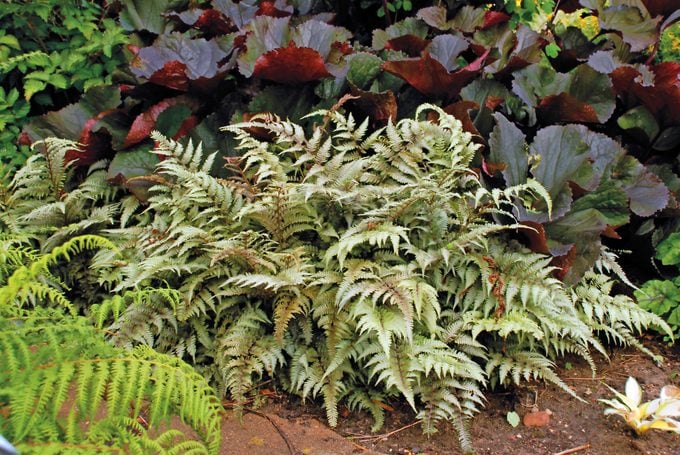
Anisocampium niponicum, Zones 2 to 9
Ferns have left good old green behind. For sophisticated texture and color, consider this woodland favorite. Take a look at the Lady in Red cultivar, with her lacy fronds and blood-red stems, or silver and burgundy Japanese painted fern, or the autumn fern Brilliance, which starts out coppery pink in spring, turns green for summer, then colors up again for fall. One of the showiest cultivars is Pictum, with silvery gray fronds and burgundy red stems. For a touch of flair, try Crested Surf, which sports two frilly tips on every frond.
2. Lungwort
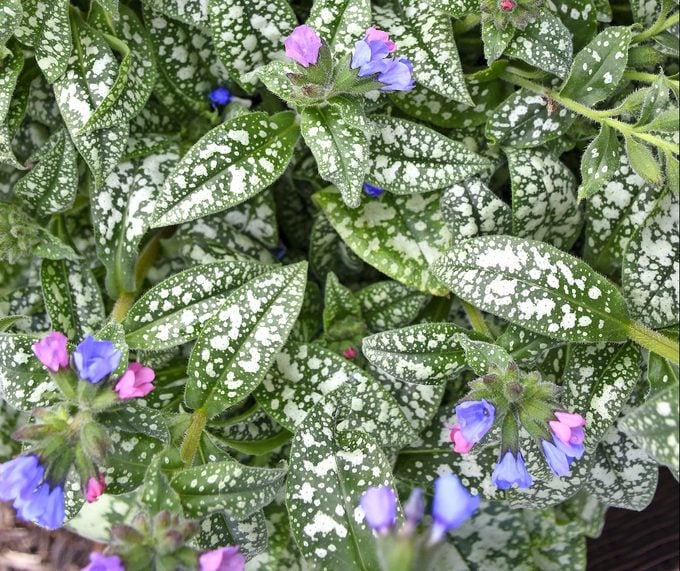
Pulmonaria, Zones 3 to 8
This low-growing beauty boasts fuzzy spotted or striped leaves that rest below spring blooms in hues of blue, purple, pink, red or white. Morning sun and afternoon shade keep lungwort looking fresh.
3. Barrenwort
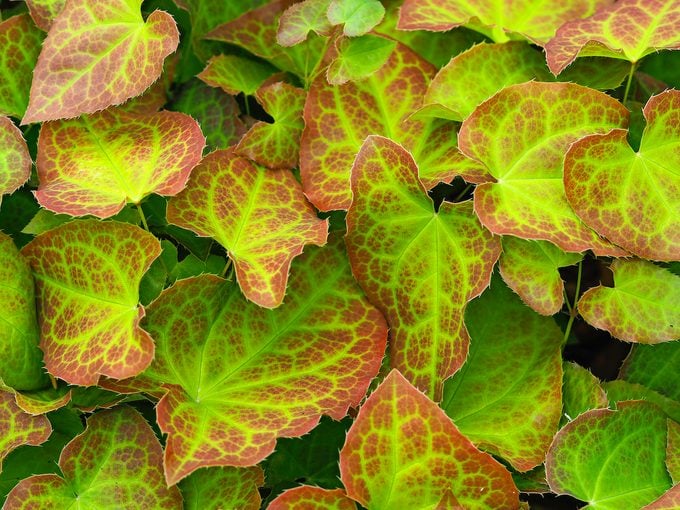
Epimedium, Zones 4 to 8
Dainty flowers in pink, purple, yellow or white appear in spring, but this plant’s main draw is its durable heart-shaped leaves. They make a trouble-free ground cover, tolerating both dry and moist shade.
4. Sun King Japanese Spikenard
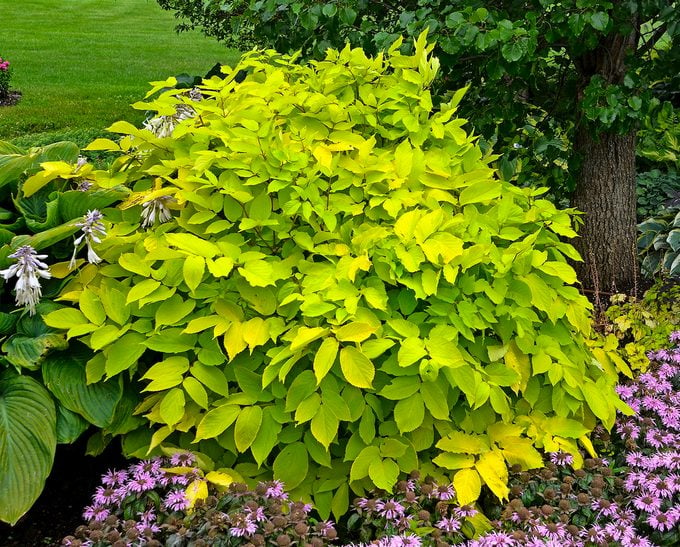
Aralia cordata, Zones 3 to 9
With large chartreuse leaves that thrive in partial shade, this plant reaches 3 to 6 feet tall and wide. A deer-resistant stunner that lives up to its regal name, it was the Perennial Plant Association’s 2020 Plant of the Year.
Shade Plants for Hummingbirds
Many hummingbird preferred flowers grow best in sun, but some do offer blooms bearing rich nectar in shade. Bees, butterflies and other pollinators will also find and appreciate them.
5. Columbine
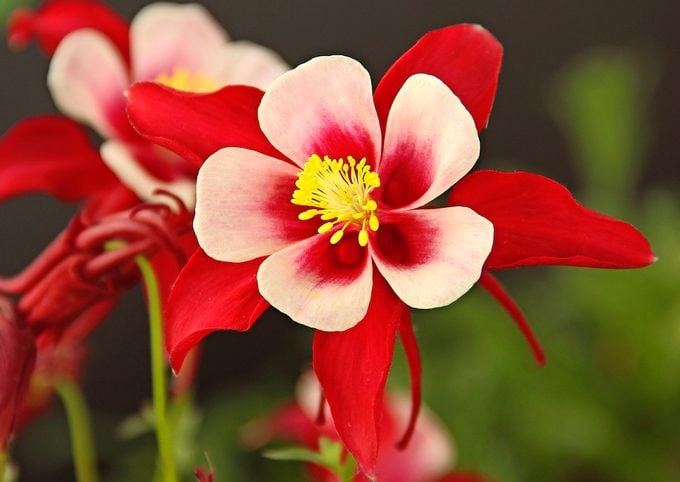
Aquilegia, Zones 3 to 9
Native species bloom in an array of colors, including red, yellow, orange, blue and purple. The bell-shaped flowers are nectar powerhouses. These 2- to 3-foot-tall perennials self sow and prefer soil that drains quickly.
6. Indian Pink
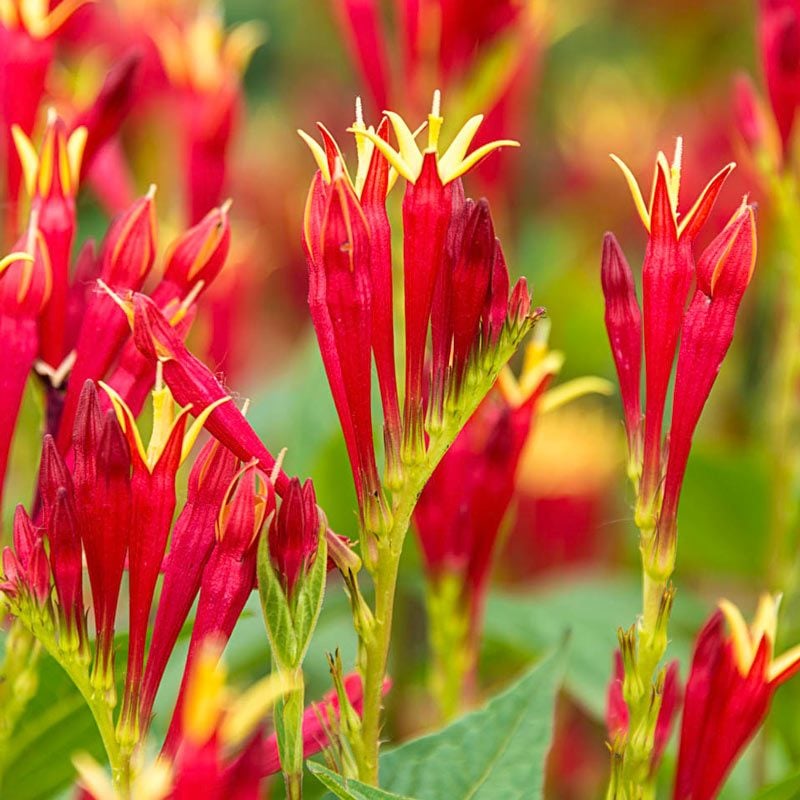
Spigelia marilandica, Zones 5 to 9
This 1-to-2-foot-tall native deserves a place in more shade gardens. The drought tolerant, clump-forming plants produce trumpet shaped red and yellow flowers that hummers flock to. Extend the bloom time by deadheading.
7. Cardinal Flower
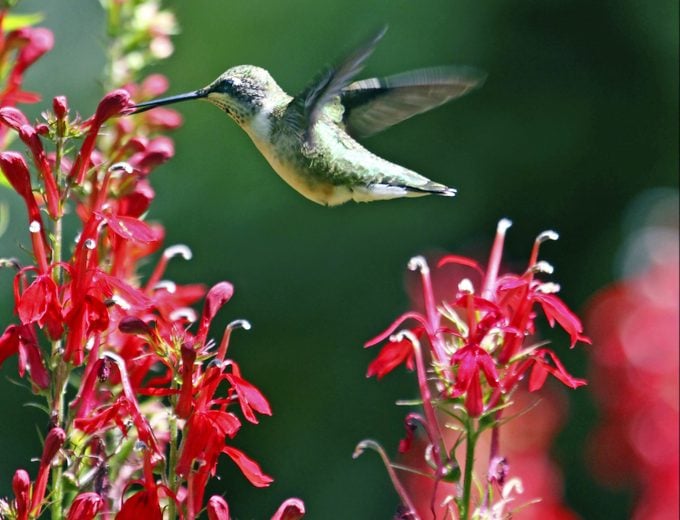
Lobelia cardinalis, Zones 3 to 9
With bright red or pink tubular blooms, this native does well in sun or part shade, provided it gets plenty of water. After cardinal flower‘s blooms fade, enjoy the fresh foliage and possibly a second bloom if you cut back the old spikes.
8. Hosta
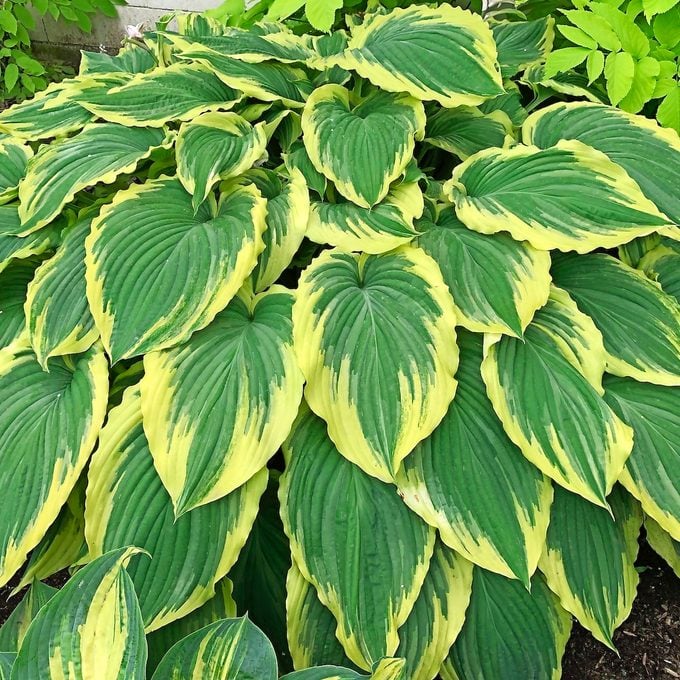
Hosta, Zones 3 to 9
Mainly grown for its impressive foliage, this shade-garden favorite has flowers in hues from white to lavender that attract nectar lovers. To create a hummingbird buffet, plant fragrant varieties near red-blooming plants. Here’s what you should know about growing hostas.
Shade Plants for Butterflies
Butterflies float toward many of the same plants beloved by bees and hummingbirds, but they especially appreciate a shady landing pad where they can comfortably sip nectar.
9. White Wood Aster
Eurybia divaricata, Zones 3 to 8
Drought tolerant and easy to grow, this native blooms late in the season, providing butterflies with last-minute energy boosts. Tolerant of heavy shade, it grows 1 to 2 feet tall with a plethora of daisylike flowers.
10. Geranium
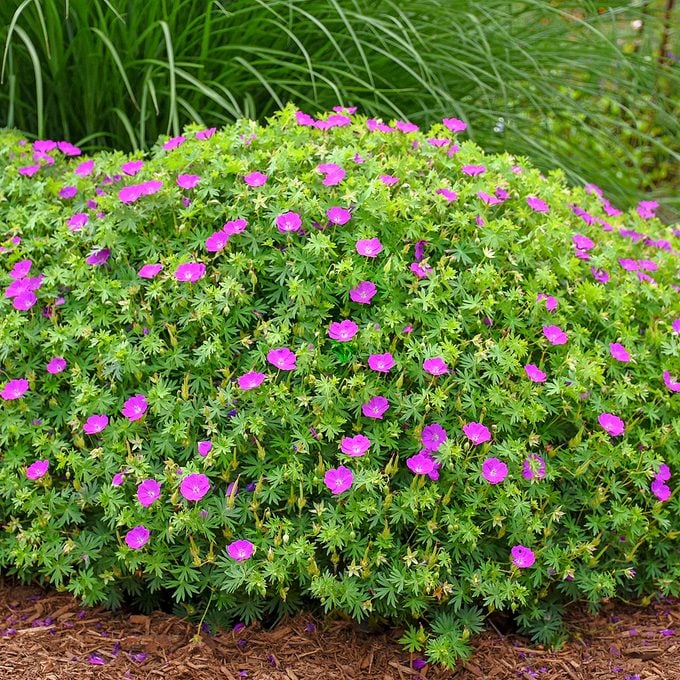
Geranium, Zones 3 to 8
Native geraniums, such as wild geranium, fit a wide range of growing conditions. Five-petaled blossoms in shades of pink, blue or purple grow on mounded foliage and are easy for butterflies to find and enjoy.
11. Ligularia
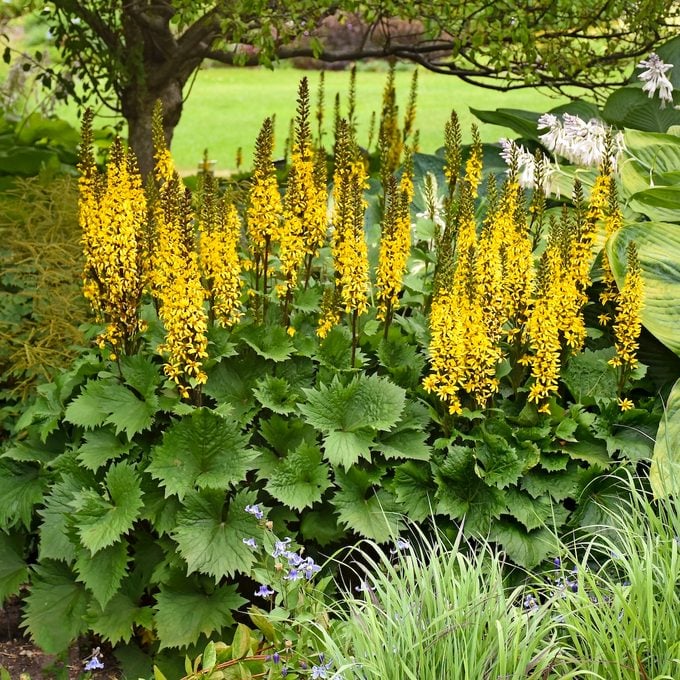
Ligularia dentata, Zones 4 to 9
These perennials boast an assortment of leaf shapes and sizes. If it’s butterflies you’re after, try Britt Marie Crawford with golden, daisylike flowers or Bottle Rocket with gold spires of blooms. Plant in moist soil.
Check out the top golden plants to make your garden glow.
12. Turtlehead
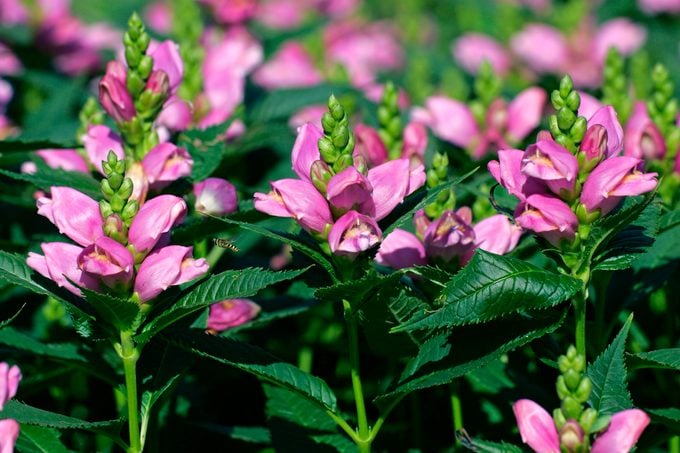
Chelone lyonii, Zones 3 to 8
Named for its flowers’ resemblance to openmouthed turtles, this late summer bloomer attracts winged visitors with its pink, purple or white blooms. A perfect pick for rain gardens or naturalized areas, it’s also deer resistant.
Colorful Shade Garden Plants to Try
Some plants flower well in shade, especially when given morning sun. These specimens’ showy blooms set the shade garden ablaze in color. But they have a lot more going for them, too—attractive foliage, interesting forms and more.
13. Coral Bells
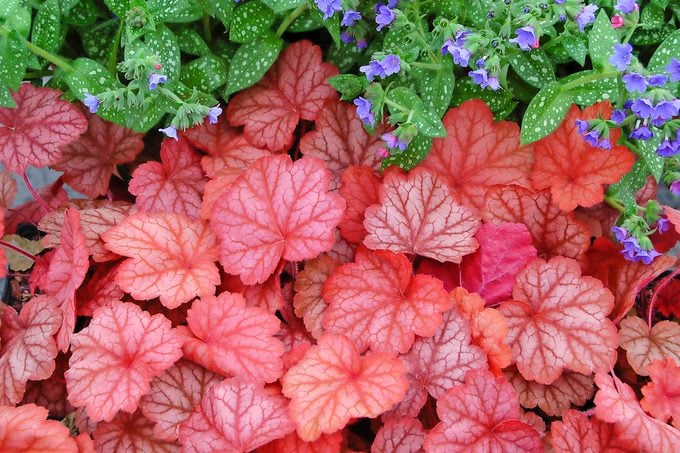
Heuchera, Zones 3 to 9
The tiny flowers of heuchera, or coral bells, attract hummers, too, but it’s the sumptuous apricot, caramel, rose, lime or plum leaves of the new varieties that steal the show in the garden. Available in a wide range of leaf colors, these powerhouse plants are shade garden all-stars. Plus, the tiny flowers held aloft on wiry stems make good cut flowers.
14. Bee Balm
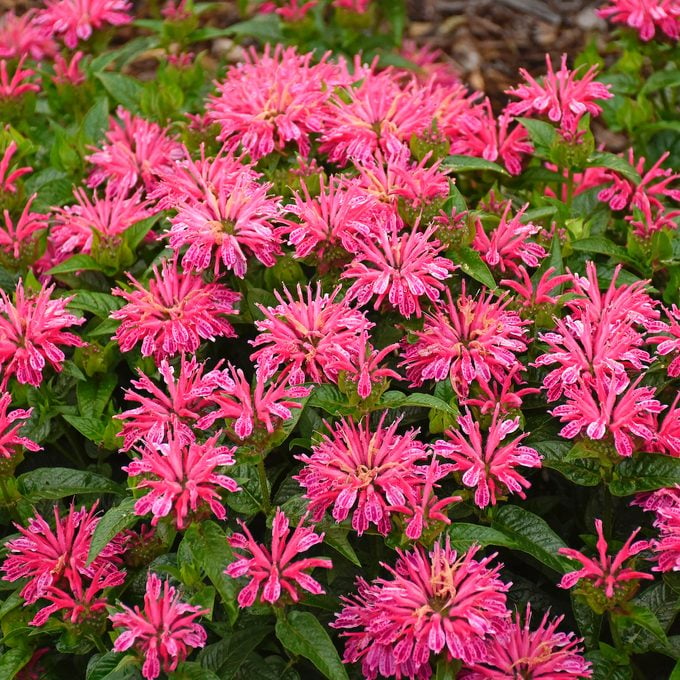
Monarda, Zones 3 to 8
This classic beauty produces more flowers in sun but can flourish when in shade, especially in hot climates. Most regions have a native or hardy species with pink, purple or red blooms that catch the eye with their spiky form.
15. Bellflower
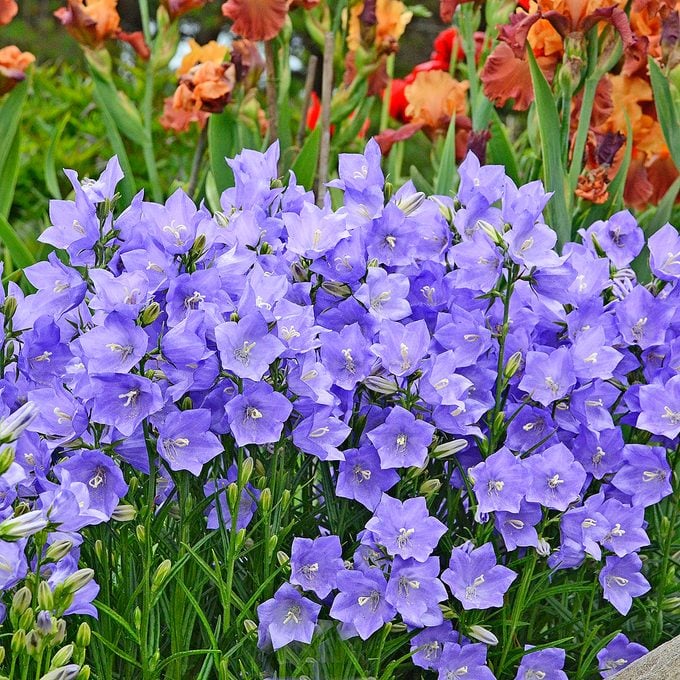
Campanula, Zones 3 to 9
This huge plant family offers blooms in many shapes and sizes, though most come in hues of pink, blue and violet. A perfect option for partial shade is Serbian bellflower, a low-growing ground cover with starry bluish purple flowers.
16. Brunnera
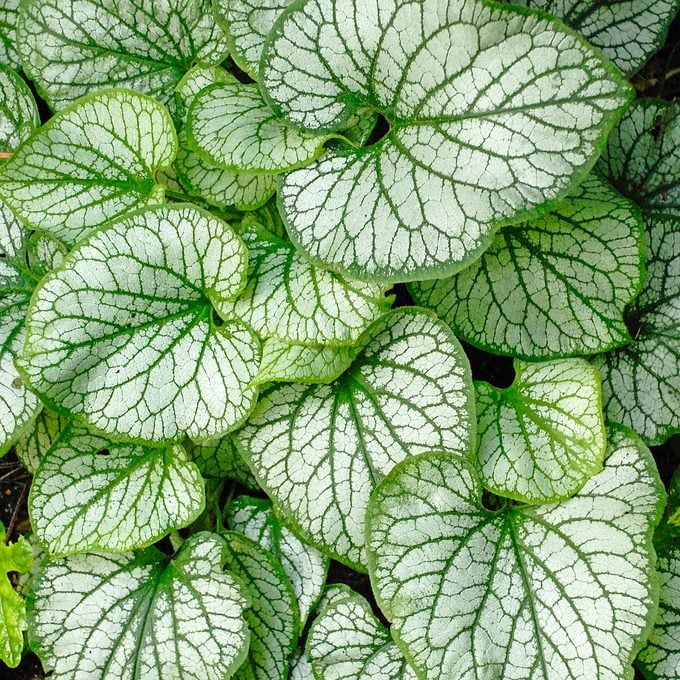
Brunnera macrophylla, Zones 3 to 8
Its heart-shaped leaves with a silvery sheen and contrasting veins are unpalatable to deer. Sporting blue or white flowers in spring, the foliage of newer cultivars such as Silver Heart, Sea Heart or Jack Frost shine throughout the growing season.
Pink Shade Garden Plants
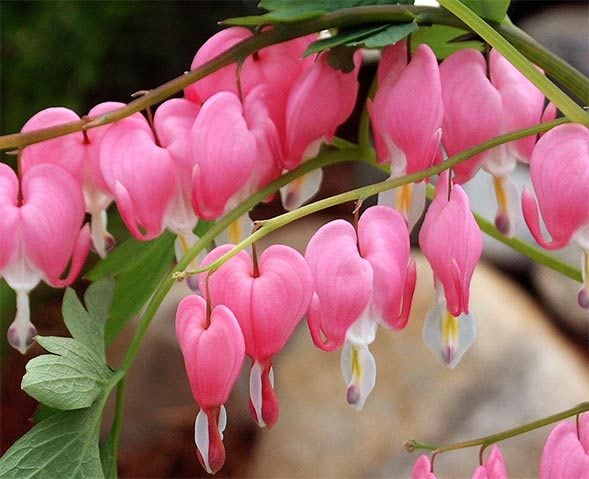
- Perennial: Astilbe, bleeding heart, fern-leaf bleeding heart, foxglove, Geranium cinereum ‘Ballerina’, hellebore, winter cyclamen
- Annual: Begonias, fuchsia, torenia
Red Shade Garden Plants
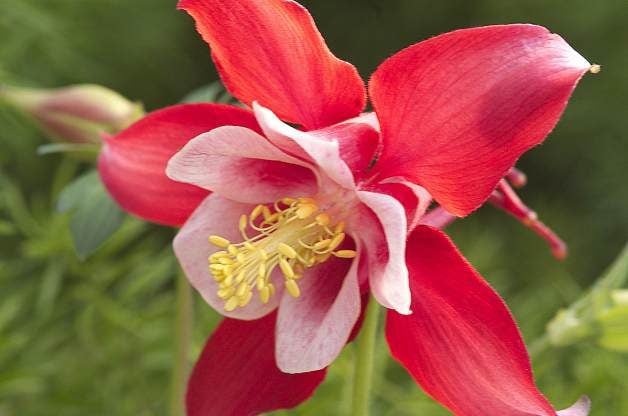
- Perennial: Astilbe, eastern and western red columbines, fire pink
- Annual: Fuchsia, begonias
Here are the top 10 red flowers that attract hummingbirds.
Yellow Shade Garden Plants
- Perennial: Lamium Hermann’s Pride, kirengeshoma, ligularia, wood poppy, woodland sunflower, yellow corydalis
- Annual: Monkeyflower, tuberous begonia
Discover the top 10 classic yellow flowers to grow.
Green Shade Garden Plants
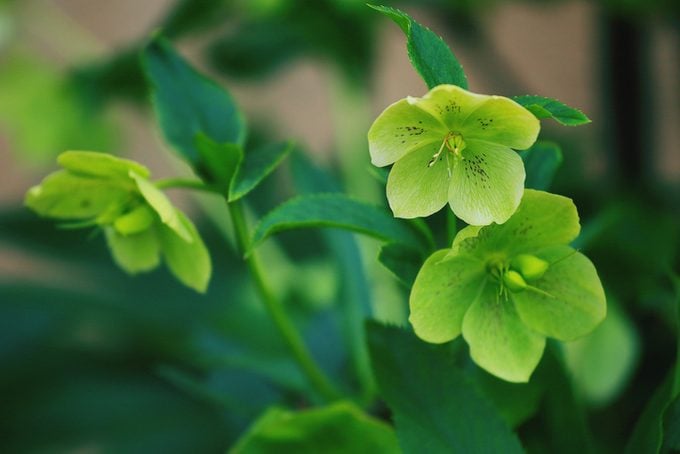
- Perennial: Hellebore
- Annual: Nicotiana langsdorfii
Blue and Purple Shade Garden Plants
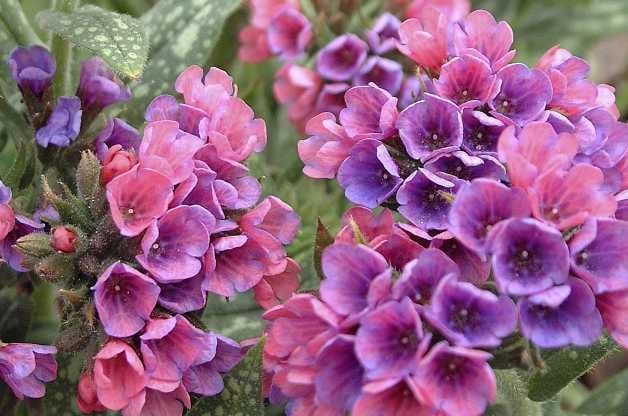
- Perennial: Blue wood aster, brunnera, Brookside hardy geranium, Jacob’s ladder, liriope, lungwort, monkshood, Phlox divaricata, Phlox stolonifera, Rocky Mountain columbine, Scilla siberica, toad lilies, Virginia bluebells
- Annual: Browallia, Summer Wave torenia
Psst—we found beautiful blue flowers and purple flowering plants for every garden.
White Shade Garden Plants
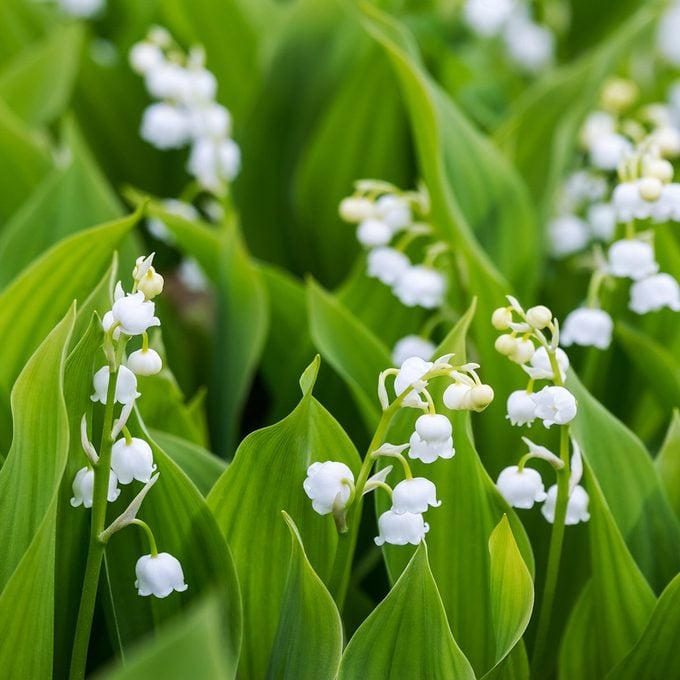
- Perennial: Astilbe, bear’s-breeches, Biokovo hardy geranium, hellebore, White Nancy lamium, lily-of-the-valley, snowdrops, tiarella, white wood aster
- Annual: Fuchsia, woodland tobacco (Nicotiana sylvestris)
Check out 15 beautiful white flowering shrubs.
Create a Calming Shade Garden Design
It’s easy to get carried away and come home with one of everything. But instead of throwing them all together, give your fancy shade garden plants room to shine beside quieter companions. Remember that serenity is one of the best things about a shade garden. Keep that peaceful feeling by separating different kinds of variegated plants with plainer companions so the leaves aren’t fighting each other for the spotlight. Use dark-colored plants, such as Osiris Café Noir ligularia, Hillside Black Beauty actaea or Chocoholic cimicifuga to create “shadows” between your bright-colored beauties so your eyes have a resting place.
Playing with color is the new trend for gardening with full shade plants. Free your fuchsias from the hanging basket and partner them with smoldering red coleus for close-up hummingbird watching. Spice up summer with copper plant (Acalypha wilkesiana), Dragon Wings begonia, pink polka-dot plant and red fuchsias.
Add zing to serene green and white hostas and ferns with a pool of blue Summer Wave torenia and an unexpected dash of hot sauce from orange and pink coleus. Mix and match whatever tickles your fancy, combining annuals and perennials with foliage plants that echo or contrast with their colors.
Choose the Right Plants for Shady Areas
Sure, you can get technical, plotting the arc of the sun and keeping track of how many hours your shady yard gets direct light, in which part of the day, in every season. But if you have a shady part of the yard, you already know it. Most shade plants do best in part shade or light shade—the usual conditions, even in many forests. Partial shade means a few hours of sun every day; light or dappled shade, created by shifting leaves, may get no direct sun at all, but it gets a good amount of light.
Learn what grass grows in shade and how to grow it.
Deep shade is an area where even indirect light rarely penetrates. It’s an uncommon situation, but you may have that, too, if you have buildings blocking the sun or other barriers. Most shade plants are very adaptable when it comes to the degree of shade they prefer. They’ll quickly tell you if you’ve guessed wrong. If they start looking weak and leggy, there’s not enough light. If their leaves crisp or curl or start looking bleached or browned, and you find yourself watering way too much, there’s too much sun. Move them, and try something that’s better suited to the original spot.
Garden centers make it easy by corralling shade plants into separate sections. Also stroll the shrubs and trees to seek out azaleas and rhododendrons, eastern redbud, dogwood, serviceberry, red-flowering currant and white sweetspire, all good bloomers in shade.
Consider houseplants, too. The filtered light in our houses is similar to outdoor shade, and croton, polka dot plant, Moses-in-the-boat, asparagus fern, Swedish ivy and abutilon (flowering maple) will thrive in the ground or in containers for a summer vacation.
Here’s how to tell if your plants need more sun.
Gardeners’ Favorite Shade Plants
“My coral bells plant amazes me year-round. I’m always impressed that it keeps most of its color and shape even through the winter. Also, few perennials come in as many colors as they do,” says Victoria Williams of Waterville, Ohio.
“Sweet William reseeds easily and butterflies love them, which is a bonus!” says Lenora Witt of Dennis, Mississippi.
“Elephant ears are a gigantic, lovely choice for shade gardens,” says Joan Heid of Chester, South Carolina.
“I love hostas. I have about 30 types. Their lush shades of green, blue and yellow are very comforting to me,” says Elizabeth Johnson of Rice Lake, Wisconsin.
“My favorites shade garden plants are astilbes. They’re beautiful in full bloom and offer interesting texture as seasons change,” says Laura Cox of South Dennis, Massachusetts.
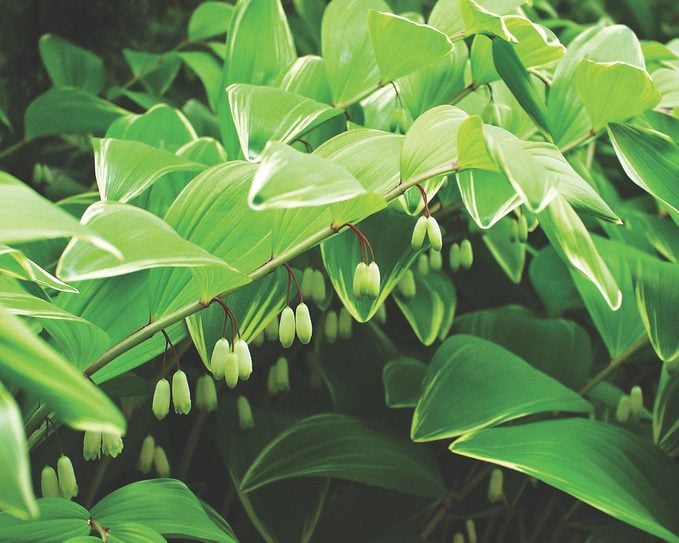
“Solomon’s seal is my new favorite. Plants arch with pale green leaves edged in white. In spring, white bell flowers dangle from the stems,” says Juli Seyfried of Cincinnati, Ohio.
Next, check out the top 10 vegetables that grow well in shade.
Originally Published: February 04, 2022

